Finding the right sleep surface can transform your nights and energize your days, especially when navigating the diverse world of hybrid mattress types. These innovative sleep solutions have revolutionized bedroom comfort by merging responsive coil support with pressure-relieving foam layers. If you’ve ever woken up with shoulder pain on traditional innersprings or felt overheated on all-foam mattresses, understanding hybrid mattress types provides the perfect middle ground. This guide cuts through the confusion to show you exactly which hybrid constructions deliver optimal support, cooling, and pressure relief based on your sleep position, body type, and budget.
Hybrid mattress types represent the smartest evolution in sleep technology over the last decade, combining the best qualities of multiple mattress constructions into one sophisticated product. While traditional innersprings lack pressure relief and all-foam options often sleep too hot, hybrids solve these problems through strategic layering. The pocketed coil systems work with memory foam or latex comfort layers to create a sleep surface that contours to your body while maintaining responsive support. With 28+ Queen size options alone across major retailers, selecting the right hybrid mattress types requires understanding how construction differences impact real-world performance for side sleepers, back sleepers, couples, and temperature-sensitive individuals.
How Hybrid Mattress Types Combine Coil Support with Foam Comfort
Hybrid mattress types fundamentally differ from traditional innerspring and all-foam options through their dual-layer construction that strategically merges metal coil support with foam comfort layers. This combination creates a sleep surface that provides the responsive bounce of traditional springs while delivering the pressure relief that foam offers. Unlike conventional innersprings that rely solely on coils for both support and comfort, quality hybrids feature at least 2 inches of foam comfort layer atop a 7-8 inch coil support core, resulting in a minimum 10-inch overall thickness that prevents excessive sinking.
The true innovation in hybrid mattress types lies in how these materials work together to solve common sleep problems. The foam comfort layers conform to your body’s curves, distributing pressure evenly across shoulders, hips, and heels. Meanwhile, the coil support system underneath provides the structural integrity that maintains proper spinal alignment throughout the night. This dual-material approach particularly benefits combination sleepers who shift positions frequently, as the responsive coils facilitate easy movement without the “stuck” feeling that can occur with deeper memory foam constructions.
Why Pocketed Coils Outperform Traditional Innerspring Systems
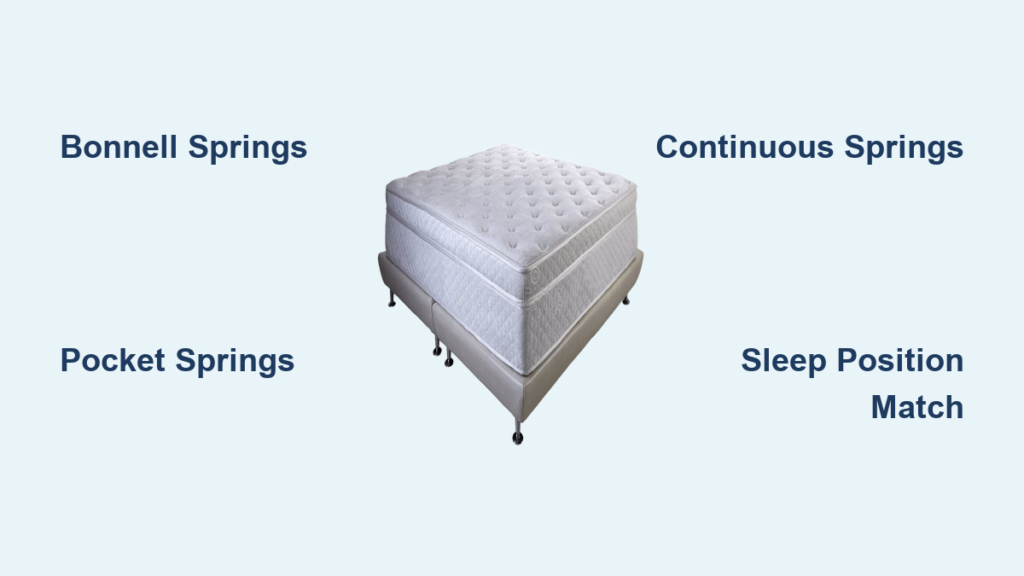
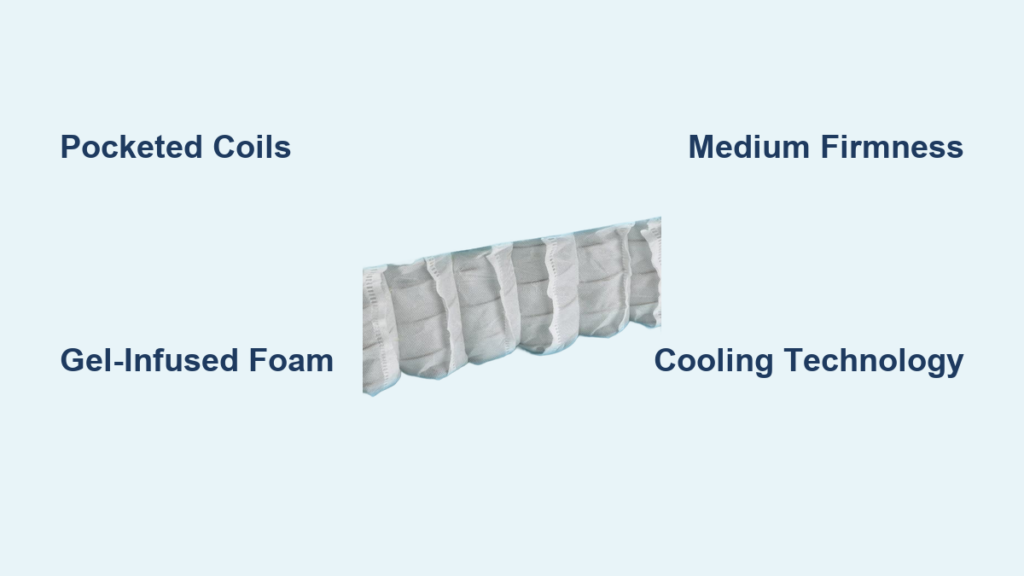
Pocketed coil systems represent the gold standard in modern hybrid mattress types, with each coil individually wrapped in fabric to operate independently. This construction allows coils to respond only to the pressure applied directly to them, rather than transferring motion across the entire sleep surface. When you roll over at night, only the coils beneath your body compress, minimizing disturbance to your sleeping partner. This independent movement also enables precise contouring to your body’s natural curves, providing targeted support where you need it most.
Traditional Bonnell coil systems found in older innerspring mattresses connect coils with helical wires, creating a single interconnected unit that transfers motion across the entire bed. This construction lacks the precision support of pocketed coils and often results in uneven wear patterns over time. The gauge (thickness) of the coil wire significantly impacts performance—lower gauge numbers indicate thicker, more durable wires that provide stronger support. Higher coil counts generally correlate with better quality, as more coils allow for more precise pressure distribution across your body.
Gel-Infused vs. Plant-Based Foam Comfort Layers
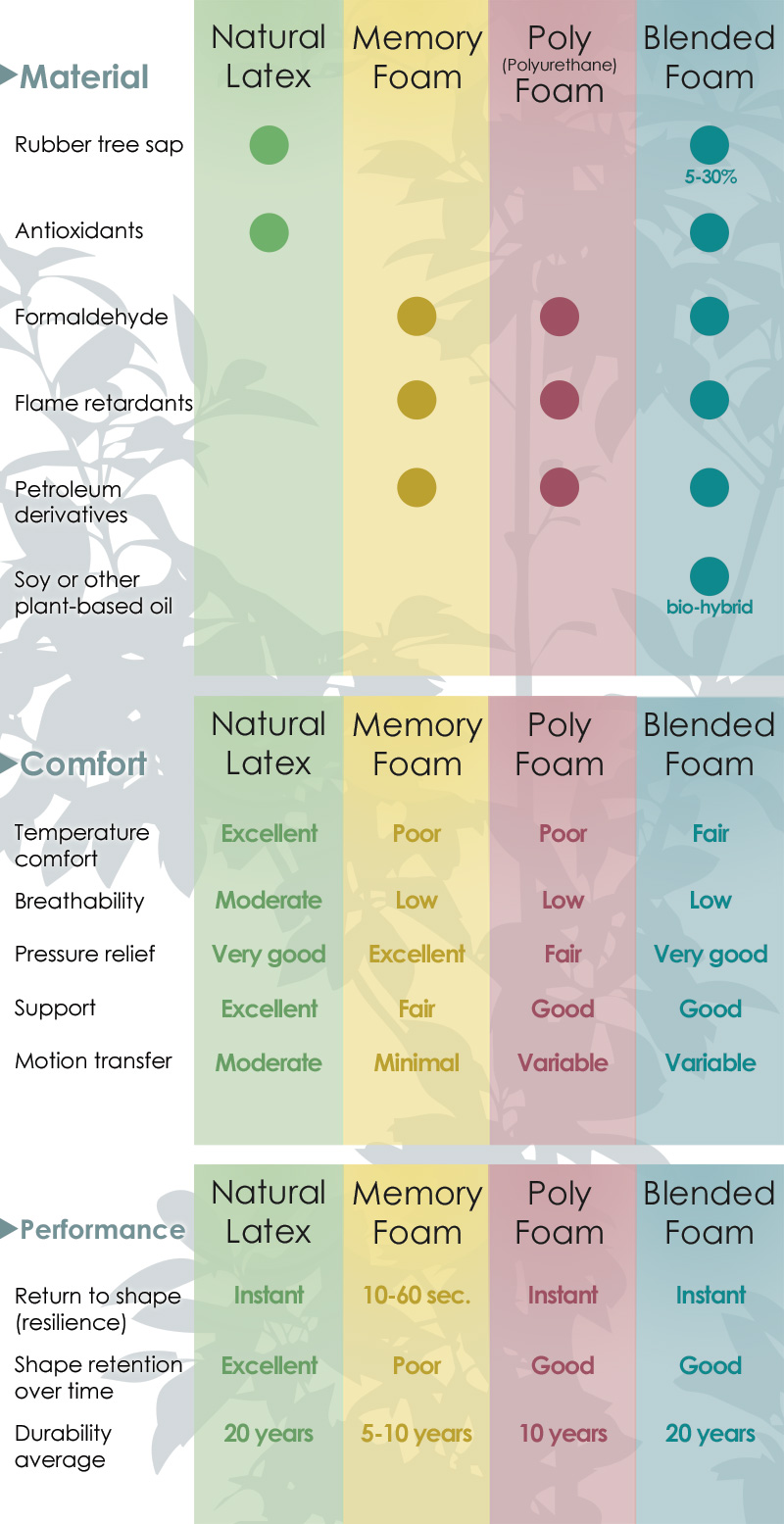
The foam comfort layers in hybrid mattress types determine how your body interacts with the sleep surface, with different foam types offering distinct benefits. Memory foam remains the most prevalent comfort layer material, providing deep body contouring that distributes pressure evenly. However, traditional memory foam can retain heat, which is why many modern hybrid mattress types incorporate gel-infused memory foam that actively absorbs and dissipates body heat through phase-change materials embedded in the foam structure.
For eco-conscious shoppers, plant-based or bio-poly foam alternatives offer similar comfort characteristics with reduced environmental impact and fewer concerns about off-gassing. These foams replace some petroleum-based components with plant-derived oils, creating a more sustainable product without sacrificing performance. Latex foam hybrids provide a naturally cooler sleeping surface with inherent resistance to dust mites and allergens, making them ideal for allergy sufferers. Natural latex hybrids typically cost more but offer exceptional durability and a responsive, buoyant feel that differs from memory foam’s deeper contouring.
Medium Firmness Hybrid Mattress Types for Back Sleepers
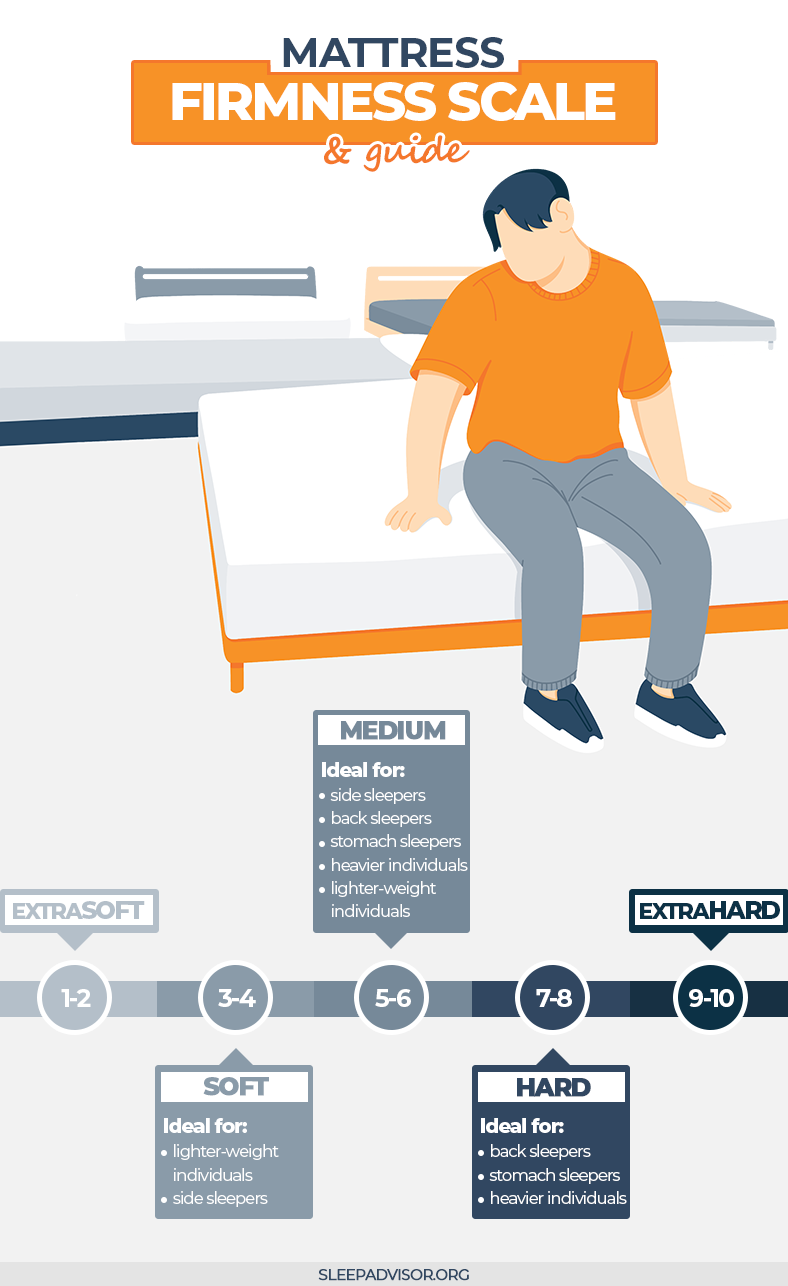
Back sleepers require balanced support that maintains the spine’s natural curvature without creating pressure points at the lower back or shoulders. Medium firmness hybrid mattress types deliver this balance by providing enough cushioning for the lumbar region to prevent gaps between your body and the mattress while maintaining overall support that keeps your spine properly aligned. The 11 medium firmness options currently available represent the largest category of hybrid mattress types, reflecting their broad appeal to back sleepers and combination sleepers who need versatility across multiple positions.
When testing medium firmness hybrids, pay attention to how the mattress supports your natural lumbar curve. Quality medium hybrids provide just enough sink to cradle your lower back without allowing excessive compression that could cause misalignment. The coil support layer proves particularly valuable for back sleepers, as the push-back response maintains consistent support throughout the night regardless of position shifts. This responsive support prevents the “hammocking” effect that can occur with softer mattresses, where your hips sink too deeply, causing lower back strain.
How to Test Medium Firmness Hybrids for Proper Spinal Alignment
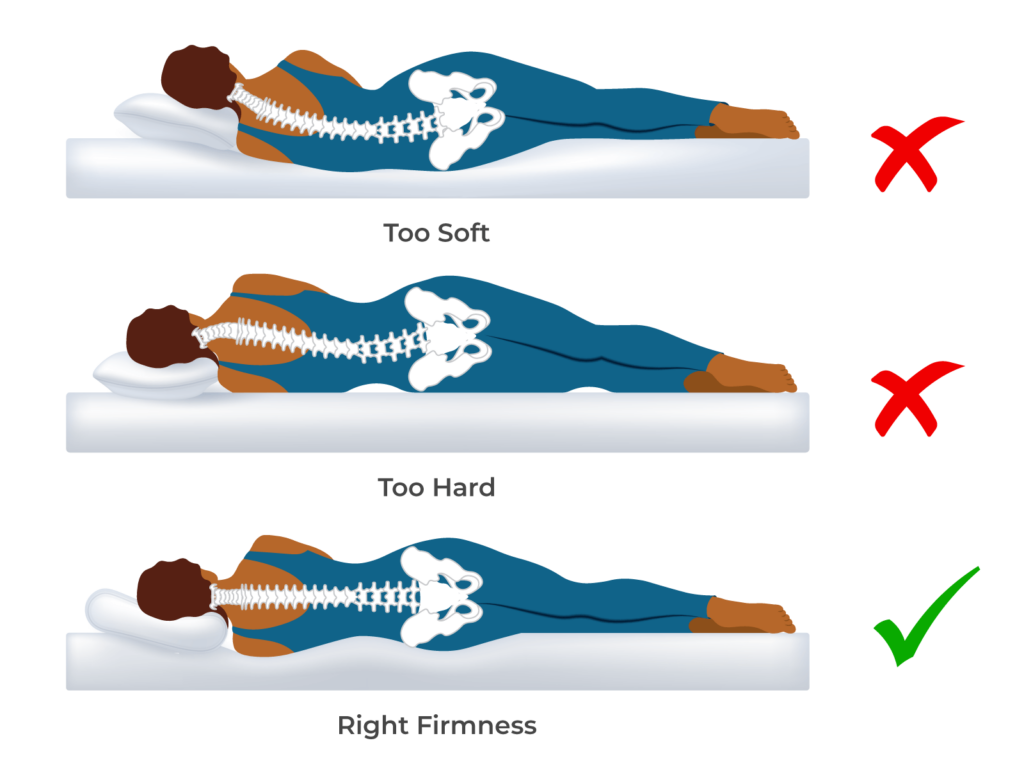
Place a straight object like a ruler or book along your spine while lying on your back to check for proper alignment. Your spine should follow a relatively straight line from neck to hips with just a slight natural curve in the lumbar region. If there’s a significant gap between your lower back and the mattress, the hybrid is too firm. If your hips sink dramatically deeper than your shoulders, the mattress is too soft. The ideal medium firmness hybrid creates minimal space between your lumbar curve and the sleep surface—about the thickness of your hand.
Check shoulder and hip compression by placing your palm under your lower back while lying down. You should be able to slide your hand underneath with slight resistance but not significant force. If your hand slides in easily with plenty of space, the hybrid lacks sufficient contouring. If you can’t fit your hand at all, the mattress is too soft for proper spinal alignment. Medium firmness hybrids should compress approximately 1-2 inches under your body weight to maintain optimal alignment.
Best Medium Firmness Hybrid Mattress Types Under $1,500
The Casper Dream Hybrid Mattress ($1,045-$1,495) provides exceptional value with its balanced construction featuring responsive foam layers atop a supportive coil system. This hybrid delivers the pressure relief back sleepers need without excessive sinkage, making it ideal for combination sleepers who shift positions throughout the night. The breathable cover and open-cell foam structure enhance temperature regulation, addressing a common concern with memory foam hybrids.
The Serta iSeries NXG 2500 Hybrid Medium Mattress ($1,699-$1,999) offers premium construction at a competitive price point, featuring Serta’s advanced coil technology designed specifically for medium firmness support. The zoned coil system provides targeted support for the lumbar region while allowing appropriate cushioning for shoulders and hips. This hybrid mattress type includes cooling gel-infused foam that helps maintain comfortable sleep temperatures throughout the night.
Plush Hybrid Mattress Types That Relieve Side Sleeper Shoulder Pain
Side sleepers experience concentrated pressure at the shoulders and hips, where the body’s largest joints contact the sleep surface. Plush hybrid mattress types address these pressure points with softer comfort layers that allow shoulders and hips to sink deeper into the mattress, maintaining proper spinal alignment by filling the space between your body and the sleep surface. The 9 plush options available cater specifically to side sleepers who need significant cushioning without sacrificing the underlying support that prevents excessive sinking.
The ideal plush hybrid for side sleepers combines responsive coil support with soft memory foam or latex comfort layers that distribute pressure evenly across contact points. This construction prevents the “point pressure” that causes numbness, tingling, and morning soreness in traditional innersprings while avoiding the excessive sinkage that can occur with all-foam mattresses. The pocketed coil system beneath the plush comfort layers provides the structural integrity needed to prevent your hips from sinking too deeply, which would compromise spinal alignment and cause lower back pain.
Identifying the Right Plush Hybrid for Your Body Weight
Lighter side sleepers (under 130 pounds) often benefit from extra plush hybrids that allow deeper compression at pressure points without sacrificing support. The Nectar 5.1 Premier Hybrid Plush Mattress ($799-$1,349) provides exceptional pressure relief with its multi-layer foam construction that cushions shoulders and hips while the responsive coil system maintains proper alignment. This hybrid mattress type features gel-infused foam that helps dissipate heat, addressing a common concern with plush constructions.
Average-weight side sleepers (130-230 pounds) typically require standard plush hybrids that balance cushioning with adequate support. The PranaSleep Karma Elite 2 Hybrid Plush Mattress ($2,199.99 on sale) delivers targeted pressure relief through its specialized foam layers combined with a high-density coil system that prevents excessive sinking. This hybrid mattress type includes reinforced edge support that maximizes usable sleep surface—particularly valuable for side sleepers who tend to sleep near the edge of the bed.
Heavier side sleepers (over 230 pounds) need plush hybrids with higher-density foams and stronger coil systems to maintain proper support. The Serta iSeries NXG 4500 Hybrid Plush Mattress ($2,299 on sale) features a robust coil foundation with thicker gauge wires that prevent bottoming out while still providing the deep contouring side sleepers require. This hybrid mattress type includes additional lumbar support zones that maintain spinal alignment even with greater body weight.
Firm Hybrid Mattress Types That Prevent Stomach Sleeper Back Pain
Stomach sleepers face the unique challenge of preventing hip sinking that creates lower back strain and spinal misalignment. Firm hybrid mattress types solve this problem with thinner comfort layers or higher-density foams that limit compression in the hip region while still providing sufficient cushioning for the chest and abdomen. The 6 firm hybrid options available cater specifically to stomach sleepers who require consistent, unyielding support to maintain proper spinal alignment throughout the night.
The ideal firm hybrid for stomach sleepers provides minimal sinkage in the hip region while still offering enough cushioning to prevent pressure points on the chest and abdomen. This balance prevents the “banana curve” that occurs when hips sink too deeply, causing the spine to arch unnaturally and creating significant lower back strain. The responsive coil layer in firm hybrids provides the structural foundation necessary for proper alignment in this challenging sleep position, though stomach sleepers should generally avoid softer hybrid types regardless of coil construction quality.
Why Most Stomach Sleepers Need Firmer Hybrid Constructions
Hip compression measurement reveals why firm hybrids work best for stomach sleepers. When lying on your stomach, your hips should sink no more than 1 inch into the mattress. Softer hybrids allow 2+ inches of compression, creating the gap between your lower back and the mattress that causes spinal misalignment. The coil support layer in firm hybrids limits this compression while still providing the slight give needed for comfortable sleep.
Shoulder and chest pressure distribution requires special attention for stomach sleepers. While the hips need firm support, the chest and shoulders require sufficient cushioning to prevent pressure points. Quality firm hybrids address this paradox through zoned coil systems that provide firmer support in the hip region while allowing slightly more give under the chest and shoulders. This targeted support prevents the chest from sinking too deeply, which would restrict breathing and cause shoulder discomfort.
Top Firm Hybrid Mattress Types for Stomach Sleepers
The Tempur-PRObreeze 2.0 Medium Hybrid Mattress ($3,599 on sale) may seem counterintuitively listed as “medium” but features Tempur-Pedic’s responsive foam technology that provides firm support ideal for stomach sleepers. The advanced cooling technology makes this hybrid mattress type particularly valuable for sleepers who tend to overheat, as stomach sleeping often increases body contact with the sleep surface.
The PranaSleep Karma Elite 2 Hybrid Firm Mattress ($2,199.99 on sale) delivers exceptional support through its high-density foam layers and reinforced coil perimeter. This hybrid mattress type includes targeted lumbar support zones that maintain proper spinal alignment without creating uncomfortable pressure points on the chest or shoulders. The breathable cover fabric enhances temperature regulation, preventing the overheating that can occur with extended stomach sleeping.
Comparing Top Hybrid Mattress Brands: Serta, Tempur-Pedic, and Nectar
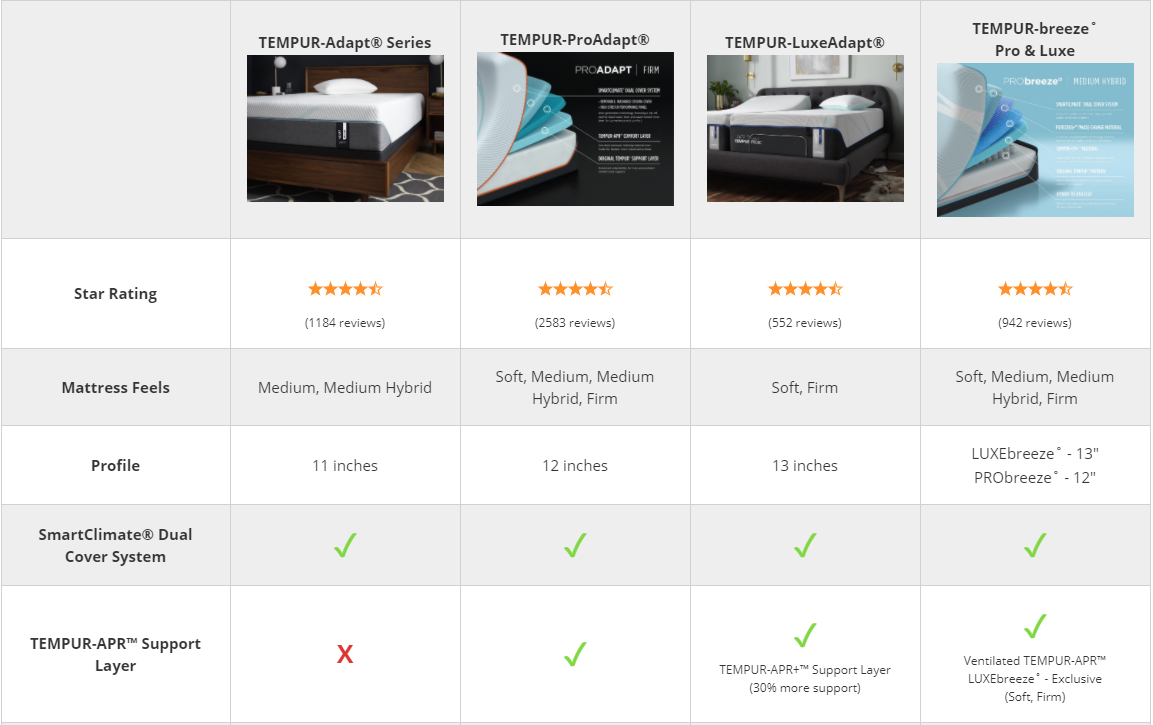
Serta dominates the hybrid mattress types market with nine product offerings, demonstrating strong commitment to this category through collections including the iSeries NXG Hybrid Mattresses and the Perfect Sleeper line. The iSeries NXG models represent advanced hybrid technology available in multiple firmness levels, from the plush 4500 to the medium 2500, catering to various sleep preferences while maintaining consistent construction quality. The Perfect Sleeper collection offers traditional Serta craftsmanship in hybrid format, providing accessible entry points to hybrid technology with the Coral Shores Quilted Firm Hybrid Mattress priced at $799-$999.
Tempur-Pedic occupies the premium segment of the hybrid mattress types market with four sophisticated product offerings centered on their Adapt and breeze series. The Adapt collection combines Tempur-Pedic’s proprietary responsive foam technology with hybrid construction, while the breeze series focuses specifically on temperature management for sleepers who tend to overheat. The TEMPUR-ProAdapt Medium Hybrid Mattress represents the entry point to Tempur-Pedic’s hybrid offerings at $2,699-$2,899, while the TEMPUR-LUXEbreeze and TEMPUR-LuxeAdapt models command prices of $4,899-$5,199, representing the pinnacle of hybrid mattress construction with advanced cooling technologies.
Nectar structures their hybrid mattress types across four distinct tiers, providing entry-level through premium options at accessible price points. The Nectar 5.1 Classic Hybrid Mattress represents the most affordable entry into hybrid ownership at $469-$749, while the Premier, Luxe, and Ultra models step up in features, materials, and construction quality. This tiered approach allows consumers to select the hybrid experience that matches their budget while still benefiting from the fundamental hybrid construction that distinguishes these mattresses from all-foam alternatives. Nectar’s strong warranty and risk-free trial period make their hybrid mattress types particularly appealing to first-time hybrid buyers.
$500 vs. $5,000: Breaking Down Hybrid Mattress Price Tiers
Entry-level hybrid mattress types, such as the Nectar 5.1 Classic Hybrid Mattress priced around $469-$749, provide basic hybrid construction at accessible price points. These mattresses incorporate fundamental coil and foam combinations that deliver the hybrid experience without premium materials or advanced features. The Serta Perfect Sleeper Coral Shores Quilted Firm Hybrid Mattress, priced at $799-$999, represents another entry-level option that combines traditional innerspring craftsmanship with hybrid construction principles. These budget-friendly hybrids typically feature thinner comfort layers (2-3 inches) and standard pocketed coil systems with moderate coil counts.
Mid-tier hybrid mattress types balance construction quality with affordability, typically ranging from $1,000 to $2,000. The Casper Dream Hybrid Mattress, priced at $1,045-$1,495, offers balanced hybrid performance at moderate price points with thoughtful details like breathable covers and zoned support. The Nectar 5.1 Premier Hybrid Mattress at $799-$1,349 and the Serta iSeries NXG 2500 Hybrid Medium Mattress at $1,699-$1,999 represent strong options in this tier, providing quality construction and comfortable sleep surfaces without premium pricing. These models typically feature 3-4 inch comfort layers with cooling technologies and higher-density coil systems that enhance durability and support.
Premium hybrid mattress types exceed $3,000, incorporating the most advanced materials, sophisticated construction techniques, and proprietary technologies. The Tempur-Pedic hybrid lineup dominates this tier, with the TEMPUR-ProAdapt Medium Hybrid Mattress at $2,699-$2,899 representing the entry point to Tempur-Pedic’s premium hybrid technology. The Tempur-PRObreeze 2.0 Medium Hybrid Mattress at $3,599-$3,899 incorporates advanced cooling, while the TEMPUR-LuxeAdapt 2.0 and TEMPUR-LUXEbreeze 2.0 models command prices of $3,899-$4,899 and $4,899-$5,199 respectively. These premium hybrids feature specialized foam formulations, precision-engineered coil systems, and advanced temperature management that justify their higher prices for discerning sleepers.
Why Hybrid Mattress Types Sleep Cooler Than All-Foam Alternatives
The coil layer beneath foam comfort layers in hybrid mattress types creates natural airflow pathways that dissipate body heat and moisture, addressing the heat retention concerns that plague many all-foam mattresses. This inherent ventilation proves particularly valuable for sleepers who naturally run hot or live in warm climates, as the metal coils conduct heat away from the body while allowing air circulation between coils. Unlike solid foam constructions that trap body heat, the open structure of hybrid mattresses promotes continuous airflow that prevents overheating throughout the night.
Advanced hybrid mattress types incorporate additional cooling technologies that enhance this natural ventilation advantage. Gel-infused foams absorb and dissipate body heat through phase-change materials embedded in the foam structure. Phase-change materials in cover fabrics actively regulate temperature by absorbing excess heat when your body temperature rises. Breathable cover fabrics made from Tencel, bamboo, or specialized cooling textiles wick moisture away from the sleep surface while facilitating heat transfer. These cooling features work synergistically with the coil layer to create a sleep environment that maintains optimal temperature throughout the night.
Hybrid Mattress Types That Solve Nighttime Overheating
The Tempur-LUXEbreeze 2.0 Medium Hybrid Mattress ($4,899-$5,199) represents the pinnacle of cooling technology in hybrid mattress types, featuring Tempur-Pedic’s most advanced temperature management system. This hybrid incorporates dual-layer cooling technology with a top layer that draws heat away from the body and a bottom layer that dissipates heat into the surrounding environment. The specialized cover fabric contains phase-change materials that actively regulate temperature based on your body’s heat output.
The Casper Snow Hybrid Mattress ($1,395-$1,995) offers exceptional cooling performance at a more accessible price point through Casper’s proprietary Snow technology. This hybrid mattress type features a breathable cover with cooling fibers combined with open-cell foam layers that enhance airflow. The pocketed coil system beneath the comfort layers creates additional ventilation pathways that work with the cooling cover to maintain comfortable sleep temperatures throughout the night.
Queen vs. King Hybrid Mattress Types: Choosing the Right Size
Queen and King size hybrid mattress types demonstrate the highest availability with 28 options each, reflecting their popularity among couples and individuals who prefer more sleeping space. Queen sizes work well for solo sleepers who want extra room to move or couples in smaller bedrooms, while King sizes provide maximum space for couples who want to minimize motion transfer and enjoy more personal sleep area. The generous dimensions of these larger sizes prove particularly well-suited to hybrid constructions, as the ample surface area allows couples to benefit from motion isolation features while each partner has sufficient personal space.
Twin and Twin XL hybrid mattress types serve specific demographic needs while still offering hybrid benefits. Twin XL mattresses, with 28 available options, prove popular among college students and taller individuals who require additional length but have space constraints that preclude larger sizes. The standard Twin, while less prevalent with 14 available options, serves children’s rooms, guest rooms, and spaces where room dimensions limit larger mattress placement. Full and Full XL sizes occupy a middle ground for solo sleepers who need more space than a Twin provides but have rooms too small for Queen or King sizes.
Specialty Hybrid Mattress Types for Unique Bedroom Setups
Split-Head hybrid mattress types (available in 3 options) address specific needs such as couples with vastly different comfort preferences or individuals using adjustable bed bases. These specialized hybrids allow different firmness levels or features across the head section of the mattress, accommodating partners who disagree on mattress feel or individuals who require different support at the head and foot of the bed. The Split-Head King hybrid (1 available option) provides this customization in the most popular couple’s size.
California King hybrid mattress types, available in 26 options, accommodate taller individuals who need additional length beyond standard King dimensions, though the narrower profile requires careful room planning. These hybrids maintain the performance characteristics of their standard King counterparts while providing the extra 4 inches of length that taller sleepers require. When selecting a California King hybrid, verify that your bedroom dimensions can accommodate the 72″ x 84″ footprint without compromising furniture placement or doorway access.
Hybrid Mattress Types FAQ: Answers to 7 Top Shopper Questions
How do hybrid mattress types differ from traditional innerspring mattresses?
Traditional innerspring mattresses rely entirely on coil systems for both support and comfort, while hybrid mattress types incorporate both coil and foam components working together. The foam comfort layer (minimum 2 inches thick) provides pressure relief and body contouring that traditional innersprings lack, while the coil support core (7-8 inches thick) maintains structural integrity that all-foam alternatives often struggle to provide. This dual-material approach creates a sleep surface that combines the responsive bounce of springs with the pressure distribution of foam.
Are hybrid mattress types suitable for side sleepers with shoulder pain?
Hybrid mattress types prove excellent for side sleepers who often experience shoulder and hip pain from pressure points. The foam comfort layers cushion these pressure points while the coil support layer prevents excessive sinking that can cause spinal misalignment. Side sleepers should generally select plush or medium firmness hybrid models that provide adequate cushioning without sacrificing the support necessary for proper sleep posture. The pocketed coil construction allows precise contouring to body curves while maintaining overall support.
Do hybrid mattress types require special foundations?
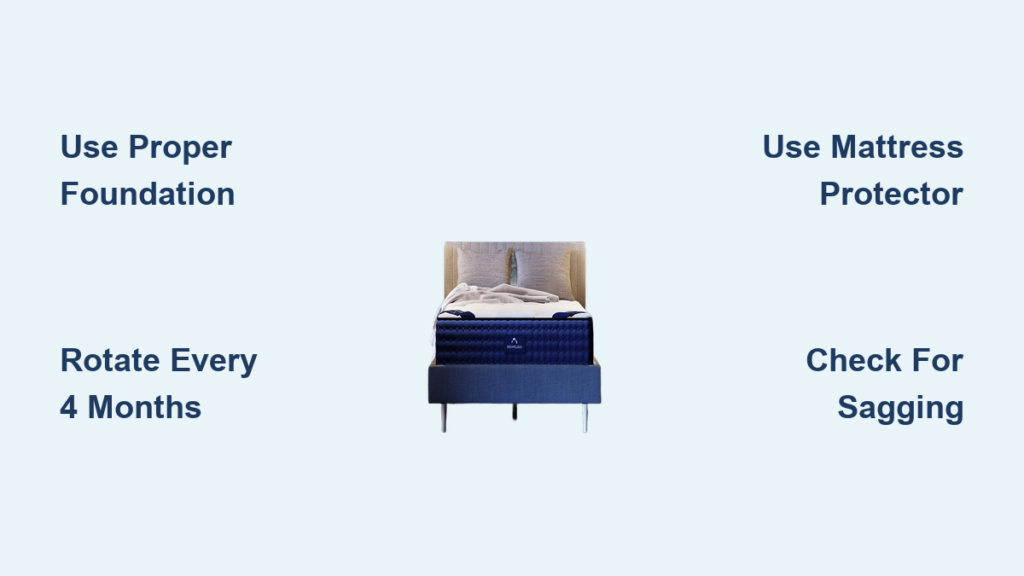
Hybrid mattress types require appropriate support from beneath but do not specifically require box springs. While box springs work effectively with hybrids (as their internal springs complement the hybrid’s coil system), platform beds, slat foundations, and adjustable bases also provide suitable support when properly constructed. The essential requirement is even, firm support across the entire mattress surface without gaps or excessive flex that could compromise mattress performance or void warranties.
What’s the ideal thickness for quality hybrid mattress types?
Quality hybrid mattress types should have a minimum overall thickness of approximately 10 inches, consisting of at least 2 inches of foam comfort layer atop a 7- to 8-inch coil support core. Premium hybrid models often exceed these minimums with thicker comfort layers, additional transitional layers, or taller coil systems that increase overall mattress height to 12 inches or more. Thickness influences the depth of comfort layers and the degree of body contouring available, with thicker constructions generally offering more sophisticated comfort systems.
How long do hybrid mattress types typically last compared to all-foam options?
Hybrid mattress types generally demonstrate superior durability compared to all-foam alternatives due to the structural integrity provided by their coil support systems. The coils handle heavier weight and resist compression more effectively than foam alone, allowing hybrid mattresses to maintain performance characteristics over a longer service life. Most manufacturers recommend replacement within 8 to 10 years for optimal sleep quality, though well-constructed hybrids in appropriate support systems may perform satisfactorily for longer periods depending on usage patterns and maintenance.
Do hybrid mattress types provide better motion isolation than traditional innersprings?
Yes, hybrid mattress types typically provide significantly better motion isolation than traditional innersprings due to their foam comfort layers that absorb movement before it transfers to the coil system. When one partner moves or exits the bed, the disturbance remains largely contained to that area rather than propagating across the entire mattress surface. This isolation allows couples to maintain more independent sleep experiences despite sharing a bed, reducing the sleep disruptions that can accumulate over time and affect daytime energy.
Can I flip hybrid mattress types for even wear?
No, hybrid mattress types are not designed to be flipped due to their layered construction with specific comfort and support layers oriented in particular directions. Instead, rotating the mattress 180 degrees every six months ensures even wear across the sleep surface and prevents the development of body impressions in specific areas. This rotation practice distributes the compression patterns that naturally develop from sleeping in the same position night after night, promoting consistent comfort throughout the mattress lifespan.