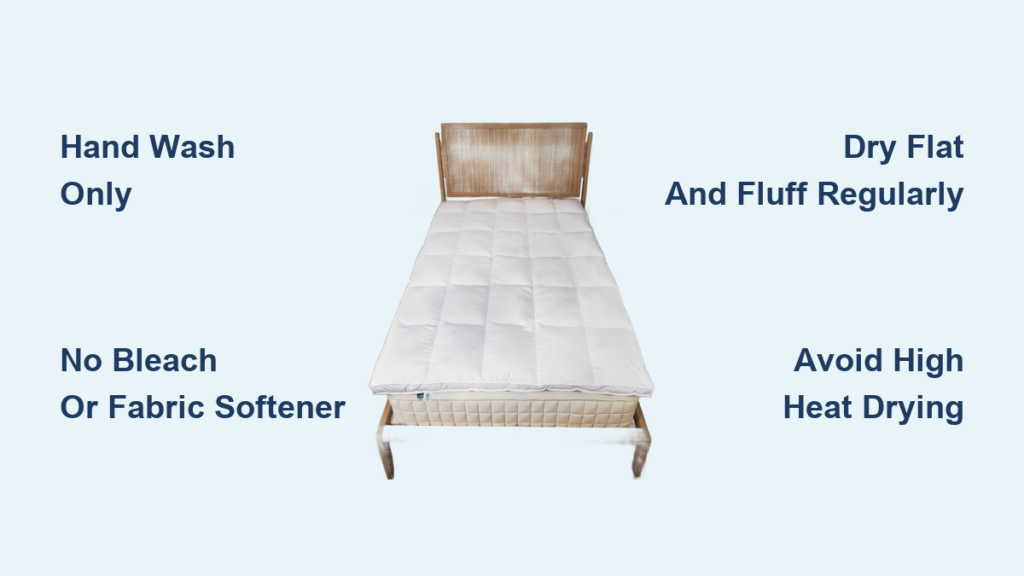
Waking up to a stained or musty-smelling mattress topper can ruin your entire morning. If you own a feather mattress topper, you’ve probably wondered how to clean it properly without ruining those delicate feathers inside. Many well-intentioned homeowners have accidentally destroyed their expensive bedding by using improper washing techniques that cause feathers to clump, tear, or leak through the fabric. The truth is, how to wash a feather mattress topper requires special care that differs significantly from cleaning regular bedding. This guide provides the exact methods you need to safely refresh your feather topper while preserving its comfort and longevity.
Feather mattress toppers create that luxurious hotel-bed feel we all love, but they demand specific maintenance. Unlike memory foam or synthetic alternatives, feathers react poorly to excessive moisture, harsh detergents, and improper drying techniques. Most manufacturers warn that incorrect cleaning can void your warranty and ruin the topper’s structure within just one wash cycle. In this comprehensive guide, you’ll discover the precise washing methods endorsed by bedding professionals, including when hand washing is essential versus when machine washing might be acceptable, how to dry feathers properly to prevent mildew, and critical mistakes that could destroy your investment.
Why Feather Mattress Topper Cleaning Requires Special Care
Feathers behave differently than synthetic fills when exposed to water and agitation. When you’re dealing with how to wash a feather mattress topper, understanding the material science is crucial for success. Feathers contain natural oils that break down when exposed to harsh detergents or excessive heat, causing them to become brittle and lose their insulating properties. The delicate quills can snap during improper washing, leading to feather leakage through the fabric casing. Additionally, feathers clump together when wet, creating uncomfortable hard spots that won’t redistribute evenly after drying.
How Water Affects Feather Structure
When feathers absorb water, they become significantly heavier—up to 3-5 times their dry weight. This extra weight strains the stitching on your mattress topper, potentially causing seams to rupture during washing or drying. The microscopic barbules that normally interlock to create that plush, supportive surface become misaligned when wet, resulting in a lumpy, uneven feel after improper cleaning. Professional bedding technicians emphasize that the key to successful feather topper maintenance lies in minimizing water exposure while still achieving thorough cleaning.
Why Standard Washing Methods Fail
Most people make the critical mistake of treating feather toppers like regular bedding. Standard washing machine cycles with vigorous agitation will tear feathers apart and damage the delicate ticking fabric. High-speed spin cycles create centrifugal force that pushes feathers against the drum walls, causing them to break and migrate toward the edges of the topper. Even seemingly gentle “delicate” cycles often use too much water and insufficient rinsing for feather-filled products, leaving detergent residue that attracts dirt and causes odors.
Step-by-Step: How to Hand Wash Your Feather Mattress Topper Safely

Hand washing remains the safest method for how to wash a feather mattress topper, especially for larger or older models. This technique gives you complete control over water exposure and mechanical stress on the delicate feathers inside.
Preparing Your Cleaning Solution
Fill a clean bathtub with lukewarm water (never hot) and add 1-2 tablespoons of mild, non-bleach detergent specifically formulated for delicate fabrics. Avoid fabric softeners completely—they coat feathers and reduce their natural loft. Gently swish the water to create minimal suds; excessive suds indicate too much detergent, which will be difficult to rinse out completely. The water should feel barely soapy to the touch.
Proper Submersion and Agitation Technique
Lay your feather topper flat in the water rather than submerging it all at once. Gently press down to allow water to penetrate gradually—never force it underwater. Work in small sections, using light squeezing motions (not rubbing) to distribute the cleaning solution. Focus extra attention on stained areas, holding the solution against the fabric for 2-3 minutes before moving to the next section. Never twist, wring, or vigorously scrub the material, as this damages both feathers and fabric.
When Machine Washing Is Acceptable (With Critical Precautions)
:max_bytes(150000):strip_icc()/GettyImages-2204880006-011ce3c5c7f8473da3c104038879402b.jpg)
While hand washing is ideal, some newer feather toppers with reinforced stitching and tightly woven ticking can withstand careful machine washing. This method requires strict adherence to specific parameters to prevent disaster.
Selecting the Right Machine Settings
Use only a front-loading washing machine (top loaders with agitators will destroy your topper). Choose the gentlest cycle available with cold water, minimal spin speed (under 400 RPM), and extra rinse cycles. Never use the “extra dirty” setting—this adds unnecessary agitation. Place the topper evenly in the drum without folding or cramming it in. Add 2-3 clean tennis balls to the wash to help maintain feather distribution during the cycle.
Critical Load Balancing Tips
An unbalanced load is the number one cause of feather topper damage during machine washing. Stop the cycle immediately if you hear unusual thumping sounds. Pause the machine halfway through the wash cycle to manually redistribute the topper, ensuring it’s not bunched up on one side. Never wash your feather topper with other items—this creates uneven weight distribution that stresses seams and damages feathers.
The Complete Drying Process: Avoiding Lumps and Mildew
Improper drying causes more feather topper failures than the washing process itself. Many people don’t realize that how to wash a feather mattress topper includes an extended, meticulous drying phase that can take 24-72 hours.
Proper Initial Water Removal
After washing, gently press water out by lying the topper flat between two clean towels and rolling them together. Never twist or wring the material. Repeat with dry towels until no more water transfers. For machine-washed toppers, remove immediately after the spin cycle and proceed to towel drying—never let it sit in the drum.
Effective Drying Techniques That Work
Lay the topper completely flat on a clean, dry surface in a well-ventilated area away from direct sunlight. Every 30 minutes for the first 4 hours, flip the topper and manually redistribute feathers by gently kneading the fabric. After the initial drying phase, use multiple low-heat dryer cycles with clean tennis balls, running 30 minutes on low heat followed by 30 minutes of air fluff with cool air. Continue this alternating process until completely dry—never skip the manual redistribution steps between cycles.
Spot Cleaning for Quick Stains and Spills
For minor stains, full washing isn’t necessary. Knowing how to spot clean your feather mattress topper properly can extend time between deep cleanings.
Immediate Response Protocol
As soon as a spill occurs, blot (never rub) with a clean, absorbent cloth to remove as much liquid as possible. Mix 1 teaspoon mild detergent with 1 cup lukewarm water. Dip a clean white cloth in the solution, wring thoroughly, and gently dab the stain. Follow with a second clean cloth dampened with plain water to remove soap residue. Place a dry towel over the area and apply light pressure to absorb moisture.
Dealing with Specific Stain Types
For protein-based stains (sweat, bodily fluids), add a few drops of white vinegar to your cleaning solution. For oil-based stains (makeup, lotions), use a tiny amount of dish soap instead of laundry detergent. Always test any cleaning solution on an inconspicuous area first. Never saturate the fabric—use just enough moisture to address the stain, as excess water penetrates to the feather filling.
What NOT to Do When Cleaning Feather-Filled Bedding
Certain practices will destroy your feather mattress topper faster than any stain ever could. Avoid these critical mistakes at all costs.
Dangerous Practices That Ruin Feather Topper
Never use bleach or harsh stain removers—they dissolve feather proteins and weaken fabric. Don’t attempt to dry clean at home with chemical solvents that feathers absorb and retain. Never put a wet feather topper directly in a dryer on high heat—this cooks the feathers, causing them to disintegrate. Avoid storing a damp topper in plastic bags, which creates the perfect environment for mildew growth between feathers.
Warning Signs of Improper Cleaning
If your topper develops persistent musty odors after washing, this indicates trapped moisture and potential mildew growth between feathers. Noticeable feather leakage through the fabric means the quills have become brittle from improper cleaning. Permanent lumps that won’t redistribute signal that feathers have clumped beyond recovery. These issues typically cannot be reversed once they occur.
Restoring Fluffiness After Washing

Even with proper cleaning techniques, your feather mattress topper may need help regaining its original plushness.
Manual Redistribution Methods
After the topper is completely dry, spend 10-15 minutes manually working the feathers back into an even distribution. Start from the center and work outward in circular motions, gently kneading the fabric to break up any remaining small clumps. Pay special attention to the corners and edges where feathers tend to migrate during washing.
Final Conditioning Steps
Place the fully dried topper on your mattress and sleep on it for 2-3 nights. Your body weight will naturally help redistribute the feathers into their optimal configuration. For stubborn flat spots, place a clean tennis ball in a sock and gently tap the area through the fabric cover to encourage feather movement without damaging the material.
Following these precise methods for how to wash a feather mattress topper ensures your investment stays fresh, hygienic, and comfortable for years. Remember that prevention beats correction—using a quality waterproof mattress protector significantly reduces the need for deep cleaning. When accidents happen, immediate spot treatment prevents stains from setting. By understanding feather behavior and respecting their delicate nature, you’ll maintain that luxurious hotel-quality sleep experience without risking damage to your bedding investment. Proper cleaning not only extends your topper’s lifespan but also ensures you continue enjoying the natural temperature regulation and pressure relief that make feather toppers so valuable.