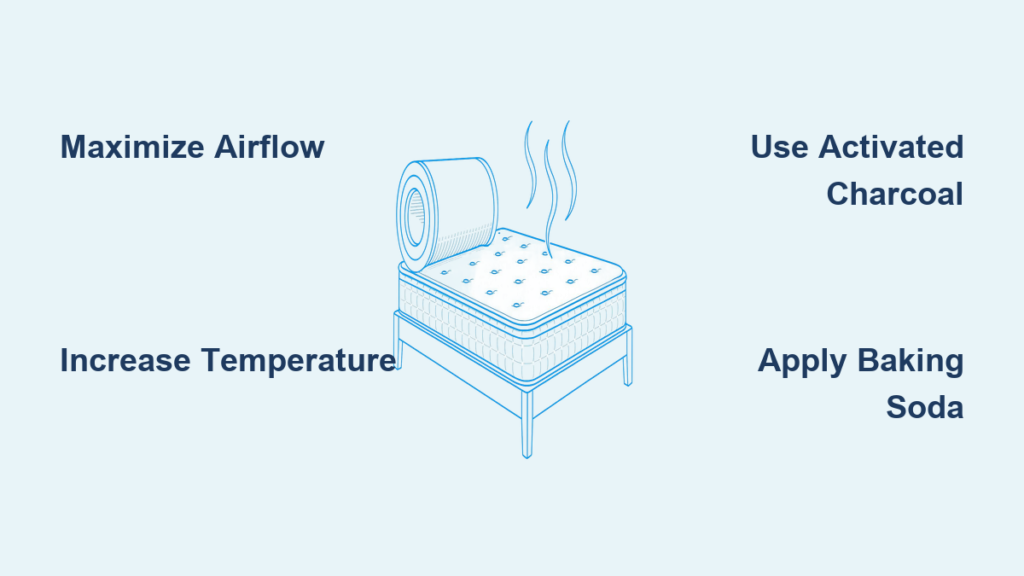
That distinct “new mattress smell” can make your bedroom feel more like a chemistry lab than a restful sanctuary. You’re not alone if the chemical odor from your new mattress has you wondering about the air you’re breathing while you sleep. This off-gassing comes from volatile organic compounds (VOCs) trapped during manufacturing and packaging, and while it’s a normal process, waiting weeks for your mattress to air out isn’t practical. The good news is you can dramatically accelerate mattress off-gassing using proven techniques that deliver results in days rather than weeks.
Whether you’ve just unboxed a memory foam, hybrid, or latex mattress, these science-backed methods will help you create a healthier sleep environment much faster. Most users experience significant odor reduction within the first week when implementing these strategies correctly, transforming what typically takes 30 days into a process that resolves in just 7-10 days.
Strategic Airflow Solutions That Actually Work
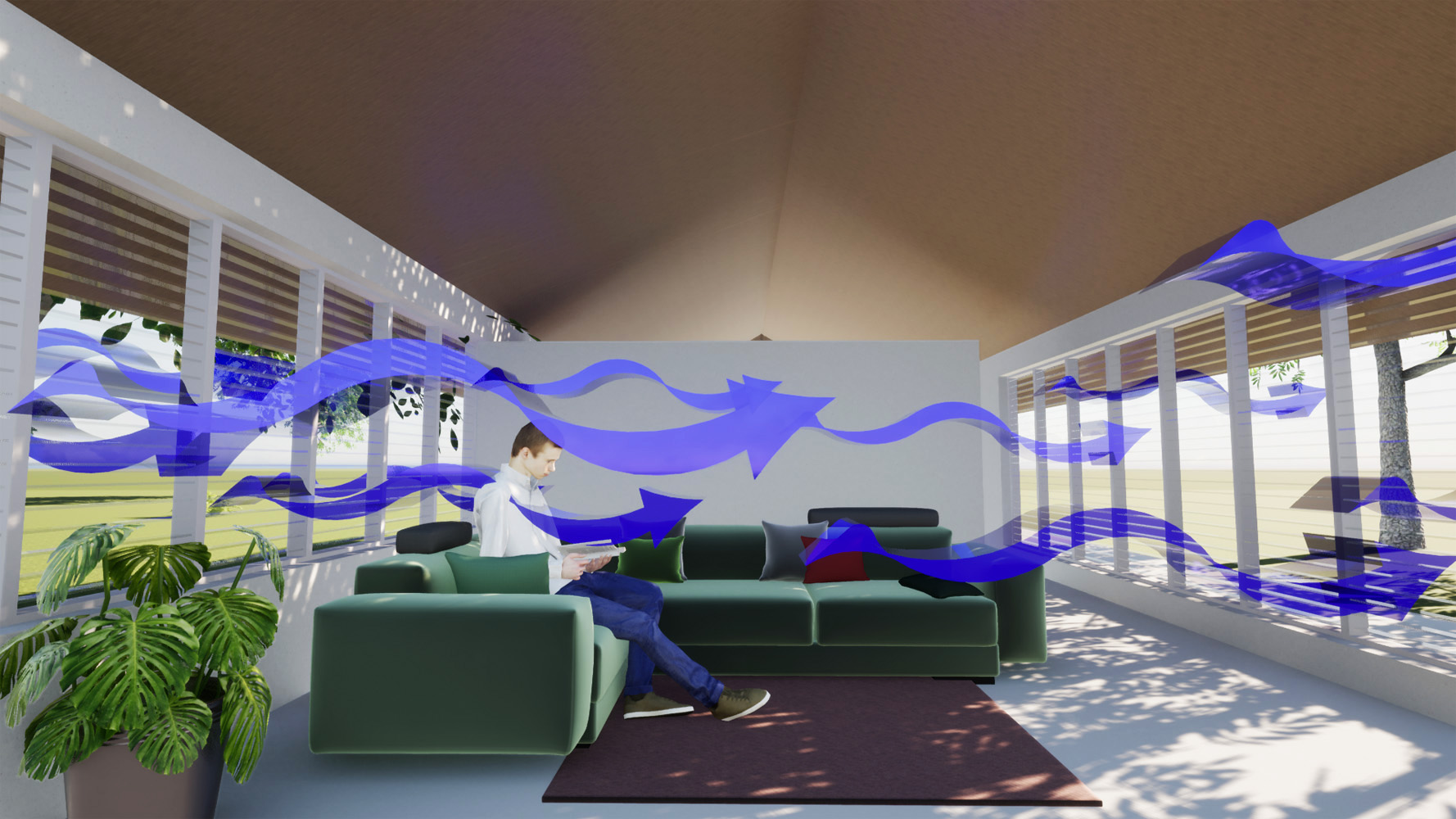
Maximizing air circulation around your mattress is the single most effective way to speed up off-gassing, and it requires no special equipment. When fresh air moves continuously across the mattress surface, it carries away VOC molecules as they evaporate, preventing reabsorption into the foam.
Position fans strategically to create cross-ventilation by placing one fan blowing toward the mattress from one side of the room and another fan positioned to exhaust air out an opposite window or doorway. This setup creates a steady airflow path that pulls fresh air through and around your mattress continuously. Run these fans 24 hours a day during the active off-gassing period, switching their direction occasionally to ensure all areas receive adequate airflow. For best results, place fans 2-3 feet from the mattress surface to maximize air movement without creating excessive noise.
Open windows and doors throughout your home to maximize fresh air exchange. Even on days when outdoor air quality is moderate, the continuous replacement of indoor air with outdoor air dramatically accelerates VOC dissipation. If your bedroom has only one window, consider using a door fan to pull air from the hallway or adjacent rooms, creating a one-way airflow pattern that constantly introduces fresh air to the space.
Elevate your mattress to allow air to reach the underside, which is often trapped against the box spring or platform bed. Prop the mattress upright against a wall or place it on a slatted bed frame that allows air circulation beneath. For mattresses on adjustable bases, elevating the head section slightly can improve airflow around the upper portion of the mattress. This simple step can reduce off-gassing time by up to 30% compared to leaving your mattress flat on a solid surface.
Temperature and Sunlight Acceleration Techniques
Heat significantly accelerates off-gassing because higher temperatures increase the rate at which VOC molecules evaporate from foam surfaces. By strategically raising the temperature around your mattress, you can dramatically speed up chemical release without damaging components.
Expose your mattress to direct sunlight whenever possible, as sunlight provides both heat and ultraviolet radiation that helps break down certain chemical compounds. Place your mattress near a sunny window or, if weather permits, move it outdoors to a covered patio where it can receive several hours of direct sunlight. The sun’s warmth penetrates the foam layers, driving VOC molecules toward the surface where they can escape. Limit outdoor sessions to 4-6 hours and rotate the mattress periodically to prevent uneven fading of the cover.
Use space heaters to raise room temperature in cooler climates, maintaining a temperature between 75-85°F (24-29°C). This elevated temperature range can double or triple the off-gassing rate compared to normal room temperature. Position heaters safely away from the mattress and any flammable materials, and never leave heating devices unattended. A programmable thermostat helps maintain consistent elevated temperatures while conserving energy when you’re away.
For spot treatment of particularly smelly areas, use a hair dryer on low or medium heat. Keep the dryer moving constantly to avoid overheating any single spot, maintaining a distance of 6-8 inches from the mattress surface. This technique provides immediate but localized results and works best as a supplement to broader temperature strategies.
Activated Charcoal and Absorption Methods That Deliver Results

Activated charcoal excels at trapping VOC molecules, making it an excellent tool for absorbing off-gassing odors and pulling residual chemicals from the air. Unlike masking agents that simply cover up smells, activated charcoal physically adsorbs a wide range of organic compounds.
Place bowls of activated charcoal around and on top of your mattress to create localized absorption zones. Use large, shallow containers that maximize the charcoal’s surface area exposure to the air. Replace the charcoal every 2-3 days during the active off-gassing period, as the pores become saturated and lose effectiveness. For more concentrated application, wrap activated charcoal in cheesecloth and tuck it between the mattress and mattress pad.
Activated charcoal mattress pads offer convenient, continuous absorption without managing loose charcoal. These products feature a layer of activated charcoal integrated into a washable fabric cover that sits directly on your mattress surface. Look for pads with at least 100 grams of activated charcoal per square yard for adequate absorption capacity.
Consider activated charcoal air purifier filters for whole-room treatment. Portable air purifiers with activated charcoal filters process the entire volume of air in your bedroom, capturing VOCs as they disperse from the mattress. Place the purifier as close to the mattress as possible, and run it continuously on the highest acceptable noise level. HEPA filters combined with activated charcoal provide the most comprehensive air cleaning.
Baking Soda Treatment Protocol for Maximum Effectiveness

Baking soda neutralizes odors through a mild chemical reaction that breaks down acidic VOCs released by polyurethane foam mattresses. Unlike activated charcoal, which adsorbs molecules without changing them, baking soda actually neutralizes certain compounds.
Apply a thick layer of baking soda directly to the mattress surface to draw out odors from deeper foam layers. Remove all bedding and sprinkle baking soda generously over the entire surface, paying extra attention to areas with strongest odor. Allow it to sit for 8-12 hours, ideally overnight, then vacuum thoroughly using the upholstery attachment with multiple passes to remove all residue.
Enhance baking soda’s effectiveness by mixing it with a few drops of essential oils before application. Use only 10-15 drops per cup of baking soda to avoid overwhelming the mattress with oil residue. Alternatively, add a tablespoon of cornstarch to the mixture, which helps absorb moisture and keeps the application drier.
Repeat the baking soda treatment every 2-3 days during the first two weeks. Each application draws out additional VOCs that have migrated from deeper foam layers to the surface. Most users report significant improvement after just 2-3 treatments when combined with increased airflow and temperature elevation.
Critical Safety Precautions During Off-Gassing
While accelerating mattress off-gassing is generally safe, certain precautions protect both your health and your investment. Never use harsh chemicals like bleach, ammonia, or commercial odor eliminators directly on your mattress, as these can degrade foam materials and create dangerous chemical reactions.
Maintain adequate ventilation throughout the acceleration process, even in colder weather. While elevated temperatures speed off-gassing, enclosed spaces with accumulating VOCs can reach uncomfortable concentrations. If you must keep windows closed, run exhaust fans continuously and use air purifiers. Consider temporarily sleeping in another room during peak off-gassing days, particularly if you experience respiratory symptoms.
Protect your mattress from moisture during treatment applications. Liquid spills or excessive moisture can promote mold growth inside foam mattresses. Keep baking soda applications dry, and never apply water-based solutions directly to the mattress surface. If cleaning the mattress cover, use a minimal amount of water on a damp cloth, and allow thorough drying before resuming treatments.
Realistic Timeline for Complete Off-Gassing
Implementing these methods together produces the fastest results with this realistic timeline:
Days 1-3: Maximum off-gassing occurs. Run fans continuously, open windows, apply first baking soda treatment, and consider sleeping elsewhere if odor is overwhelming. Expect strongest smell during this period despite your efforts.
Days 4-7: Significant odor reduction typically occurs as peak VOC releases complete. Continue fan circulation and baking soda treatments every 2-3 days. You may be able to sleep in the room again, though sensitive individuals might still notice mild residual odor.
Weeks 2-4: Off-gassing continues at reduced intensity. Maintain airflow with fans or ceiling circulation, and your mattress should be comfortable for regular use.
By combining strategic airflow, temperature elevation, and absorption methods, you can transform what typically takes 3-4 weeks into a process that resolves in just 7-10 days. The key is consistent application of multiple techniques rather than relying on any single method. Your patience during this acceleration process rewards you with a comfortable, healthier sleep environment for years to come.