When your infant struggles to breathe or experiences acid reflux during sleep, you want fast, safe relief. Inclining a crib mattress can help gravity work in your baby’s favor—draining nasal passages, easing congestion, and keeping stomach contents where they belong. However, improper elevation creates serious safety risks, from suffocation hazards to dangerous sleep positions. This guide walks you through every safe method, critical precautions, and age-specific considerations so you can help your baby sleep more comfortably without compromising their safety.
The techniques outlined here work for both congestion relief and acid reflux management, though the optimal angle differs between these conditions. Before implementing any incline, always consult your pediatrician to ensure elevation is appropriate for your baby’s specific health needs. With the right approach, you can create a safer sleep environment that helps your little one breathe easier and rest more peacefully.
Why Incline a Crib Mattress for Reflux and Congestion Relief
Infants face unique breathing challenges that make slight elevation beneficial in certain situations. Babies are obligate nasal breathers for the first several months of life, meaning they breathe exclusively through their noses when asleep. This makes congestion particularly distressing—even minor blockages can disrupt sleep and breathing. Elevating the head end of the crib mattress aids natural drainage of nasal passages, helping mucus flow away from airways rather than pooling where it causes problems.
Beyond congestion relief, incline positioning helps manage infant acid reflux, which often worsens at night when stomach acid concentration is higher. When a baby lies completely flat, gravity no longer helps keep stomach contents contained, allowing acid to flow backward into the esophagus and throat. This creates discomfort that disrupts sleep and can cause irritation. A slight elevation lets gravity work as it should, keeping acid where it belongs and reducing the chance of painful reflux episodes.
The elevation angle you choose depends on whether you’re addressing congestion, reflux, or both. For pure congestion relief, research suggests maintaining an incline between 15 to 30 degrees—enough to prevent fluid pooling without creating an unsafe sleep slope. Acid reflux typically requires more elevation, around 30 to 45 degrees, to effectively keep stomach contents down. Never use a steep incline thinking more elevation means better results; steeper angles increase the risk of your baby sliding into dangerous positions or rolling onto their side unintentionally.
Finding the Perfect Elevation Angle

Getting the angle right matters enormously for both effectiveness and safety. Too shallow, and you won’t achieve meaningful relief for your baby. Too steep, and you create fall risks, sliding hazards, and potential breathing obstructions. The following guidelines represent the consensus from pediatric safety research and should serve as your starting point.
For infants suffering from acid reflux, elevate the head of the mattress approximately 30 to 45 degrees higher than the foot end. This steeper angle creates enough gravitational assistance to keep stomach acid from flowing backward while your baby sleeps. Some sources identify 30 degrees as the optimal middle ground—enough to make a real difference without creating an excessively steep slope that compromises safety.
Congestion relief requires a gentler approach. Research indicates that 15 to 30 degrees of elevation effectively prevents nasal fluid pooling while maintaining safe sleep conditions. At this angle, gravity encourages drainage without creating the sliding risks associated with steeper inclines. Staying within this range keeps your baby’s airway clear while preserving the flat, firm sleep surface that pediatricians recommend for reducing SIDS risk.
Implementing Safe Crib Mattress Inclination Methods

Adjust Your Crib’s Mattress Platform for Built-in Elevation
Most cribs feature an adjustable mattress support system that allows you to change the height of the sleeping surface as your baby grows. This same mechanism can create an incline without requiring additional products. Start by removing all bedding, including sheets and mattress covers, then lift the mattress entirely out of the crib. Examine the supporting platform beneath the mattress—it may be solid wood or consist of a spring-based system.
Where this platform attaches to the crib frame, you’ll typically find multiple attachment points that allow height adjustment. The key is maintaining the head portion at its current height while lowering the foot portion one or two positions. This creates a gradual incline across the mattress surface rather than a sharp bend or fold. Once you’ve adjusted the platform, replace the mattress and verify that it sits securely without gaps along the edges. Test the stability by pressing firmly on various points of the mattress surface.
This method works well because it maintains a flat, firm sleep surface throughout—no bending, folding, or soft spots that could create hazards. The incline is inherent to the crib’s structure, meaning there’s nothing that can shift, slide, or compress during the night.
Install a Certified Crib Wedge for Reliable Elevation
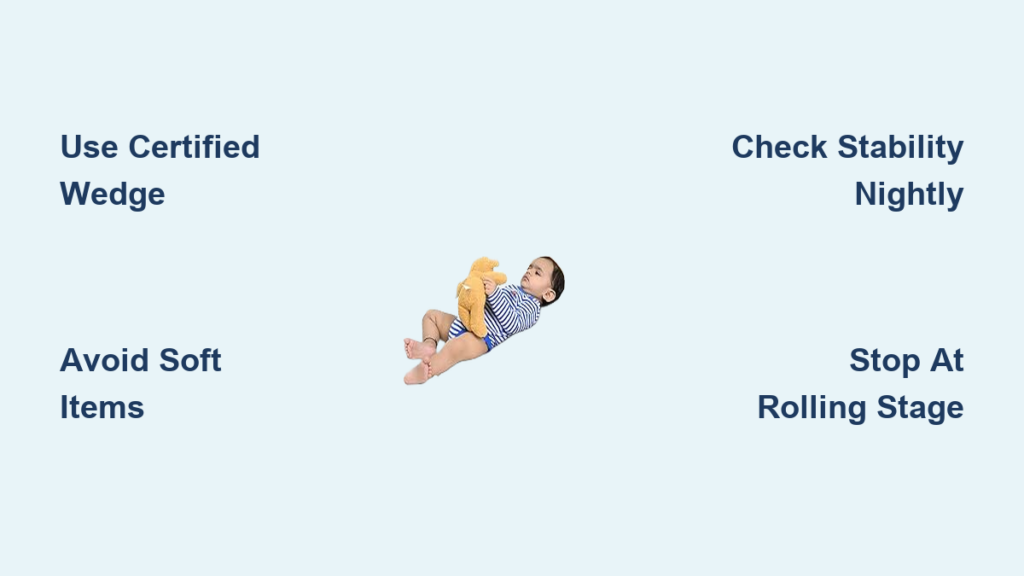
Crib wedges are engineered specifically for this purpose, manufactured to comply with safety standards, and tested to ensure they don’t shift during use. These foam wedges fit beneath the mattress at the head end, creating a stable, consistent incline that won’t compress or move when your baby settles into sleep. When selecting a wedge, prioritize products specifically designed for crib use rather than generic foam wedges that may not meet safety specifications.
Position the wedge under the mattress, never on top of it. Placing elevation devices on top of the sleep surface creates suffocation hazards and unstable conditions. Once the wedge is in place, carefully lower the mattress onto it, ensuring the fit is snug and secure. Check that no gaps exist between the mattress edges and the crib sides—these gaps could create entrapment hazards. Also verify that the wedge doesn’t cause the mattress to tilt excessively or become unstable when weight is applied.
Use Rolled Towels Only as a Short-Term Solution
When a proper wedge isn’t immediately available, rolled towels can serve as a short-term solution. However, this approach requires careful implementation and should only continue until you can obtain a designed product. The towels must create a gentle, stable elevation without any risk of shifting or compressing under your baby’s weight.
Roll thick bath towels tightly and place them beneath the mattress at the head end. You may need two or three rolled towels stacked to achieve the desired height, depending on the towel thickness and your target angle. Before placing your baby in the crib, test the stability thoroughly—press down firmly on the mattress and check that the towels don’t compress, shift, or create uneven surfaces. The elevation should be consistent across the width of the mattress, with no high or low spots.
This method carries more risk than designed products because towels can unravel, compress, or shift during the night. Use it only as a bridge solution, not a permanent arrangement. Monitor your baby closely if you must use this method, and replace it with a proper wedge or platform adjustment at the earliest opportunity.
Tilt the Entire Crib for Maximum Stability
When other methods don’t provide enough elevation or aren’t compatible with your crib’s design, tilting the entire crib may be necessary. This approach offers advantages over inclining just the mattress—the sleep surface remains completely flat, reducing sliding risks and maintaining proper spinal alignment for your baby. However, it requires careful attention to stability and safety.
Begin by removing any wheels from the crib legs, as wheels compromise stability when the crib is tilted. Next, place solid supports beneath the two legs at the head end of the crib. The supports must be completely solid and unable to compress or break under weight—bricks with holes that the legs can sit in have proven effective for many parents. Depending on your crib design, a height increase of approximately six inches at the head end typically provides the appropriate tilt angle.
Once the supports are in place, test the crib’s stability vigorously before allowing your baby to sleep in it. Push firmly on various points of the crib frame to ensure it won’t tip, rock, or shift. Check that all four legs remain in solid contact with the floor or supports.
Avoid These Dangerous Crib Inclination Mistakes

Never Use Soft Items for Elevation
Pillows, stuffed animals, and blankets placed under or around your baby create severe suffocation risks and should never be used for elevation. These soft items can cover your baby’s face, restrict breathing, or shift during sleep into dangerous positions. A baby mattress should never bend or fold in the middle, as this creates both a health risk and an unstable sleeping surface that could lead to falls or trapped limbs.
Never place pillows and sheets in the cot with a newborn to prop them up, regardless of how comfortable the positioning seems. The risks of suffocation, getting caught in material, and unsafe sleep positions far outweigh any potential benefit. Blankets used for elevation also increase SIDS risk and should be avoided entirely.
Ensure Your Setup Remains Stable All Night
Regardless of which elevation method you choose, stability is non-negotiable. Check regularly that no gaps exist between the mattress edges and the crib sides—these spaces could trap your baby’s limbs or head. Verify that any wedge or support device fits securely and doesn’t shift when weight is applied. The mattress should feel completely flat and stable with no movement, bouncing, or rocking when your baby settles.
If you’re using the crib tilting method, double-check that your supports are solid and cannot compress, break, or shift under the weight of the crib and your baby. Test the setup by pushing firmly on the crib frame from various angles before each use. Even small instabilities that seem insignificant can become dangerous when combined with an inclined position and a moving baby.
Stop Using Inclines Once Baby Develops Rolling Skills
Crib elevation is appropriate from birth until your baby develops the ability to roll over independently. Once your baby can roll from back to front and front to back, the risks associated with incline sleeping increase significantly. A rolling baby on an inclined surface could end up in positions they can’t escape from, creating suffocation, entrapment, or airway obstruction risks.
Most babies develop rolling capability between 4 and 6 months of age, though individual timelines vary considerably. Watch for consistent, intentional rolling during playtime and tummy time—this indicates your baby has developed the strength and coordination that makes incline sleeping unsafe. At this point, discontinue elevation and consult your pediatrician about alternative approaches for managing ongoing congestion or reflux.
Alternative Relief Methods When Inclining Isn’t Appropriate
When inclining isn’t appropriate or sufficient, several complementary approaches can help relieve your baby’s congestion:
- Cold-mist humidifiers add moisture to the air, helping loosen mucus and relieve nasal congestion
- Nasal aspirators provide direct relief by gently removing mucus from your baby’s nasal passages
- Saline drops offer a non-invasive way to thin mucus, making it easier for your baby to clear naturally
Always consult your pediatrician before implementing any new method to address your baby’s congestion or reflux symptoms.
Critical Medical Considerations for Safe Implementation
Before implementing any incline for medical reasons like reflux or congestion, consult your pediatrician to ensure the approach is appropriate for your baby’s specific condition, age, and health status. What works for one infant may not work for another, and your baby’s doctor can help you weigh the benefits against potential risks.
If congestion or reflux symptoms persist despite home interventions, schedule a pediatric appointment. Persistent symptoms could indicate underlying conditions requiring medical treatment, allergies that need identification and management, or structural issues like a deviated septum that benefit from professional intervention.
Final Note: Creating a safe incline for your crib mattress comes down to choosing the right method for your situation, maintaining vigilance about stability and positioning, and knowing when to transition to other approaches. With proper implementation and ongoing attention, incline sleeping can be an effective tool in your parenting arsenal—just one part of a comprehensive approach to helping your little one breathe easier and rest better. Always prioritize safety over convenience, and consult your pediatrician with any concerns about your baby’s sleep position or health.