Waking up to musty odors or visible mold spots underneath your floor mattress isn’t just unpleasant—it’s a serious health hazard waiting to happen. When you place a mattress directly on the floor, you’ve created the perfect breeding ground for mold: trapped moisture from your nightly sweat (up to a pint of water vapor!), warmth from your body, and zero airflow beneath. The solution isn’t abandoning your minimalist floor bed setup but implementing smart, practical strategies to keep moisture at bay. This guide reveals exactly how to prevent mold on floor mattress setups through proven barrier solutions, airflow techniques, and daily habits that work in any climate.
Why Your Floor Mattress Becomes a Mold Magnet Overnight
Your mattress sits directly on the floor like a sealed lid over a damp environment, trapping the moisture you naturally release while sleeping—roughly a cup of water per night for most people. When this warm, humid air hits your cooler floor surface (especially concrete or tile), condensation forms underneath your mattress where it can’t evaporate. Foam mattresses are particularly vulnerable because their dense structure creates millions of tiny pockets where mold spores thrive undisturbed.
The problem intensifies in bedrooms with poor ventilation or high humidity levels. Without any space for air to circulate beneath your mattress, you’ve essentially built a “warm, damp sandwich” that mold finds irresistible. This moisture trap happens faster than you might think—even in moderately humid rooms, significant condensation can develop overnight when your mattress completely seals against the floor.
Spot Mold Before It Takes Over Your Floor Bed
Don’t wait for visible black spots to confirm mold growth—catch it early with these simple detection methods. Press your palm firmly into your mattress right after waking up; if it feels damp or retains your hand’s impression, moisture is accumulating dangerously. Musty odors that linger even after airing out your room, unexplained allergy symptoms that improve when you leave home, or subtle discoloration on the mattress underside all signal trouble brewing.
For a more precise assessment, place an inexpensive hygrometer (under $15) right next to your mattress near floor level—not on a dresser or shelf. If readings consistently exceed 60% relative humidity at mattress height, you’re essentially trying to keep things dry in a sauna. These early warning signs give you the crucial window needed to implement prevention strategies before mold penetrates deep into your mattress where cleaning becomes nearly impossible.
Choose Mold-Resistant Mattresses for Floor Sleeping

Not all mattresses handle floor placement equally well—your material choice dramatically impacts mold risk. Thin futons and shikibutons made with breathable natural fibers like cotton or wool are designed for regular airing and folding, making them far superior to dense memory foam blocks when sleeping directly on the floor. Innerspring mattresses offer better internal airflow than solid foam but still require protection from floor moisture.
Memory foam demands extra attention—even in dry climates, weekly airing is essential because its dense structure traps moisture in tiny air pockets that become mold havens. If you’re committed to floor sleeping, avoid thick pillow-top or all-foam mattresses that lack breathability. Remember that placing any mattress directly on the floor may void your warranty, as manufacturers typically require proper bed frame support for adequate airflow and structural integrity.
Install Waterproof Barriers That Actually Work

A fully encased waterproof mattress protector is your first line of defense against floor moisture infiltration. Look for models featuring TPU (thermoplastic polyurethane) sandwiched between soft fabrics—these prevent moisture penetration while avoiding the crinkly noise of older plastic protectors. For floor mattresses specifically, dedicated moisture barrier sheets made from PEVA or TPU with textured undersides create crucial airflow channels while blocking floor moisture.
Shower curtain liners made from PEVA serve as budget-friendly alternatives when placed between floor and mattress, though they lack specialized features like antimicrobial treatments. Traditional Japanese tatami mats offer natural moisture regulation—woven rush grass over compressed rice straw absorbs excess humidity when air is damp and releases it when conditions dry. Coconut coir mats provide similar benefits with their dense, ventilated structure that lifts your mattress slightly while allowing air movement.
Elevate Your Mattress Just Inches for Maximum Airflow
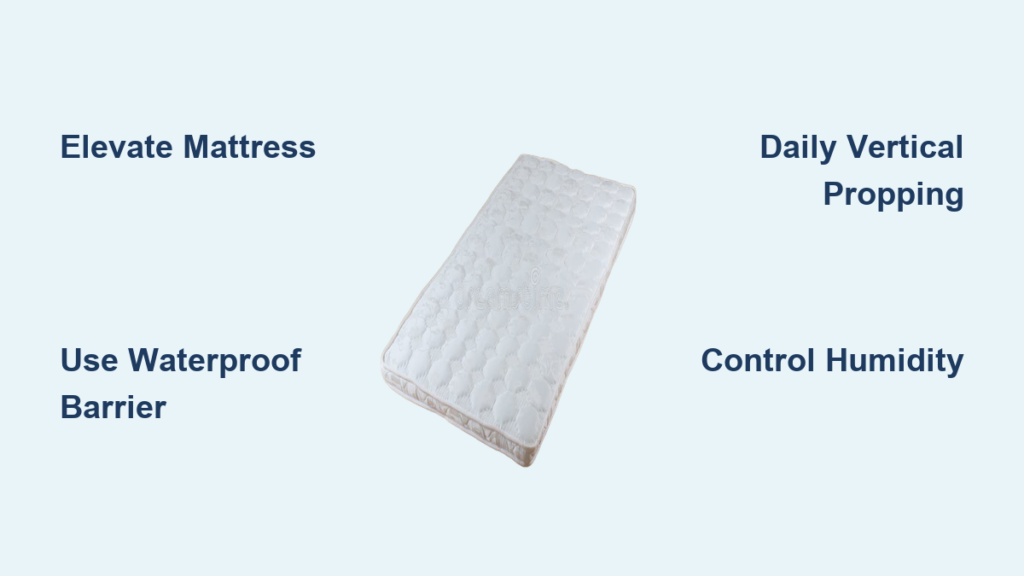
Even minimal elevation dramatically reduces mold risk by creating space for air circulation beneath your mattress. Slatted platforms with 2-3 inch spacing between wooden slats offer the ideal balance—typically rising just 3-7 inches while maintaining your floor bed aesthetic. Bunkie boards work if they’re slatted versions (multiple wood slats covered with breathable canvas), not solid particleboard that traps moisture.
For concrete or basement floors, mattress pallets made from properly prepared wood or bamboo create essential airflow channels. Modern ventilated bases with honeycomb structures provide continuous airflow while adding only 1-2 inches of height—perfect for maintaining your low-profile setup. If you’re concerned about aesthetics, ultra-low foundations give the appearance of intentional design while providing practical elevation benefits.
Implement the Vertical Propping Technique Daily
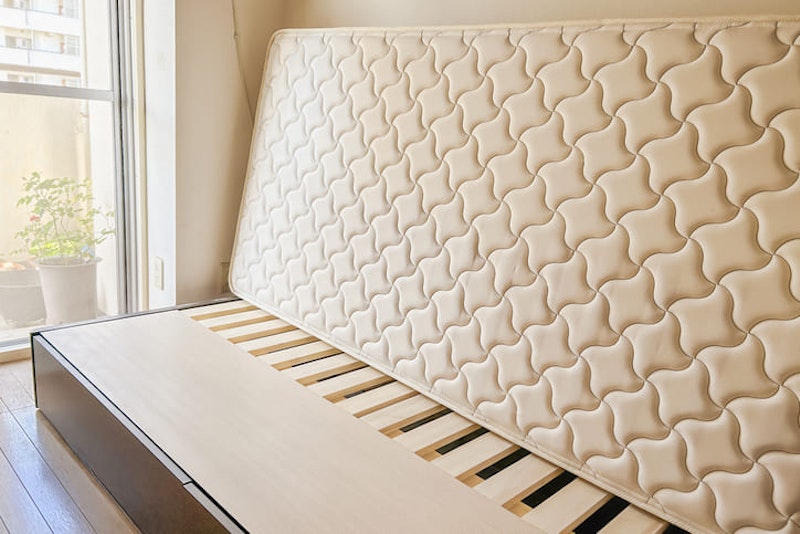
This single habit makes the biggest difference in preventing floor mattress mold: prop your mattress vertically against a wall each morning for 15-30 minutes. Strip all bedding first, then lean your mattress upright so both sides can breathe while you get ready for the day. In humid climates, extend this to 2-5 hours weekly for deeper drying.
Many cosleeping families incorporate this into their morning routine—while children eat breakfast, parents stand the mattress against the wall with a fan blowing across it. Set a phone reminder if needed; this simple daily habit prevents the slow moisture buildup that leads to serious mold problems. Even this brief vertical airing allows trapped moisture to escape before it penetrates deep into your mattress where cleaning becomes impossible.
Establish Weekly Deep Airing Sessions
Your weekly reset should be more thorough than daily propping. Completely strip the mattress, flip it over so last week’s underside becomes the top, and rotate it head-to-foot for even wear. Prop it at an angle against the wall for several hours, ideally with a fan circulating air around it.
If weather permits, brief outdoor airing in indirect sunlight provides additional benefits—UV radiation helps inhibit mold growth. But avoid direct blazing sun that can damage foam or fade fabric; 30-60 minutes in shaded morning sun is sufficient. While your mattress airs, wipe down the floor surface and any barrier mats underneath to remove dust and debris that trap moisture.
Control Bedroom Humidity Like a Pro
Your room’s environment matters as much as what’s under your mattress. Purchase a hygrometer and place it at floor level near your bed—not on a dresser—to monitor actual mattress conditions. If readings regularly exceed 60% humidity, invest in a compact dehumidifier (30-50 pint capacity for typical bedrooms) to maintain the ideal 30-50% range.
Leave gaps between your mattress and exterior walls for air circulation, and keep laundry drying or humidifiers away from your sleeping area. In extremely humid climates, run the dehumidifier for several hours each morning while you’re out of the room. This simple environmental control reduces condensation on your floor surface, addressing the root cause of moisture buildup under your mattress.
Clean Small Mold Spots Before They Spread
If you catch mold early, you can often save your mattress with proper cleaning. Move it to a well-ventilated area and vacuum the affected area thoroughly with strong suction. For small spots, apply a solution of equal parts white vinegar and water lightly to the surface—never saturate the mattress. Allow it to dry completely in sunlight if possible, as UV rays help eliminate remaining spores.
Never mix vinegar and hydrogen peroxide, as this creates peracetic acid that can damage mattress materials. After treatment, prop your mattress vertically for several days with a fan circulating air to ensure complete drying. If musty odors return within a week, mold has likely penetrated deep into the mattress core, requiring replacement—especially for households with respiratory sensitivities.
Customize Prevention for Your Climate
Humid environments demand more aggressive mold prevention: combine elevated platforms with waterproof barriers, air your mattress 2-3 times weekly, and run a dehumidifier daily. In dry climates, simpler solutions may suffice, though elevation remains crucial for dust control. Concrete and basement floors require special attention—treat them as moisture villains by adding extra airflow layers.
Seasonal adjustments are essential in regions with dramatic climate shifts. During humid summers, increase airing frequency and consider running dehumidifiers overnight. In dry winter months with indoor heating, you might reduce airing frequency but maintain regular rotation to prevent body impressions. Monitor your mattress conditions monthly and adjust your routine accordingly.
Follow This 5-Step Mold Prevention Checklist
Start implementing these essential actions immediately to prevent mold on floor mattress setups:
– Buy a hygrometer and place it at floor level near your mattress
– Install a fully encased waterproof mattress protector today
– Begin daily vertical propping for 15-30 minutes minimum
– If humidity exceeds 60%, prioritize purchasing a dehumidifier
– For concrete or basement floors, add an airflow layer like a slatted platform
Your floor mattress doesn’t have to become a mold factory—by understanding moisture dynamics and implementing these targeted strategies, you can enjoy your minimalist sleeping arrangement without health risks. Remember that preventing mold on floor mattress setups ultimately comes down to one principle: stop trapping moisture by giving the underside real airflow on a schedule matching your room’s specific conditions. Your future self (and your lungs) will thank you when you avoid the frustrating game of identifying mysterious musty smells.