Your air mattress deflates in the middle of the night, and when you inspect it, you discover the leak is on the soft felt side—not the smooth vinyl surface you’re used to patching. Standard repair kits seem designed only for the plastic side, leaving you wondering how to properly patch an air mattress on the felt side without causing more damage or creating an unreliable fix. This common camping and guest room dilemma affects millions of users each year, and knowing how to patch an air mattress on the felt side correctly can save you from uncomfortable nights and unnecessary replacements.
Unlike the smooth vinyl surface that accepts standard patches easily, the felt side presents unique challenges with its textured surface and fabric-like composition. Most people make the critical mistake of applying regular vinyl patches directly to the felt, only to have them peel off within hours. The right approach requires understanding the material differences and using appropriate adhesive techniques that bond with the porous felt surface while maintaining the mattress’s flexibility. In this guide, you’ll learn the specific materials needed, preparation steps that make the difference between a temporary fix and a permanent solution, and professional techniques that ensure your patch holds through multiple inflations.
Why Felt-Side Repairs Require Special Techniques
Material Differences Between Felt and Vinyl Surfaces
The felt side of your air mattress isn’t just a different color—it’s a completely different material composition that demands specialized repair approaches. While the smooth side uses a non-porous PVC or TPU layer that standard patches adhere to easily, the felt side consists of a woven fabric backing bonded to the air chamber. This porous, textured surface prevents conventional vinyl patches from creating a proper seal because the adhesive can’t penetrate the fibers effectively. When you attempt to patch an air mattress on the felt side with standard supplies, the patch typically lifts at the edges within hours as air pressure pushes against the inadequate bond.
Consequences of Improper Felt-Side Patching
Using the wrong repair method on the felt side creates multiple problems beyond just the patch failing. Standard vinyl patches applied directly to felt often peel off completely during use, leaving behind sticky residue that’s difficult to remove and compromises future repair attempts. More seriously, improper patching can damage the underlying air chamber as the peeling patch pulls at the bonded layers, potentially creating larger tears. Many users discover too late that their quick fix has expanded the original leak, requiring more extensive repairs or complete replacement of the mattress.
Essential Supplies for Felt-Side Air Mattress Repair

Specialized Adhesives That Bond with Felt Material
Standard rubber cement won’t cut it when you need to patch an air mattress on the felt side. You need a flexible adhesive specifically formulated to bond with both porous fabrics and vinyl materials. Contact cement with neoprene base works best because it creates a permanent, flexible bond that moves with the mattress material. Marine-grade epoxy designed for inflatable boats also proves effective as it cures to a rubbery consistency that withstands repeated flexing. Avoid super glue or household adhesives that become brittle—these will crack when the mattress bends during use.
Correct Patch Material Selection
Forget the standard PVC patches included in most repair kits—these will fail on felt surfaces. For successful felt-side repairs, you need patches made from flexible, fabric-reinforced material. Look for patches specifically labeled for “fabric surfaces” or “textured materials” that contain a woven backing similar to your mattress’s felt layer. Emergency alternatives include cut pieces from an old inner tube (for the flexible rubber base) topped with a thin fabric patch to create a composite repair. The patch must be at least 1 inch larger than the leak on all sides to ensure proper adhesion to the porous felt surface.
Step-by-Step Felt-Side Repair Process
Preparing the Felt Surface Properly
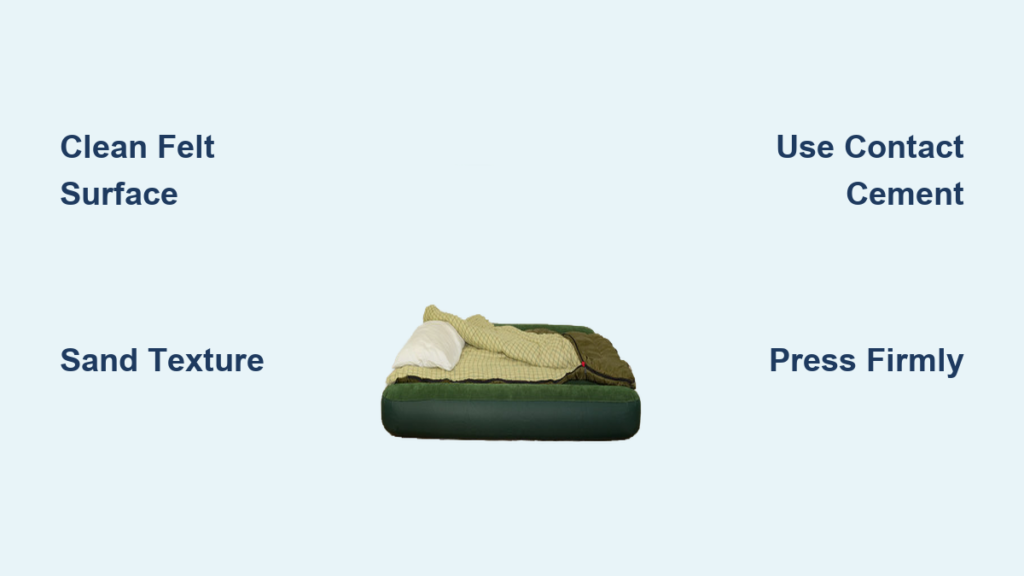
Proper surface preparation makes or breaks your attempt to patch an air mattress on the felt side. Start by thoroughly cleaning the area with rubbing alcohol to remove body oils and dirt that prevent adhesion—this step is critical because felt absorbs contaminants more readily than vinyl. Next, gently abrade the surface with fine-grit sandpaper to open the fabric fibers without damaging the underlying air chamber. This creates microscopic channels for the adhesive to penetrate. Finally, ensure the area is completely dry before proceeding, as moisture trapped under the patch causes premature failure.
Applying Adhesive and Patch Correctly
The application technique differs significantly from standard vinyl repairs when you patch an air mattress on the felt side. Apply a thin, even layer of contact cement to both the prepared felt surface AND the back of your patch material—this double-coating method is essential for porous surfaces. Allow the adhesive to become tacky (about 10-15 minutes) before positioning the patch. When placing the patch, start from the center and work outward to eliminate air bubbles, then apply firm, even pressure across the entire surface for at least two minutes. Place a heavy book on the patch for 24 hours to maintain consistent pressure as the bond cures.
Troubleshooting Common Felt-Side Repair Failures

Why Your Patch Keeps Peeling Off
If your patch fails despite following proper technique, the most likely culprit is insufficient surface preparation. Felt surfaces require more thorough cleaning and abrasion than vinyl to achieve proper adhesion. Another common issue is using patches that are too small—remember that felt’s porous nature requires larger overlap areas than smooth surfaces. Humidity during application can also compromise the bond, as contact cement performs best in dry conditions. When troubleshooting, examine the failed patch: if adhesive remains primarily on the patch rather than transferring to the mattress, you didn’t allow enough drying time before application.
Fixing Residue Left by Failed Patches
Previous failed attempts to patch an air mattress on the felt side often leave behind stubborn adhesive residue that prevents new patches from bonding properly. Remove this residue using mineral spirits or specialized adhesive removers, applied with a soft cloth in gentle circular motions. Avoid harsh scrubbing that could damage the felt fibers. For particularly stubborn residue, apply a small amount of cooking oil, let it sit for 10 minutes to break down the adhesive, then clean thoroughly with rubbing alcohol to remove any oil film before attempting a new repair.
Preventing Future Felt-Side Damage

Proper Handling Techniques for Felt-Surface Mattresses
Understanding how to handle your air mattress prevents the need to patch an air mattress on the felt side repeatedly. Always place a protective ground cloth beneath camping mattresses to prevent abrasion from rough surfaces. When storing, roll the mattress with the felt side out to reduce stress on the bonded layers. Never drag the mattress across surfaces—lift it instead—as the felt side picks up debris that creates micro-tears during movement. These simple habits significantly extend your mattress’s lifespan and prevent the leaks that require complex felt-side repairs.
Emergency Field Repairs When Proper Supplies Are Unavailable
When you need to patch an air mattress on the felt side during a camping trip without proper supplies, create a temporary field repair using available materials. Apply clear nail polish over the leak to seal small holes temporarily—multiple thin coats work better than one thick application. For larger tears, use duct tape with the sticky side against the felt surface (not the vinyl side), smoothing it carefully to eliminate air pockets. Remember that field repairs are temporary; perform a proper permanent repair with appropriate materials as soon as possible.
Final Note: Successfully patching an air mattress on the felt side requires understanding the material differences and using appropriate bonding techniques. By preparing the porous surface correctly, selecting flexible adhesives designed for fabric materials, and applying proper pressure during curing, you can create repairs that last through multiple seasons of use. Remember that prevention through proper handling and storage reduces the need for frequent repairs. When performed correctly, a well-executed felt-side patch becomes virtually invisible after curing and withstands normal use without compromising your comfort. For best results, inspect your air mattress before each use and address small leaks immediately before they require more extensive repairs.