Moving a foam mattress topper requires specialized handling that most people overlook. Unlike regular bedding, foam materials respond dramatically to temperature changes, compression, and improper storage—with one mistake potentially causing permanent damage that ruins its supportive structure. Whether you’re relocating across town or shipping items internationally, knowing how to pack a foam mattress topper correctly protects your investment and prevents costly replacements. This guide reveals three proven methods that work for all foam types including memory foam, latex, and polyfoam constructions.
The process demands more than simply stuffing your topper into a bag. Foam mattress toppers need careful preparation, appropriate materials, and specific techniques to survive transport without losing their shape or support. The good news is that with the right approach, you can reduce a bulky topper to a manageable size while keeping it completely protected. We’ll cover the exact steps professionals use, helping you choose the best method based on your available tools and timeline.
Gather Proper Packing Supplies Before Starting
Before you touch your foam mattress topper, assemble all necessary materials to avoid mid-process interruptions. The specific supplies depend on your chosen compression method, but certain essentials appear across all approaches.
Heavy-duty vacuum storage bags specifically rated for compressed items form the foundation of the most space-efficient packing method. Standard vacuum bags won’t accommodate a full mattress topper and may tear under pressure. If vacuum bags aren’t available, heavy-duty 30-gallon garbage bags serve as an affordable alternative. You’ll also need securing mechanisms like bungee cords, ratchet straps, or heavy packing tape depending on your method.
Beyond bags and straps, collect protective materials including plastic wrap, cardboard sheets, and a permanent marker for labeling. A vacuum cleaner with a hose attachment becomes essential for the vacuum sealing method, while a box cutter helps with unpacking later. Add silica gel packets to any sealed container—they absorb residual moisture that could otherwise promote mold growth during storage.
Prepare Your Topper with Temperature Control
A clean, temperature-acclimated topper packs better and arrives in better condition. Start by laying your foam topper flat on a clean surface and thoroughly vacuuming the entire surface using an upholstery attachment to remove dust, dead skin cells, and debris. If washable (check the manufacturer’s care tag), spot-clean stains with mild detergent and lukewarm water, avoiding saturation.
After cleaning, allow the topper to air dry completely in a well-ventilated area for 24 to 48 hours—packing a damp topper guarantees mold growth. Once dry, inspect carefully for existing damage, marking problem spots with tape for later assessment.
Temperature acclimation proves critical. Foam becomes rigid and brittle when cold, prone to cracking during compression. If stored in a cold environment, bring it into room temperature (65-75°F) for at least four to six hours before packing. Similarly, avoid packing during extreme heat when foam becomes overly soft and difficult to handle.
Why Temperature Matters for Memory Foam
Memory foam’s unique temperature sensitivity means it responds differently to compression based on ambient conditions. Cold memory foam resists compression and may develop permanent cracks, while warm foam compresses more easily but risks losing structural integrity if over-compressed. The ideal packing temperature range maintains foam’s cellular structure while allowing sufficient flexibility for compression without damage.
Vacuum Seal Without Damaging Foam Structure
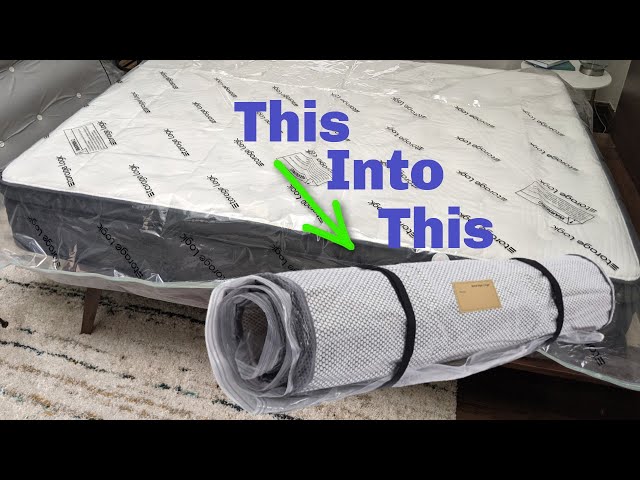
Vacuum sealing provides the most space-efficient packing method, reducing volume by up to 75 percent. This technique works exceptionally well for memory foam and polyfoam toppers, though latex requires more careful handling.
Begin by laying your clean, dry topper flat on a smooth surface. For toppers with convoluted (egg-crate) surfaces, place that side face-down to maximize compression efficiency. Choose between rolling and folding based on thickness—rolling works best for toppers under three inches thick, while thicker toppers often benefit from folding in thirds lengthwise before rolling.
Place your rolled or folded topper into a heavy-duty vacuum storage bag, ensuring adequate size without straining the zipper. Close the zipper completely, then connect your vacuum cleaner to evacuate air until the topper compresses to approximately 25-30 percent of its original volume. Work out stubborn air pockets by gently pressing on the bag while vacuuming continues.
Once complete, immediately seal the valve and wrap the compressed bag in plastic wrap for puncture protection. Label clearly with contents, date, and destination room. For long-term storage, double-bagging provides critical extra protection against leaks.
Critical Compression Limit Warning

Avoid over-compressing beyond 70 percent reduction—while tempting to squeeze out every inch of space, excessive compression permanently damages the foam’s internal cell structure. Your topper may never fully recover its original loft or supportive properties if compressed too aggressively.
Use Garbage Bag and Strap Alternative Method
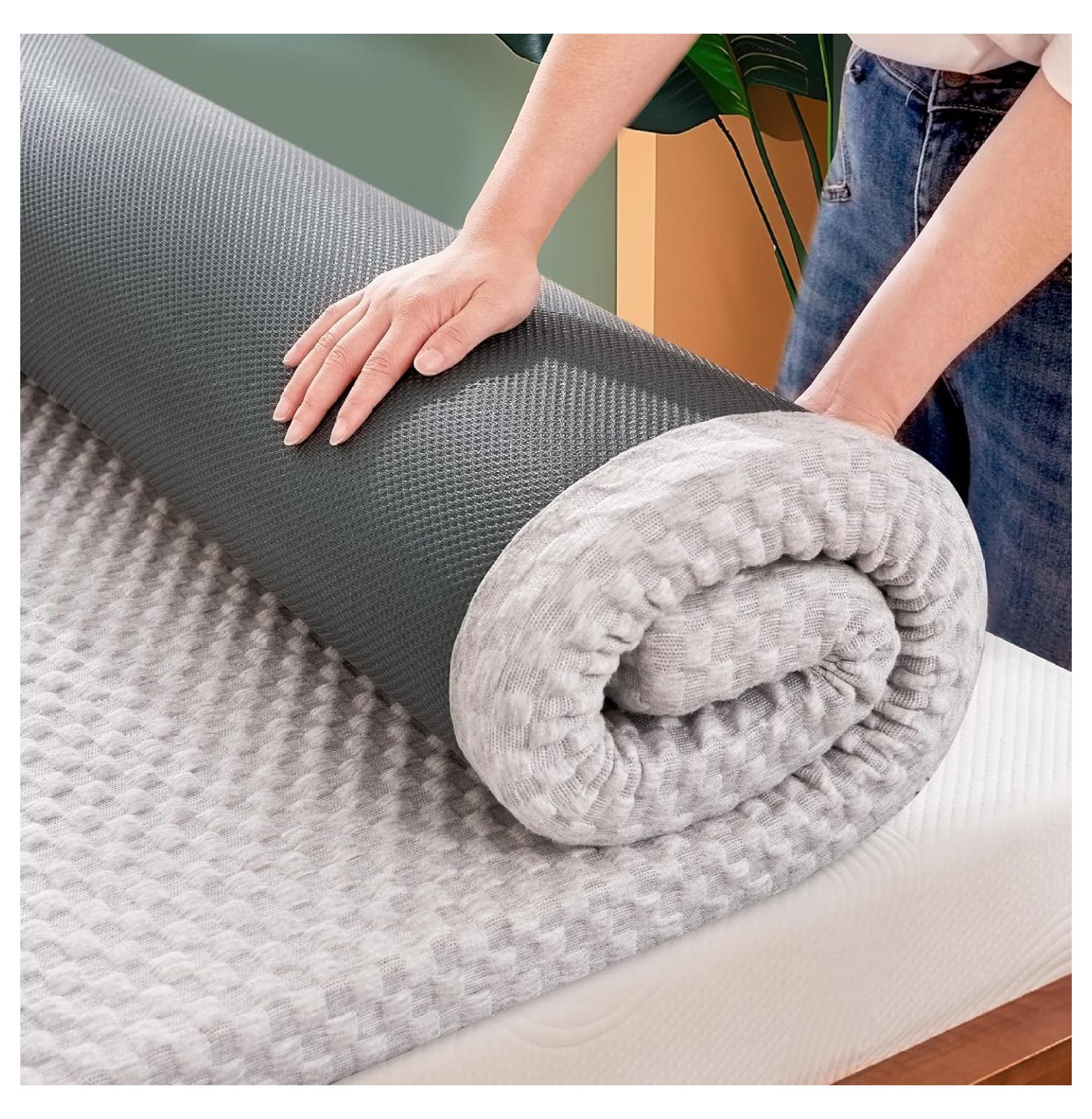
Not everyone has vacuum storage bags, but this household alternative still provides effective compression for short-distance moves.
Place your topper inside nested heavy-duty 30-gallon garbage bags for added durability. Press out excess air by rolling the bagged topper from one end to the other, then secure the bag opening with multiple wraps of heavy packing tape. Wrap bungee cords or ratchet straps around the compressed bundle at 18-inch intervals, tightening enough to maintain compression without tearing the bags. For final protection, wrap the entire bundle in stretch wrap.
This method doesn’t reduce volume as dramatically as vacuum sealing but keeps your topper contained and protected during transport. It works best for local moves where space constraints are less critical.
Transport Without Causing Hidden Damage
How you load and secure your packed topper matters as much as how you pack it. Improper loading can undo all your careful preparation.
When loading into a vehicle, place packed toppers against walls or the perimeter where they receive support from the vehicle structure. Never place heavy items on top—the weight can permanently compress the foam or puncture protective bags. For multiple toppers, place them flat with cardboard layers between for protection. Secure all packed toppers with straps anchored to vehicle tie-down points to prevent shifting during transit.
Climate control during transport proves essential. In hot weather, ensure vehicle ventilation prevents overheating—extreme heat can cause foam to soften and potentially deform. In cold weather, remember that cold foam becomes brittle; handle compressed toppers gently. Add extra silica gel packets during humid weather to absorb moisture.
Store Long-Term Without Foam Degradation
If your packed topper will be in storage for weeks or months, proper conditions make the difference between perfect condition and irreparable damage.
Ideal storage temperatures range from 50 to 75°F, avoiding both extreme heat that degrades foam and extreme cold that makes it brittle. Keep humidity below 60 percent—moisture is foam’s enemy, promoting mold growth. Store packed toppers off the floor on pallets or shelving to protect against moisture from concrete.
Position matters for long-term storage. Whenever possible, store compressed toppers flat rather than standing upright, which can cause uneven compression. If storing upright, rotate periodically to prevent permanent deformation. Never place heavy items on top—the weight will compress the foam permanently.
Avoid These Costly Packing Mistakes
Learning from others’ mistakes helps you avoid permanent damage to your foam mattress topper. The most frequent errors fall into three categories:
Packing a damp topper ranks as the most damaging mistake—moisture trapped inside sealed packaging creates ideal conditions for mold and mildew growth. Beyond health concerns, moisture causes foam to degrade faster and develops persistent odors. Always verify complete dryness before packing.
Over-compression damages foam cell structure permanently. While vacuum sealing can reduce your topper significantly, pushing beyond 70 percent reduction often causes irreversible damage. Your topper will expand more fully and perform better if you respect these limits.
Sharp creases from improper folding create permanent depressions. Foam “remembers” sharp folds, and those creases remain visible long after unpacking. When possible, roll rather than fold, and if folding is necessary, use gentle curves rather than sharp angles.
Unpack and Restore Your Topper Properly
When you reach your destination, follow these steps to ensure proper recovery:
Bring compressed toppers to room temperature for two to four hours before opening. Remove wrapping materials carefully, watching for any tears or damage. Unroll or unfold gently, avoiding sudden movements that could stress the foam. Allow 24 to 48 hours for full expansion before using the topper, and inspect carefully for any damage.
If your topper retains compression shape, allow extra expansion time (up to 72 hours) and gently massage the foam to encourage cell recovery. For unpleasant odors after unpacking, air out in a well-ventilated area for 24-48 hours or sprinkle baking soda before vacuuming.
Following this systematic approach ensures your foam mattress topper arrives ready to provide the same comfortable sleep surface you enjoyed before the move. The extra time invested in proper packing pays dividends in preserved quality and avoided replacement costs.