
That surprisingly compact box sitting in your bedroom seems impossible—how could a full-sized mattress possibly fit inside? You’re not alone in your skepticism; most first-time buyers of bed-in-a-box mattresses can’t believe the tight cylinder they’ve unboxed will transform into a comfortable sleeping surface. This vacuum-sealed, compressed design is intentional—manufacturers roll and seal mattresses to make shipping through doorways and up stairs manageable while protecting the product during transit. When you properly release those plastic layers, your mattress begins a remarkable transformation back to its full size, comfort, and support. This complete guide walks you through every critical step of opening a mattress in a box so you can enjoy optimal comfort as quickly as possible.
The moment you cut the box tape, you’ll discover your mattress tightly rolled and wrapped in multiple protective plastic layers—a normal state that might cause momentary panic if you’re unprepared. This compressed format allows manufacturers to ship queen and king-sized mattresses through standard doorways that would otherwise be impossible with traditional bedding. Understanding what to expect during unboxing prevents common mistakes that could affect performance or even void your warranty. Whether you’ve ordered a memory foam, hybrid, or latex mattress in a box, the unboxing process follows similar principles that, when followed correctly, ensure your investment performs as designed from night one.
Create the Perfect Workspace Before Unboxing
Clear at least two feet of space around your bed frame before attempting to unbox your mattress in a box. This extra room gives you maneuvering space when the rolled mattress begins expanding and prevents accidental damage to walls or nearby furniture. Remove any delicate items from nightstands and dressers in the immediate area—dust and minor debris from the packaging process can scatter during unboxing.
Position Your Foundation Correctly Before Unrolling
Place your bed frame or foundation in its permanent location and verify it’s stable and level before unboxing begins. Mattresses perform best on firm, supportive foundations—slatted frames with gaps no wider than 3 inches, solid platform bases, or box springs specifically designed for your mattress type. For larger sizes like queen and king mattresses, ensure center support legs are properly positioned beneath the frame, as these prevent sagging and uneven wear over time.
Gather Essential Unboxing Supplies Ahead of Time
While you’ll primarily use your hands during unboxing, keep these three items within reach: a pair of scissors (not a box cutter, which could accidentally slice the mattress), a large trash bag for packaging, and a flashlight to inspect corners of the box. Most modern mattress boxes feature perforated sections designed for hand opening, but having scissors available prevents frustration if you encounter stubborn tape. The flashlight helps you spot any folded edges of plastic wrap that might be hidden beneath the rolled mattress.
Execute the Unboxing Process Without Damage
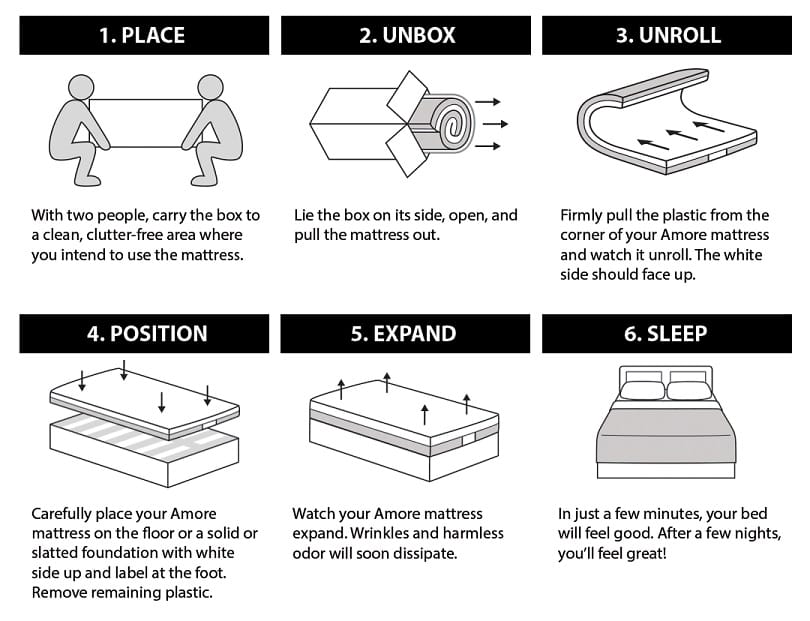
Start by carefully opening the top of the mattress box along the perforated lines or taped seams—never cut downward into the box, as this risks puncturing your mattress. Most manufacturers design boxes with easy-grip tabs that allow you to peel back the cardboard without tools. Once opened, you’ll see the tightly compressed mattress bundle wrapped in several layers of plastic, often with cardboard protectors at both ends.
Identify the Correct Unrolling Orientation
Before extracting the mattress, locate the zipper on the cover—most manufacturers design mattresses with the zipper side intended to face downward when properly installed. This orientation matters for future maintenance like cover removal for cleaning. Also identify the pull-tabs or tucked ends of the plastic wrap, as these are your key access points for releasing the compression without tearing the protective layers.
Unroll the Mattress with Proper Technique
Gently lift the rolled mattress from the box and position it on your foundation with the zipper side down. Grip the plastic wrap firmly at one end and pull steadily to begin unrolling the mattress across your bed frame. The mattress will resist initially due to the vacuum seal, but continuous even pressure causes it to unfurl smoothly. Keep pulling until the mattress lies completely flat, then carefully remove any remaining plastic wrapping from the surface. Work slowly and adjust the mattress position as needed to center it perfectly on your frame.
Maximize Mattress Expansion for Optimal Comfort
Your mattress begins expanding the moment you release it from the plastic wrapping, though reaching full size and firmness takes time. Manufacturers typically recommend allowing two to three hours for the mattress to fully air out and expand before sleeping on it. This waiting period lets the internal foam layers decompress completely and allows any manufacturing odors—the famous “new mattress smell”—to begin dissipating. While you can technically use the mattress immediately, the full expansion time ensures you experience it as designed.
Recognize the Stages of Mattress Recovery
Watch for these visual cues as your mattress expands: In the first 5-10 minutes, the mattress quickly regains about 80% of its thickness as compressed foam decompresses. Over the next two hours, materials settle into their final configuration, and any surface wrinkles in the cover smooth out. Full recovery to rated thickness and firmness typically completes within 24 to 72 hours. During this period, you might notice minor indentations where the mattress was folded—these will disappear as the materials fully expand.
Accelerate Expansion in Challenging Conditions
Temperature significantly affects expansion speed—extreme cold can slow the process considerably. If setting up your mattress in a cool room (below 65°F), increase ambient temperature to 65-75°F using a space heater before unboxing. Warm conditions help foam recover more quickly and ensure you get the full thickness and support your mattress promises. Never use direct heat sources like hair dryers on the mattress, as excessive heat can damage foam layers.
Recycle Mattress Packaging Responsibly
The plastic packaging protecting your mattress is recyclable but requires special handling. This engineered plastic wrap is designed for durability and tear resistance, meaning it doesn’t break down easily in traditional recycling streams. Unlike grocery bags, this packaging often lacks standard plastic resin identification codes, making it trickier to process through conventional programs.
Locate Proper Recycling Options in Your Area
Before tossing packaging in regular trash, contact your local recycling facility about proper disposal procedures. Many communities accept this plastic film in curbside recycling programs if bundled together, while others require drop-off at designated collection centers. Retailers like Target, Walmart, and hardware stores often have collection bins near store entrances specifically for plastic film recycling.
Repurpose Packaging Before Disposal
If recycling isn’t available, find practical reuse options before discarding the packaging. The heavy-duty plastic works perfectly for moving protection, seasonal storage covering, or protecting furniture during home renovations. Many mattress owners repurpose the plastic wrap as drop cloths for painting projects or as temporary ground cover when camping.
Resolve Common Unboxing Challenges Immediately

If your mattress resists expanding fully after unboxing, apply light pressure to compressed areas with your palms to encourage foam recovery. Check room temperature—cold environments cause foam to remain rigid and expand more slowly. Increasing ambient temperature accelerates the process in cool spaces. Never jump on or aggressively manipulate the mattress to speed expansion, as this can damage internal layers.
Address Manufacturing Defects Properly
If you notice tears in the cover, damaged foam layers, or uneven expansion that doesn’t improve after 72 hours, contact the manufacturer immediately with photos and documentation. Most companies have specific procedures for reporting issues and may require inspection before processing claims. Keep all original packaging until you’re certain your mattress is in perfect condition—many warranties require proof of proper unboxing.
Avoid Handle-Related Damage During Setup
Never use the mattress handles for lifting or carrying during unboxing, even though they seem like convenient grips. These handles are designed only for repositioning after the mattress is fully expanded and placed on its foundation. Using handles prematurely can rip stitching or fabric attachment points, potentially voiding your warranty and creating safety hazards.
Critical Mattress Expansion Timeline

| Stage | Duration | What to Expect |
|---|---|---|
| Initial unboxing | 5-10 minutes | Remove from box, unroll onto frame |
| Primary expansion | 2-3 hours | Mattress reaches usable state for sleeping |
| Full expansion | 24-72 hours | Complete recovery to rated thickness |
| Odor dissipation | 2-7 days | Manufacturing smell diminishes with airing |
Opening a mattress in a box requires patience more than expertise—follow these steps precisely and respect the expansion timeline, and you’ll enjoy optimal comfort by nightfall. Taking just 15 minutes to unbox and set up your mattress properly ensures it performs at its best from the very first night and throughout its entire lifespan. The brief waiting period for full expansion delivers years of restful sleep on a mattress that’s recovered completely to its intended design specifications.