
Moving your Nectar mattress requires completely different handling than when it first arrived compressed in its signature box. That initial rolled packaging was engineered for one-time shipping only—once your mattress has fully expanded, attempting to refold or reroll it will cause permanent damage to the foam layers. Unlike traditional innerspring mattresses, memory foam constructions like Nectar’s can’t safely return to a compressed state after expansion. This guide reveals exactly how to move your expanded Nectar mattress while preserving its structural integrity, comfort properties, and crucially, your warranty coverage.
Whether you’re relocating across town, moving to a different room, or shipping your mattress cross-country, the techniques in this guide will prevent costly damage. You’ll learn why folding destroys memory foam, discover the exact supplies needed for safe transport, and master the lifting techniques that protect both your mattress and your back. Most importantly, you’ll avoid the common mistakes that unknowingly void your warranty coverage—saving you potentially hundreds in premature replacement costs.
Why Folding Your Expanded Nectar Mattress Causes Irreversible Foam Damage
When you unboxed your Nectar mattress, the foam layers underwent a permanent molecular transformation as they expanded to their designed shape. The gel-infused memory foam and supportive base foam have crystallized into their final configuration, making them extremely vulnerable to folding forces. Attempting to refold your mattress forces these expanded foam cells into unnatural shapes, creating microscopic cracks that become permanent deformations.
You’ll notice this damage immediately as visible creases or lumps in the mattress surface, or it might manifest weeks later when compromised foam areas begin breaking down under normal use. These pressure points create uneven support that affects sleep quality and significantly shortens your mattress lifespan. The damage is irreversible—you can’t “fix” cracked foam by simply letting the mattress sit flat again.
Most critically, folding your Nectar mattress voids the manufacturer’s warranty. Warranty claims require proof of proper handling according to Nectar’s care guidelines, which explicitly prohibit refolding expanded mattresses. If you attempt to claim warranty coverage after visible folding damage, Nectar will deny your claim, leaving you responsible for full replacement costs. Documenting your mattress condition before moving with photos creates evidence of proper care if future warranty issues arise.
5 Must-Have Supplies for Safely Moving Your Nectar Mattress
Gathering the right protective materials before you begin moving prevents surface damage, moisture exposure, and minor impacts that compromise your mattress over time. Having these supplies ready ensures a smooth moving process without dangerous last-minute improvisation.
Heavy-duty moving pads or blankets form your first line of defense against scuffs and abrasions. Wrap these completely around your mattress, securing with packing tape at the seams to prevent shifting during transport. The padding creates a buffer zone that protects the cover material from tears and prevents surface-level damage that could lead to moisture penetration.
Mattress storage bags provide essential protection for moves involving weather exposure or storage periods. These durable plastic bags create a complete barrier against dust, dirt, moisture, and pests. Crucially, ensure your mattress is completely clean and dry before sealing the bag—any trapped moisture causes mold growth that damages foam and creates health hazards.
Wide moving straps (not ropes) prevent damage while securing your mattress in transit. Standard ropes create dangerous pressure points that mimic folding damage. Opt for padded straps at least 2 inches wide that distribute pressure evenly without compressing foam layers.
Reflective emergency blankets protect against temperature extremes during transport. Foam mattresses suffer when exposed to temperatures below 40°F or above 90°F, which can cause expansion, contraction, or adhesive failure between layers.
Cardboard corner protectors shield vulnerable edges during doorframe navigation. The corners and edges of your mattress experience the most stress during moving—reinforcing them prevents cover tears and underlying foam damage.
How to Lift and Carry a Nectar Mattress Without Damaging the Foam Layers
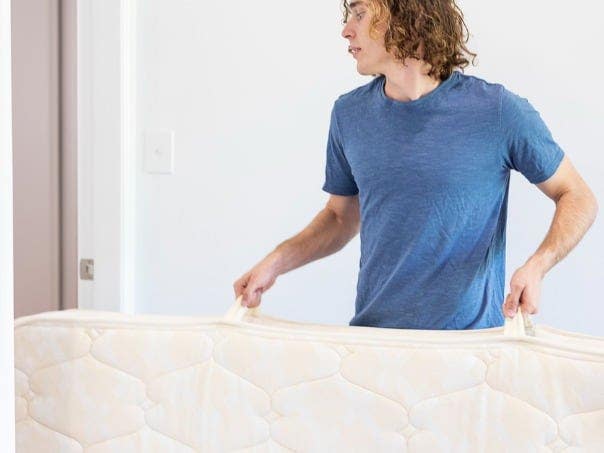
Attempting to move your Nectar mattress alone risks both personal injury and irreversible mattress damage—especially with queen and king sizes weighing 70-100 pounds. Team lifting isn’t optional; it’s essential for maintaining the flat orientation your foam layers require.
Position two people at opposite ends of the mattress with hands fully underneath the perimeter. Lift simultaneously while keeping your back straight and knees bent—never twist your torso while carrying. For king-size mattresses, add two more people along the sides to prevent sagging in the middle section that creates dangerous pressure points.
When navigating doorways, remove hinges for additional clearance rather than attempting to angle the mattress. This takes 2 minutes but prevents the sharp bends that crack foam cells. For stair navigation, keep the mattress as level as possible—don’t try to “walk” it around corners by bending it, as even temporary creases cause permanent damage.
Maintain controlled movement throughout transport—sudden stops or drops create shockwaves through the foam that cause internal damage not visible on the surface. Walk at a steady pace, watching for obstacles, and communicate clearly with your moving team about turns and clearance issues. The entire moving process should take 15-20 minutes with proper preparation, not rushed movements that risk damage.
Vehicle Transport: Securing Your Nectar Mattress Flat During Transit

Loading your wrapped mattress requires careful positioning to maintain its flat orientation throughout the journey. The goal is preventing any shifting that creates bending forces during acceleration, braking, or cornering.
In a moving truck, position your mattress on the floor against a stable wall, not suspended over other furniture. Never stack heavy items on top—lightweight pillows or bedding only, and even then, distribute weight evenly. For smaller vehicles, remove rear seats to create adequate space rather than forcing the mattress at an angle. Renting a cargo van for $50 is far cheaper than replacing a damaged $800+ mattress.
Critical climate considerations often get overlooked. Foam mattresses suffer when exposed to temperatures above 90°F or below 40°F for extended periods. During summer moves, park in shaded areas and cover with reflective material. In winter, avoid leaving the mattress in an unheated vehicle overnight. The ideal transport temperature range is 60-80°F—extreme deviations cause foam expansion/contraction that separates layers.
Check your mattress positioning every 2 hours during long drives. Straps can loosen, and items can shift to create pressure points. If you notice any bending or sagging, stop and reposition immediately—damage occurs quickly once foam begins compressing unnaturally.
Cross-Country Moves: Protecting Your Nectar Mattress During Extended Transport

Long-distance relocations introduce additional risks that require enhanced protection strategies. Extended transport time, multiple handling points, and varying environmental conditions all increase the potential for damage.
Document your mattress condition with timestamped photos before loading—this provides crucial evidence if damage occurs during professional transport. Use a double-protection system: moving pads beneath a sealed storage bag with desiccant packets to control moisture. For moves exceeding 24 hours, include a temperature logger to verify climate conditions stayed within safe ranges.
When using professional movers, provide explicit written instructions prohibiting any bending, folding, or vertical storage. Request that your mattress be the last item loaded and first item unloaded to minimize exposure time. Never allow movers to stack other items directly on your mattress—even lightweight boxes create pressure points that damage foam over time.
During multi-day moves, store your mattress in climate-controlled facilities only. Standard storage units without temperature regulation expose your mattress to damaging humidity fluctuations that encourage mold growth inside the foam layers. Check stored mattresses every 48 hours if possible, inspecting for moisture accumulation or pest activity.
5 Critical Mistakes That Void Your Nectar Mattress Warranty During Moving
Certain moving practices automatically classify as “misuse” under Nectar’s warranty terms, making damage claims ineligible regardless of how the problem manifests later. Avoid these five critical errors to maintain your warranty protection:
1. Attempting to refold or reroll your mattress – This is the most common warranty-voiding mistake. The foam has taken its permanent shape and cannot safely return to a compressed state. Even partial folding creates damage that voids coverage.
2. Using ropes or thin straps that create pressure points – Cinching any material tightly around your mattress mimics folding damage. Wide, padded straps only, with tension just enough to prevent shifting.
3. Dragging your mattress across surfaces – The friction generates heat that damages foam properties and creates tears in the cover material, particularly at vulnerable corners and edges.
4. Storing vertically or on end – This creates uneven pressure that permanently deforms foam layers. Always store flat with nothing stacked on top.
5. Exposing to extreme moisture or temperatures – Leaving your mattress in a damp basement storage unit or an unheated garage during winter causes damage not covered by warranty.
Nectar Mattress Moving Checklist: 7 Steps to Prevent Damage and Maintain Warranty
Follow this verified sequence to move your Nectar mattress safely while preserving warranty coverage:
- Gather supplies 24 hours in advance – Moving pads, storage bag, wide straps, corner protectors
- Photograph current condition – Document any existing wear for warranty reference
- Clean and dry mattress thoroughly – Prevent mold during transport/storage
- Wrap completely with moving pads – Secure seams with tape to prevent shifting
- Place in storage bag – Seal completely but include desiccant packets
- Lift with team of 2-4 people – Maintain flat orientation through all doorways
- Position flat in climate-controlled vehicle – Never stack items on top
After relocation, allow 24-48 hours for your mattress to readjust to its new environment before evaluating performance. Minor settling from transport typically resolves during this period. Most importantly, resist the temptation to refold your mattress for “easier storage”—that single action causes irreversible damage and voids your warranty protection permanently.
By following these precise moving techniques, your Nectar mattress will deliver the same comfortable, supportive sleep surface in its new location while remaining fully covered under warranty. Proper moving isn’t just about preventing immediate damage—it’s about protecting your investment for years of continued restful sleep.