
Moving a latex mattress presents unique challenges that catch many people off guard. Unlike traditional innerspring or memory foam mattresses, latex mattresses combine substantial weight with flexible composition, making relocation a project requiring careful planning. A queen-size natural latex mattress can weigh 80-100 pounds—nearly twice as heavy as comparable memory foam models—while its flexible nature means improper handling can cause folds, sagging, or permanent deformations. This comprehensive guide walks you through every phase of moving a latex mattress safely, whether you’re relocating across town, moving to a different room, or storing your mattress temporarily. You’ll learn specialized techniques that protect both your investment and your physical safety throughout the relocation process.
Why Latex Mattresses Challenge Even Experienced Movers
Latex mattresses earn their reputation for exceptional comfort through dense, resilient material that creates specific moving challenges. Natural latex is inherently heavier than synthetic alternatives, and all-latex constructions are considerably denser than hybrid models. This density contributes to excellent support but means moving a latex mattress demands more planning and specialized equipment than lighter mattress types.
The flexibility paradox creates complications during handling. When lifted improperly, a latex mattress can fold or bend in ways that compromise its internal structure, potentially causing tears or permanent deformations. Unlike memory foam that slowly returns to shape, latex maintains folds if left compressed too long. Understanding these limitations is essential for protecting your mattress during relocation.
Environmental vulnerabilities require special attention during transport. Exposure to dirt, moisture, and debris can compromise the hygienic qualities of the mattress, while temperature extremes during long-distance moves can affect the latex material itself. Proper preparation and protective coverings address these vulnerabilities when movers understand what protections are necessary.
Measure and Assess Your Mattress Before Moving
Weigh your mattress before enlisting help to determine how many people you’ll need. Smaller twin-size latex mattresses typically weigh 50-70 pounds and might be manageable for two people, while larger king-size models exceeding 100 pounds likely require three or four helpers. Consult manufacturer specifications if you don’t have a scale—this information prevents inadequate preparation.
Thickness determines transport options for your latex mattress. Thinner models under 10 inches may be gently folded for short-term transport without damage, while thicker models or those with high ILD (Indentation Load Deflection) ratings measuring firmness should only be rolled or kept flat. Higher ILD indicates firmer latex that resists compression but may be more susceptible to damage if bent improperly.
Composition affects moving strategy significantly. Natural latex tends to be heavier than synthetic varieties, and all-latex constructions require more careful handling than hybrid designs. If you’re moving an all-latex mattress, prepare for additional weight and plan accordingly by enlisting more help or mechanical aids.
Essential Supplies for Safe Latex Mattress Transport

Mattress bags provide primary protection during transport. These specially designed coverings shield against dirt, dust, moisture, and potential tears. Purchase heavy-duty mattress bags at moving supply stores, Target, Walmart, or online retailers (typically $10-$25). If unavailable, heavy-duty plastic wrap serves as an adequate substitute when properly secured.
A hand truck or dolly is non-negotiable for heavy latex mattresses. These wheeled devices allow transport with significantly reduced physical strain by distributing weight across wheels rather than requiring you to bear it entirely. For navigating stairs, position two dollies at either end of the mattress for controlled movement.
Choose the right tape for secure fastening—masking tape, duct tape, or shipping tape with durable, waterproof adhesives. These strong adhesives remain secure even when exposed to moisture and prevent protective coverings from shifting. Never apply tape directly to latex rubber—the adhesive bonds strongly with latex surfaces, and removal will tear the material.
Step-by-Step: Preparing Your Latex Mattress for Moving
Disassemble modular latex mattresses properly by unzipping the cover and removing each latex layer separately. Fold each layer lengthwise and roll into a more compact configuration. This approach dramatically reduces effective size and weight, making components easier to carry and allowing them to fit into standard moving boxes.
Secure non-modular mattresses correctly by laying the mattress flat and sliding the mattress bag over it with a helper supporting one end. Push excess air out before folding flaps down and sealing all openings with packing tape. Inspect carefully for rips or holes, applying additional tape to damaged areas.
Follow the 30-day compression rule when preparing rolled or folded latex layers for boxing. While folding and rolling is acceptable for moving purposes, leaving latex layers compressed longer than 30 days can cause permanent indentations. If longer-term storage is necessary, remove layers from compression and allow them to spread out as they would in the fully assembled mattress.
Executing the Move: Lifting and Transporting Techniques
Complete a thorough pathway sweep before lifting. Remove debris, obstacles, and loose items that could cause tripping. Confirm all doors are propped fully open and measure doorways one final time to ensure the mattress will pass through without binding.
Use proper lifting technique to prevent injury. Position helpers along the mattress edges, bending at the knees (not waist) and powering the lift using leg muscles while bracing core abdominal muscles. Lift smoothly and in coordination with all helpers—avoid twisting or jerking movements.
Position the mattress vertically on a dolly for transport. Stand it carefully on the dolly, ensuring balance and centering. Use straps to secure the mattress, preventing shifting during movement. For floppy mattresses, place flat cardboard pieces on either side for additional stabilization.
Room-to-Room Moves: Simplified Process for In-Home Relocation
Fold thinner latex mattresses safely when moving within your home. Mattresses under 10 inches can be folded in half without damage for brief periods during relocation. However, avoid leaving the mattress folded longer than necessary to prevent permanent impressions.
Skip the mattress bag for short moves when relocating within your home. The risk of dirt exposure is minimal for room-to-room moves, allowing you to focus on proper lifting technique. Use moving blankets to protect corners and edges from impacts against doorframes.
Take advantage of modular construction when available. Unzip the cover and move individual latex layers separately to any room, then reassemble afterward. This approach is particularly valuable for older individuals or those with physical limitations, eliminating the need to lift the entire mattress weight at once.
5 Costly Mistakes That Damage Latex Mattresses During Moves
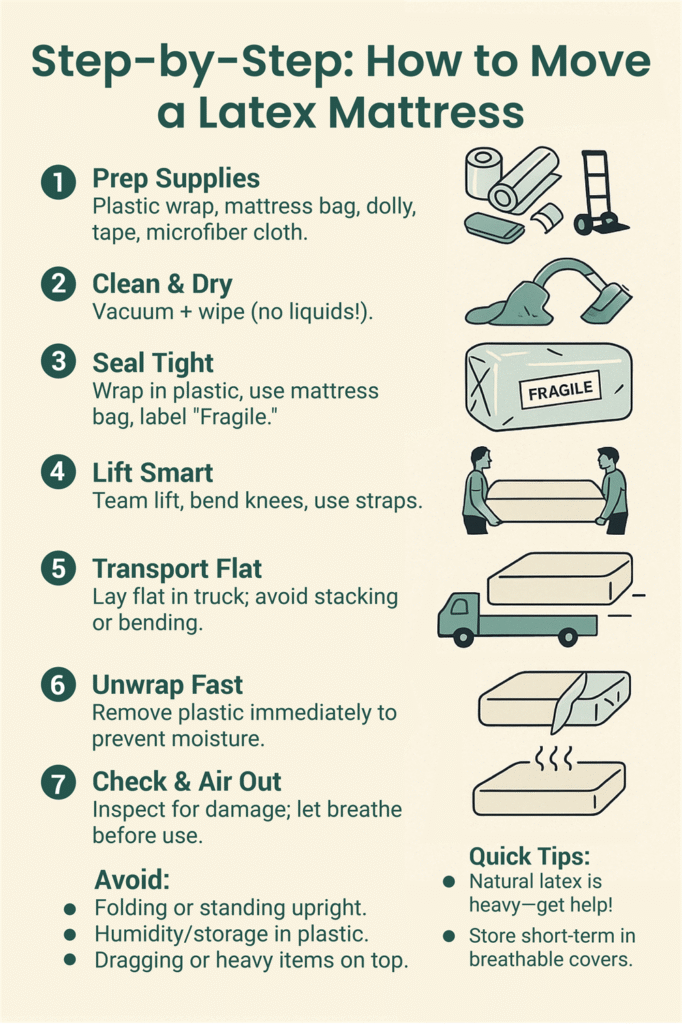
Attempting solo moves with large latex mattresses is the most dangerous mistake. The combination of weight and flexibility makes single-person handling extremely difficult, creating significant risk of injury and damage. Even twin-size latex mattresses benefit from a second person’s assistance.
Improper lifting technique causes back injuries. Bending at the waist to lift heavy objects places enormous stress on the lower back. Always lift using leg muscles—bend knees, keep back straight, and power the lift through leg contraction.
Failing to protect the mattress adequately exposes it to cumulative damage. Even short moves can expose a mattress to dirt, moisture, and impacts. Always use a mattress bag or protective wrap, adding moving blankets for corners and edges.
Taping directly to latex rubber causes irreparable damage. The adhesive bonds strongly with latex surfaces, and removal tears the material. Always apply tape only to protective coverings.
Leaving mattresses compressed beyond 30 days causes permanent indentations. While the 30-day guideline provides a reasonable benchmark, avoid extended compression whenever possible for optimal mattress longevity.
Troubleshooting Common Moving Problems
Address indentations after moving by allowing the mattress to lay flat for 24-48 hours. Most temporary compression marks recover during this period. If indentations persist beyond three days, contact the manufacturer about potential warranty coverage.
Repair minor surface damage with patches designed specifically for mattress materials. Small tears or punctures can often be fixed with adhesive patches that maintain the mattress’s integrity without compromising comfort.
Assess structural damage by checking that all layers remain properly positioned and the mattress maintains even thickness. Significant structural damage typically requires replacement, while minor issues may be repairable.
Final Tips for Successful Latex Mattress Relocation
Moving a latex mattress requires thoughtful planning but becomes manageable with the right approach. For future moves, consider selecting a latex mattress with modular construction featuring removable zip covers and individual layers—these can be broken down into components that fit in standard boxes, dramatically simplifying relocation.
When moving day arrives, proper preparation protects both your mattress and your physical safety. Use appropriate protective coverings, enlist adequate help, employ proper lifting techniques, and navigate obstacles carefully. Taking these precautions ensures your latex mattress arrives at its new location in excellent condition, ready to provide the comfortable, supportive sleep surface that makes latex mattresses so valued.
Whether you’re relocating across town or across the country, investing time in proper moving technique pays dividends in mattress longevity and personal safety. By following these expert guidelines, you can approach your latex mattress move with confidence, knowing you have the knowledge to execute the process successfully.