Finding space for an extra mattress challenges homeowners and renters alike, whether you’re preparing for holiday guests or accommodating family members during unexpected visits. That spare mattress sitting in your living room or bedroom creates an eyesore that disrupts your carefully curated space while taking up valuable square footage. Learning how to hide an extra mattress properly solves this common dilemma without sacrificing comfort or style. The right storage solution protects your investment, maintains your home’s aesthetic appeal, and ensures your spare sleeping surface remains guest-ready whenever needed.
Most people don’t realize that hiding an extra mattress effectively requires matching the storage method to your specific living situation, guest frequency, and available space. Some solutions work better for frequent visitors, while others suit occasional guests. This guide delivers practical, tested approaches for concealing your spare mattress that balance accessibility, protection, and visual appeal—no more tripping over rolled bedding or feeling embarrassed when unexpected company arrives.
Under-Bed Mattress Storage That Works for Any Bed Frame

Maximizing the space beneath your existing bed offers the most practical solution for hiding an extra mattress without significant investment. Platform beds, bunk beds, and even some traditional frames provide enough clearance to store a spare mattress out of sight yet instantly accessible.
Vacuum-sealed storage bags compress bulky mattresses to 25% of their original size, making them ideal for tight under-bed spaces. Before sealing your mattress, thoroughly vacuum both sides to remove dust mites and debris, then spot-clean any stains with a mild detergent solution. Allow it to dry completely for 24 hours to prevent mold growth during storage. When rolling your mattress into the bag, start from the foot end and roll tightly toward the head, using your body weight to squeeze out excess air before sealing the valve. These bags work especially well with memory foam mattresses that compress easily without damage.
Rolling techniques vary significantly by mattress type and require careful attention to prevent permanent damage. Memory foam mattresses can be rolled tightly for long-term storage without compromising comfort, while latex models tolerate moderate rolling but shouldn’t be stored compressed for more than six months. Innerspring mattresses present the greatest challenge—you can stand them vertically on their edge but shouldn’t attempt tight rolling as this can bend coils and create permanent indentations. Hybrid mattresses fall between foam and innerspring in flexibility; roll them loosely with the coil side facing outward to minimize damage.
DIY under-bed drawer systems transform awkward space into functional storage using basic materials you likely already own. Slide two identical wooden planks (slightly narrower than your mattress) beneath your bed frame, then attach heavy-duty drawer slides to both the planks and bed frame. Place your rolled mattress on the planks and add casters if your bed lacks sufficient clearance. This makeshift drawer glides smoothly for easy access while keeping the mattress completely hidden when not in use—perfect for apartments where permanent modifications aren’t allowed.
Furniture That Doubles as Mattress Storage Without Looking Clunky
Investing in dual-purpose furniture creates seamless mattress concealment that enhances your home’s functionality rather than compromising its aesthetics. These solutions work particularly well in studio apartments, home offices, or bonus rooms that serve multiple purposes.
Ottoman storage beds provide instant mattress access with elegant concealment through their hydraulic lift mechanisms. When selecting one, measure your mattress thickness plus two inches for clearance—most standard ottoman beds accommodate mattresses up to ten inches thick. Look for models with ventilation holes in the base to prevent moisture buildup during storage. The best designs feature fabric upholstery matching your decor, making the bed appear as a stylish seating area until you need to accommodate guests. Pull-out handles cleverly hidden beneath the upholstery provide smooth access without visible hardware.
Convert your daybed into hidden mattress storage by utilizing the space beneath its frame. Many modern daybeds include built-in drawers specifically sized for rolled mattresses or toppers. If your daybed lacks this feature, install a low-profile storage container underneath that matches the daybed’s height. During the day, drape a coordinating slipcover over both the daybed and storage container to create a cohesive sofa-like appearance. When guests arrive, simply remove the slipcover and pull out your stored mattress—no complicated assembly required.
Wall-mounted Murphy bed cabinets conceal mattresses completely while transforming your space from living area to bedroom in seconds. Contemporary designs incorporate the mattress within the cabinet structure, so when folded up, it appears as a standard wall unit with shelves or artwork. The most space-efficient models include a pivot mechanism that rotates the mattress into a vertical position during storage, reducing the required wall depth by nearly half. Look for units with automatic lift assists that require minimal effort to lower—critical when you need to set up guest accommodations quickly.
Temporary Concealment Methods for Renters and Tight Spaces
When permanent furniture solutions aren’t feasible, these temporary methods effectively hide an extra mattress without violating lease agreements or requiring significant investment.
Decorative room dividers create instant privacy screens around stored mattresses using freestanding panels that double as art displays. Position a three-panel screen in front of your rolled mattress, then attach removable adhesive hooks to hang baskets, plants, or framed photos. This transforms an eyesore into an intentional design feature that complements your decor. For maximum effectiveness, choose screens with solid backing rather than lattice designs—these provide complete visual concealment while maintaining easy access when needed.
Furniture slipcovers disguise stored mattresses as functional seating with minimal effort. Measure your stored mattress dimensions, then select an oversized sofa slipcover that will drape elegantly over the entire structure. Secure the cover with non-damaging furniture tape along the bottom edges, then add decorative pillows to complete the illusion. This method works especially well when storing a mattress against a wall in a living room or home office, creating additional seating that guests won’t suspect doubles as their sleeping arrangement.
Ceiling-mounted curtain tracks provide flexible concealment that disappears when not in use. Install a discreet track along your ceiling just beyond the mattress storage area, then hang floor-length curtains in a color matching your walls. When closed, the curtains create a seamless visual barrier; when open, they gather neatly against the wall. For studio apartments, run the track in an L-shape to create a complete enclosure around your mattress storage zone. Use blackout fabric for better concealment or sheer material for partial visibility that maintains an open feel.
Vertical Storage Solutions for Rooms With Limited Floor Space
When floor space comes at a premium, these vertical storage approaches maximize unused overhead areas to hide your extra mattress without encroaching on living space.
Closet ceiling racks utilize often-wasted vertical space above your hanging clothes. Install reinforced shelving brackets at least eight inches below your closet ceiling, then place a plywood platform across them rated for at least 150 pounds. Slide your rolled mattress onto this platform, securing it with bungee cords attached to eye hooks in the closet walls. For easy access, add a pull-down mechanism using nylon rope and pulleys—simply tug the rope to lower your mattress when needed, then hoist it back up for storage.
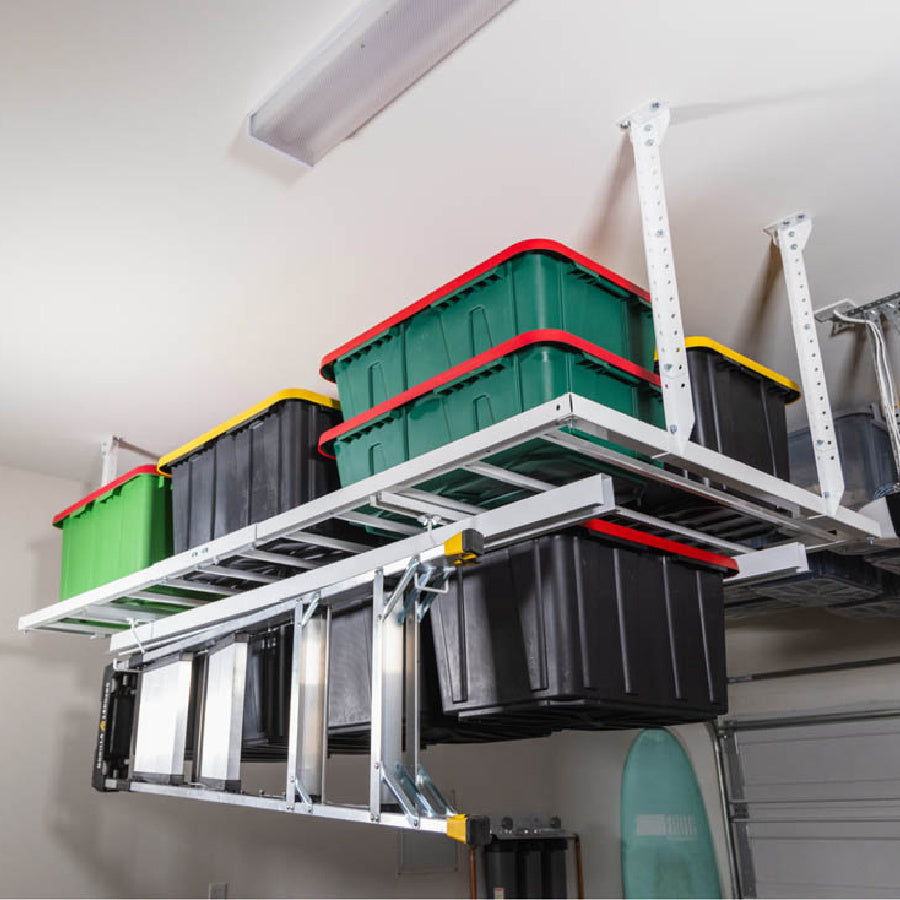
Garage overhead storage systems protect mattresses from damage while keeping them completely out of sight. Mount heavy-duty ceiling racks designed for bulky items, ensuring they’re anchored into ceiling joists rather than drywall. Store your mattress in a breathable fabric storage bag rather than plastic to prevent moisture buildup. For added protection in humid climates, include silica gel desiccant packs inside the bag. Position the storage area above your workbench or car space where it won’t interfere with daily activities.
Corner-mounted wall brackets create discreet vertical storage in living areas without permanent modifications. Install two heavy-duty L-brackets in a corner at shoulder height, then place a narrow shelf across them. Roll your mattress vertically and stand it upright against the wall behind the shelf. The shelf itself can hold decorative items that draw attention away from the stored mattress. This solution works particularly well in home offices or dining areas where corners often go unused.
Maintenance Tips to Keep Your Hidden Mattress Guest-Ready
Proper preparation ensures your concealed mattress remains fresh, comfortable, and ready for unexpected guests without unpleasant surprises.
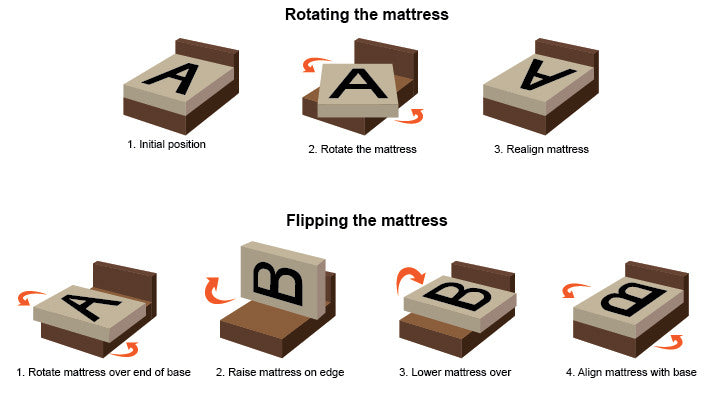
Seasonal mattress rotation prevents permanent indentations even during storage. Every three months, unroll your mattress completely and allow it to air out for 24 hours before re-rolling in the opposite direction. This simple step maintains even wear across the entire surface and prevents the “memory” of being compressed in one position. For vertical storage, flip the mattress top-to-bottom during each rotation to distribute weight evenly.
Moisture control measures protect against mold and mildew in stored mattresses. Before sealing your mattress in any container, place silica gel packets strategically along its surface—use one standard packet per square foot of mattress area. For long-term storage, consider adding cedar blocks that repel pests while absorbing excess humidity. Never store mattresses directly on concrete floors; always use a moisture barrier like a plastic sheet or specialized storage pad.
Odor prevention techniques keep mattresses smelling fresh for years. Sprinkle baking soda lightly across the mattress surface before storage, allowing it to sit for one hour before vacuuming thoroughly. Add a few drops of lavender essential oil to cotton balls placed inside the storage container—this creates a pleasant scent while naturally repelling dust mites. For memory foam mattresses, avoid strong chemical deodorizers that can break down the foam structure over time.
Choosing the right mattress concealment method depends on your specific living situation, but implementing even one of these solutions transforms that awkward spare mattress from a space-wasting eyesore into a seamlessly integrated part of your home. Whether you opt for under-bed storage, dual-purpose furniture, or creative temporary concealment, the key is selecting a method that matches how often you host guests and the space you have available. With proper preparation and maintenance, your hidden mattress will remain in excellent condition, ready to provide comfortable accommodations whenever needed—all without compromising your home’s style or functionality.