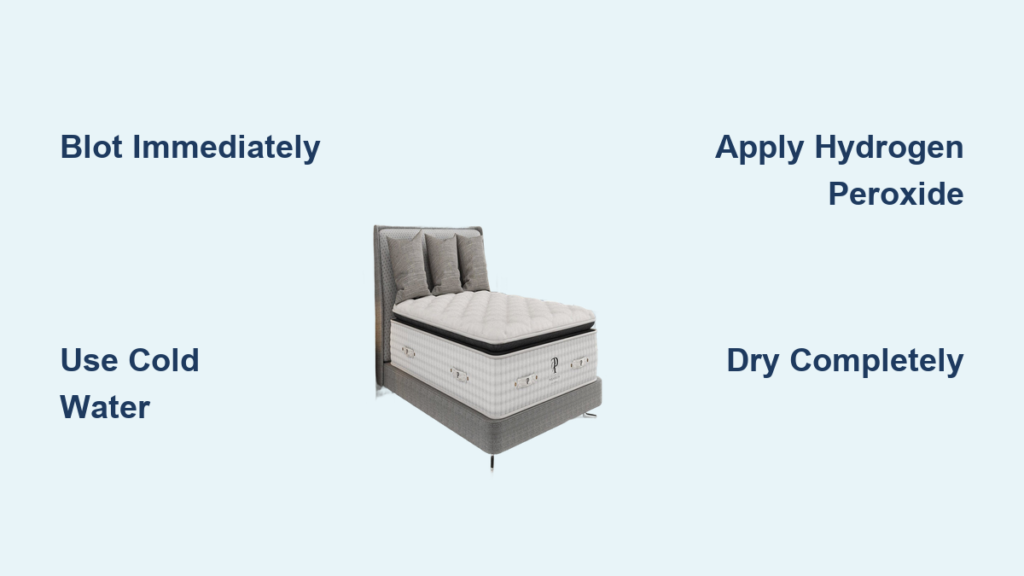
That luxurious pillow top mattress feels like sleeping on a cloud—until you spill coffee, deal with night sweats, or face an unexpected accident. Unlike standard mattresses, pillow top constructions feature an additional layer of soft foam, fiberfill, or latex sewn directly onto the surface, creating a perfect trap for liquids that soak in quickly and bond stubbornly with fibers. When a spill happens on your pillow top mattress, the clock starts ticking immediately—those plush materials absorb contaminants faster than traditional mattresses, making prompt action essential for successful stain removal.
Trying to figure out how to get stains out of pillow top mattress surfaces can feel overwhelming, especially when you realize that common cleaning mistakes like using hot water on blood stains or scrubbing aggressively can permanently set discoloration. The wrong approach risks damaging delicate materials, trapping moisture that leads to mold, or spreading stains across a larger area. This guide delivers proven, step-by-step methods specifically designed for pillow top construction that actually work.
You’ll discover exactly which cleaning solutions match your specific stain type, how to dry properly without causing mold growth, and when to call professionals instead of risking further damage. By following these targeted techniques, you can restore your mattress to fresh condition and protect your investment for years of comfortable sleep.
Why Pillow Top Mattresses Trap Stains More Than Standard Models

Pillow top mattresses create unique stain challenges due to their layered construction. That extra comfort layer adds significant surface area and increased porosity compared to standard mattresses, allowing spills to penetrate deeper and spread more easily through absorbent foam and fiberfill materials. The sewing that attaches the pillow top to the base mattress creates seams where contaminants accumulate and wick into the core.
Unlike traditional mattresses with tighter weaves, pillow top surfaces use softer, more open materials designed for comfort rather than stain resistance. This means common bedroom accidents—morning coffee spills, night sweats, or pet accidents—soak in within seconds rather than sitting on the surface where they’re easily blotted. Understanding this construction helps explain why knowing how to get stains out of pillow top mattress surfaces requires specialized techniques.
Critical warning: Never treat a pillow top mattress like carpet or upholstery. The layered foam construction requires gentler treatment to avoid compressing the pillow top layer or forcing stains deeper into the core.
Identify Your Stain Type Before Starting Any Treatment

Matching your cleaning approach to the specific stain type determines whether you achieve complete removal or permanent discoloration. Different contaminants require completely different treatment strategies—using the wrong method sets stains permanently.
Protein-Based Stains Demand Cold Water Treatment
Blood, urine, vomit, and sweat stains contain proteins that bond with mattress fibers when exposed to heat. Never use hot water on these stains—it permanently sets discoloration. Look for yellow or brown discoloration concentrated around head and foot areas where body heat concentrates. These stains often develop musty odors as proteins break down mattress materials over time.
Tannin Stains Respond Best to Acid-Based Solutions
Coffee, tea, and red wine create stubborn brown discoloration from tannins that penetrate deeply into absorbent pillow top materials. These stains appear immediately after spills and darken over time as tannins oxidize. The longer you wait, the deeper they penetrate into the foam layers.
Oil-Based Stains Require Degreasing Agents
Butter, cooking oils, and greasy foods leave residue that attracts dirt and creates progressive yellowing. These stains feel slightly slick to the touch and often appear as circular spots where food contacted the mattress. Unlike liquid spills, oil-based stains spread slowly over weeks as they migrate through fibers.
Act Immediately on Fresh Spills to Prevent Permanent Damage
Speed determines whether you successfully remove stains or live with permanent discoloration. Fresh spills haven’t yet bonded with mattress fibers or penetrated deep into foam layers, making them dramatically easier to remove.
Remove Solids Before Liquid Absorption
Use a dull knife or spoon edge to gently scrape away solid material, working from the outside edge toward the center. Never rub or scrub—this forces contaminants deeper into the pillow top layer. For liquid spills, skip this step and move directly to blotting.
Blot Aggressively with White Absorbent Materials
Apply firm pressure with clean white cloths or paper towels, replacing them as they become saturated. Continue for 5-10 minutes minimum to extract maximum moisture. Colored cloths risk dye transfer, while inadequate blotting leaves moisture that wicks back to the surface later.
Pro tip: Place clean towels under the stained area if possible—this creates a “wick effect” that pulls moisture downward rather than letting it spread horizontally through foam layers.
DIY Cleaning Solutions That Actually Remove Mattress Stains
Natural solutions work effectively for most pillow top stains when matched correctly to the contamination type. These affordable options avoid harsh chemicals while delivering professional-level results.
Hydrogen Peroxide for Blood and Organic Stains
Use 3% hydrogen peroxide directly from the pharmacy for blood, wine, and yellow body fluid stains. Apply with a spray bottle, watch for bubbling action as it breaks molecular bonds, then blot thoroughly. Test first in an inconspicuous area as it may lighten colored fabrics.
Vinegar Solution for Sweat and Odor Neutralization
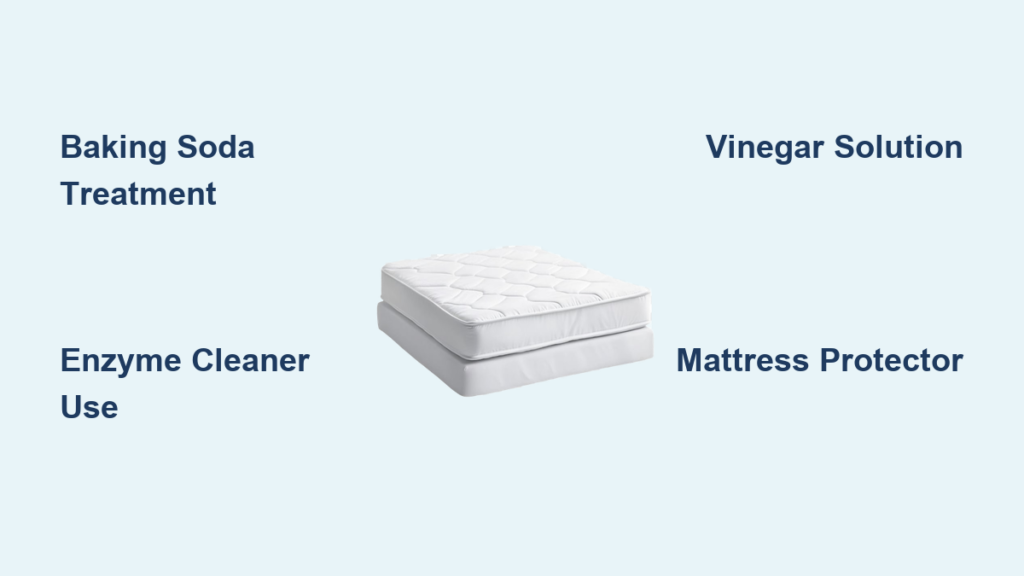
Mix equal parts white vinegar and cool water in a spray bottle. The acetic acid breaks down mineral deposits and protein bonds while neutralizing odors. Allow 5-10 minutes dwell time before blotting. For tough stains, apply undiluted vinegar followed by thorough water rinse.
Baking Soda Paste for General Stain Removal
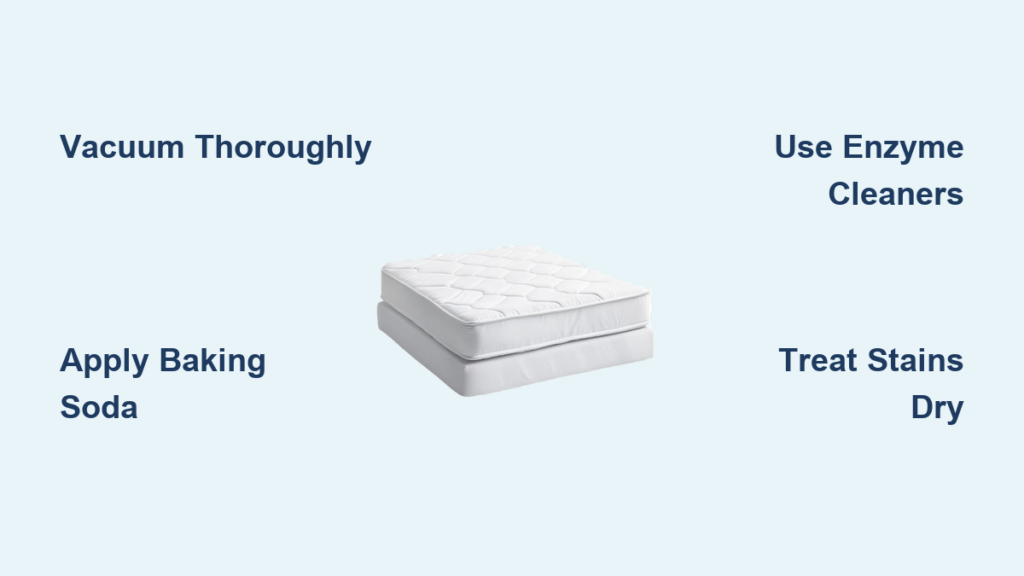
Create a paste with 3 parts baking soda to 1 part water. Apply to stains, let dry completely, then vacuum residue. This alkaline solution neutralizes acidic stains while its mild abrasiveness lifts discoloration without damaging fibers.
Step-by-Step Stain Removal Process for Pillow Top Mattresses
Follow this systematic approach to remove stains without damaging your mattress or spreading contamination.
Vacuum Before Applying Any Solution
Remove loose debris by vacuuming the entire mattress surface, especially along seams where the pillow top meets the base. This creates a clean surface for solutions to penetrate effectively. Use crevice tools for edges and corners.
Apply Solution from Edge to Center
Work cleaning solutions from the stain’s outer edge toward the center to prevent spreading. Apply enough to dampen without oversaturating—excessive moisture penetrates foam cores and creates mold risks. For pastes, extend application slightly beyond visible stain boundaries.
Agitate Gently with Soft-Bristled Brush
Use circular motions with light pressure to loosen stain bonds without damaging delicate pillow top fibers. Never use hard brushes—these compress foam layers and create permanent indentations. Focus on depth by gently pressing while agitating.
Extract Thoroughly with Clean White Cloths
Blot firmly from outside edges inward, replacing cloths as they become saturated. This critical step removes dissolved stain and cleaning residues. Continue for 10-15 minutes minimum—insufficient extraction leaves residues that attract new dirt.
Deep Cleaning Methods for Set-In Stains That Won’t Budge
Stubborn, set-in stains require multiple approaches rather than single applications due to pillow top construction that traps contaminants at different depths.
Alternate Cleaning Solutions for Maximum Effectiveness
Cycle through different treatments to attack stains from multiple angles:
– First application: Enzyme cleaner to break down organic matter
– Second application: Hydrogen peroxide for bleaching action
– Final application: Baking soda paste for absorption and deodorizing
Allow complete drying between each treatment session to prevent moisture trapping. Document visible progress after each application to determine when additional treatments yield diminishing returns.
Steam Cleaning with Extreme Caution
Use only with adjustable steam cleaners on lowest temperature settings. Keep the steam head moving constantly to prevent heat damage to foam layers. Never saturate—limit moisture application to surface layers only. Follow with 48+ hours of aggressive drying with fans and dehumidifiers.
Proper Drying Techniques to Prevent Mold After Cleaning

Inadequate drying causes more mattress damage than improper cleaning. Moisture trapped in pillow top layers creates ideal conditions for mold and mildew within 24-48 hours.
Create Cross-Ventilation with Multiple Fans
Position fans to blow across all mattress surfaces, including sides and edges where moisture lingers longest. A dehumidifier in the room accelerates drying by removing ambient moisture. Avoid direct heat sources that can damage foam materials.
Test for Complete Dryness Before Use
Press your palm firmly against multiple areas of the mattress. If you feel any coolness or moisture, continue drying. The pillow top layer typically requires 24-48 hours to dry completely depending on humidity levels—never sleep on a damp mattress.
Specialized Treatments for Specific Stain Types
Urine Stain Removal Protocol
- Apply enzyme cleaner generously (designed for pet odors)
- Allow 8-12 hours dwell time for enzymes to break down uric acid crystals
- Blot thoroughly with clean cloths
- Apply baking soda paste to absorb residual moisture
- Vacuum after 24 hours
Coffee Stain Treatment
Mix 1 tbsp dish soap + 1 tbsp white vinegar + 2 cups cool water. Apply to stain, blot thoroughly, then follow with hydrogen peroxide solution for stubborn discoloration. Ensure complete residue removal—coffee sugars attract new dirt if left behind.
When Home Remedies Fail: Professional Cleaning Options
Seek professional help when:
– Multiple home treatments fail to remove stains
– Stains cover large areas (>12 inches diameter)
– Mattress is new or high-value
– You notice mold growth or persistent odors
Choose services with specific pillow top experience who use foam-safe solutions. Verify they offer drying guarantees and use extraction methods that remove moisture from deep layers.
Prevent Future Stains with These Simple Protective Measures
Invest in Quality Mattress Protectors
Choose pillow-top specific protectors with:
– Waterproof backing that doesn’t compress the pillow top layer
– Breathable cotton or bamboo top layer
– Full-encasement design for maximum protection
Wash protectors weekly according to manufacturer instructions—this creates the most effective barrier against future staining.
Establish Regular Maintenance Routine
- Weekly: Vacuum mattress surface with upholstery attachment
- Monthly: Inspect for developing stains and rotate mattress
- Annually: Deep clean entire mattress surface
Address spills immediately using the techniques outlined here—delaying treatment dramatically reduces success rates for how to get stains out of pillow top mattress surfaces.
Successfully removing stains from your pillow top mattress requires matching the right solution to your specific stain type, applying it correctly, and ensuring complete drying. Remember that immediate action on fresh spills gives you the best chance for complete restoration, while set-in stains often need multiple treatment sessions. By implementing preventive measures like quality mattress protectors and regular maintenance, you can protect your investment and enjoy a clean, fresh sleeping surface for years to come. The key to mastering how to get stains out of pillow top mattress surfaces lies in understanding the unique construction challenges and responding with targeted, appropriate solutions.