Waking up to the unmistakable odor of urine on your mattress creates an immediate crisis that demands swift action. Whether it’s a child’s nighttime accident, a pet emergency, or an adult bedwetting incident, the clock starts ticking the moment urine contacts your mattress fibers. This urgency matters because urine contains uric acid crystals that bond tightly to mattress materials once they dry, creating stubborn odors that seem impossible to eliminate. These crystals remain dormant until humidity or moisture reactivates them—explaining why your mattress can smell fresh one day and develop that pungent ammonia odor the next. Understanding this science transforms your approach from simple stain removal to comprehensive odor elimination that addresses the root cause.
Successfully figuring out how to get pee smell out of mattress requires more than surface cleaning—it demands targeting the uric acid crystals embedded deep within your mattress layers. The good news is that with the right techniques and persistence, most urine odor scenarios can be resolved effectively. This guide provides immediate response steps for fresh accidents, deep-cleaning methods for set-in odors, and prevention strategies to protect your mattress long-term. You’ll learn which products actually work, which common mistakes to avoid, and how to customize your approach based on your specific mattress type.
Act Fast When Urine Happens
The single most important factor in successfully removing pee smell from a mattress is how quickly you respond. Fresh urine that hasn’t dried responds dramatically better to treatment than urine that has penetrated deep into mattress layers over hours or days. Your immediate goal is absorbing as much liquid as possible before it spreads and soaks into the core materials.
Begin by grabbing clean, dry cloths or paper towels and pressing them firmly onto the affected area. Use a blotting motion with steady pressure—never rub or scrub, as this pushes urine deeper into fibers and spreads the contamination. Change to fresh sections of cloth as they become saturated, continuing until no more moisture transfers. For larger accidents, layer several cloths and apply body weight to maximize absorption. This initial step alone can reduce treatment time and effort significantly.
After absorbing excess liquid, mist the stained area with a solution of equal parts white vinegar and cool water. The vinegar’s acidity neutralizes alkaline urine compounds and begins breaking down uric acid crystals. Allow the solution to sit for five to ten minutes, then blot thoroughly with dry cloths. The vinegar smell dissipates completely as it dries and won’t remain on your mattress. For significant accidents, repeat this process multiple times until the cloth comes away mostly dry.
Finish by sprinkling a generous layer of baking soda over the entire affected area. For enhanced deodorizing power, mix in five to ten drops of essential oil—tea tree, lavender, or eucalyptus work exceptionally well for their antibacterial properties. Allow the baking soda to sit for at least eight hours, ideally overnight, before vacuuming thoroughly with a hose attachment. This combination draws out remaining moisture while neutralizing odors at the molecular level.
Natural Solutions for Fresh Stains
White vinegar and baking soda form a powerful natural cleaning duo that handles most fresh urine accidents effectively. This approach works through simple chemistry: vinegar’s acidity neutralizes the alkaline compounds in urine, while baking soda’s absorbent properties pull moisture and odor from mattress fibers. Neither product contains harsh chemicals, making them safe for all household members including children and pets.
Create a vinegar solution by mixing equal parts white vinegar and cool water in a spray bottle. Lightly mist the stained area—saturating the mattress risks damaging internal materials and creates mold concerns. The solution should be damp rather than wet. After ten minutes, blot with clean, dry cloths, working from the outside of the stain toward the center to prevent spreading. Repeat this process two to three times for moderate accidents.
For the baking soda application, sprinkle a thick layer (approximately one-quarter inch) over the treated area. The baking soda draws out remaining moisture through osmosis while simultaneously neutralizing odor compounds. For dried-in stains, create a paste using three parts baking soda to one part water, adding a drop of dish soap for enhanced cleaning power. Apply this paste to the stain, work it gently into fibers with a soft brush, and allow it to dry completely before vacuuming. Warning: Never use hot water, as it sets urine proteins and makes odors permanent.
Deep Clean with Enzyme Cleaners

Enzyme-based cleaners represent the gold standard for eliminating urine odor from mattresses because they attack the problem at its biological source. These products contain specific bacteria strains that consume uric acid crystals, urea, and the proteins that bacteria break down into odorous compounds. Unlike air fresheners that merely mask smells, enzymes eliminate the organic matter creating the odor entirely. This biological approach works on both fresh and set-in stains, though results are more dramatic on older contamination.
Select an enzyme cleaner formulated specifically for urine or pet odors, as these products contain higher concentrations of the relevant bacterial strains. Read labels carefully to ensure compatibility with your mattress materials—most work safely on all fabric types, but some contain additives that could affect delicate surfaces. Apply the cleaner generously according to package directions, typically spraying until the fabric is thoroughly moist but not saturated. For severe odors, apply a second application after the first dries completely.
The enzymatic process continues working for up to forty-eight hours after application, so resist the urge to use or disturb the mattress during this time. For enhanced effectiveness, cover the treated area with plastic sheeting, which prevents evaporation and allows deeper penetration into mattress fibers. This technique proves particularly valuable for set-in odors that have resisted other treatments. The bacteria consume organic matter completely, leaving behind only water and carbon dioxide as byproducts.
Tackle Set-In Odors Effectively
Old urine odors present the most challenging removal scenario because uric acid crystals have bonded tightly with mattress materials over time. These deeply embedded compounds resist standard cleaning methods and seem to regenerate whenever humidity rises. Successful treatment requires a multi-pronged approach that combines several products and techniques, working the solutions deep into mattress layers where odors hide.
Begin by vacuuming the entire mattress surface with an upholstery attachment, paying special attention to seams and crevices where debris accumulates. This removes loose particles and prepares the surface for deeper treatment. Next, apply an enzyme-based cleaner liberally, working it into the mattress with a soft brush to ensure fiber saturation. Cover the area with plastic sheeting and allow it to work overnight—the extended contact time allows bacteria to penetrate deep into the mattress core where odors originate.
After the enzyme treatment dries, apply a hydrogen peroxide solution (one cup of three percent hydrogen peroxide mixed with one tablespoon of dish soap and one tablespoon of baking soda). Allow it to bubble for ten minutes, then blot thoroughly. The hydrogen peroxide’s oxidizing action breaks down remaining odor compounds while lifting any associated staining. This combination approach tackles urine odor through multiple mechanisms simultaneously. Pro tip: For extra stubborn odors, repeat this sequence after the mattress dries completely.
Match Method to Mattress Type
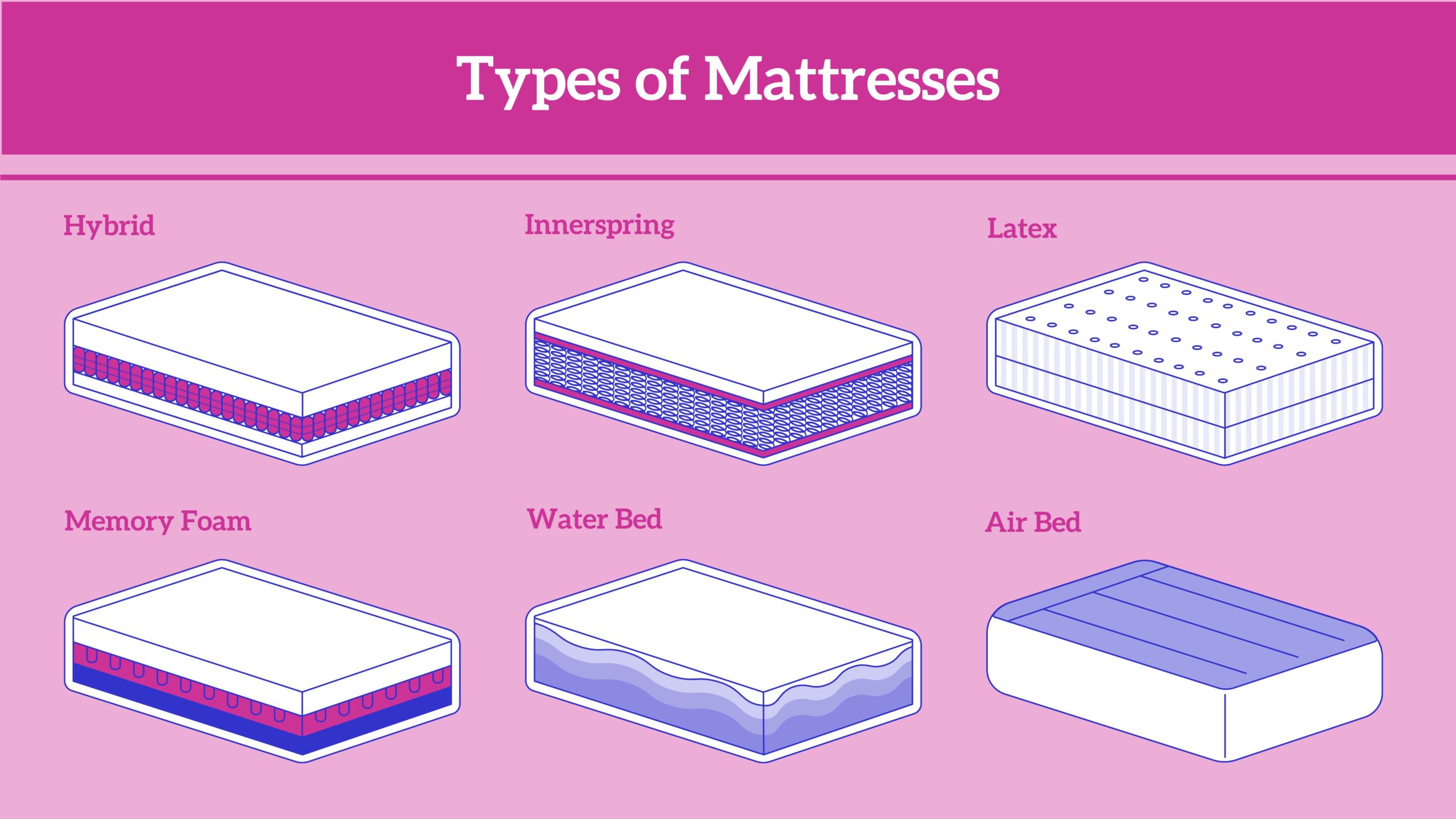
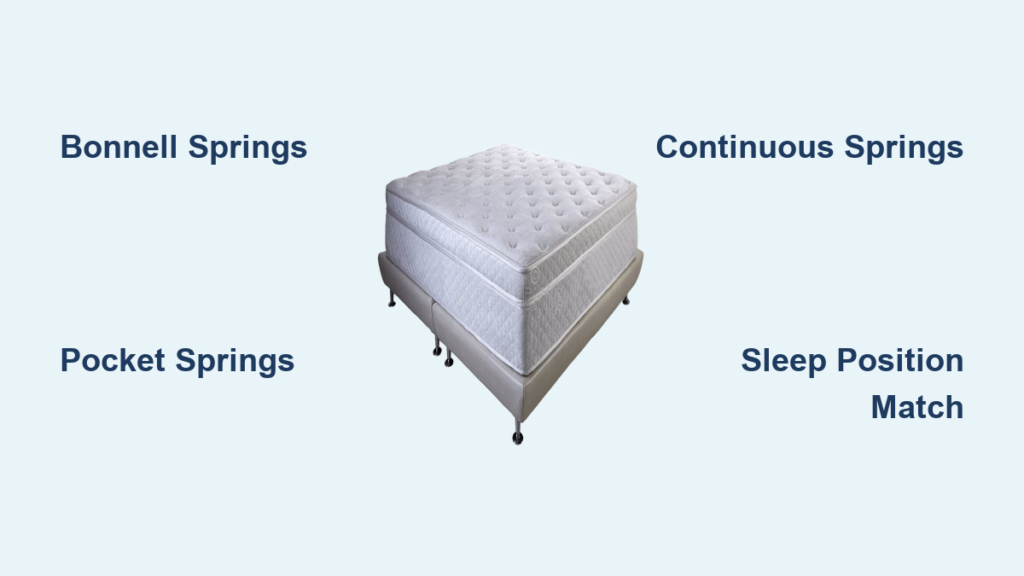
Different mattress constructions require modified cleaning approaches to avoid damage while achieving effective odor elimination. Memory foam, innerspring, latex, and pillow-top mattresses each have unique characteristics that influence which products and techniques work best. Tailoring your method to your specific mattress type prevents accidental damage while maximizing cleaning effectiveness.
Memory foam mattresses require gentle treatment because their dense structure traps liquids and resists drying. Avoid saturating memory foam, as excess moisture damages the cellular structure and creates mold risks within the foam core. Use spray applications sparingly and blot immediately rather than allowing pooling. Enzyme cleaners work well but need extended contact time to penetrate the dense material. After cleaning, position fans to blow directly across the surface and use a dehumidifier to ensure complete drying, which may take forty-eight hours or longer.
Innerspring mattresses have thinner comfort layers over the spring system, meaning urine can potentially reach internal components. Clean the ticking and padding layers thoroughly while avoiding saturation of the spring system, which can lead to rust. If your mattress has a removable cover, unzip and wash it according to manufacturer instructions. After wet cleaning, expose both sides of the mattress to airflow by propping it on its side or using mattress risers to allow circulation underneath.
Dry Your Mattress Properly
Proper drying represents the critical final step that determines whether your urine odor removal efforts succeed permanently. Incomplete drying allows residual moisture to reactivate uric acid crystals, causing odor to return within days or weeks. Thorough drying also prevents mold growth, which creates additional health hazards and odors. Taking time to ensure complete dryness protects your investment in cleaning and prevents recurring problems.
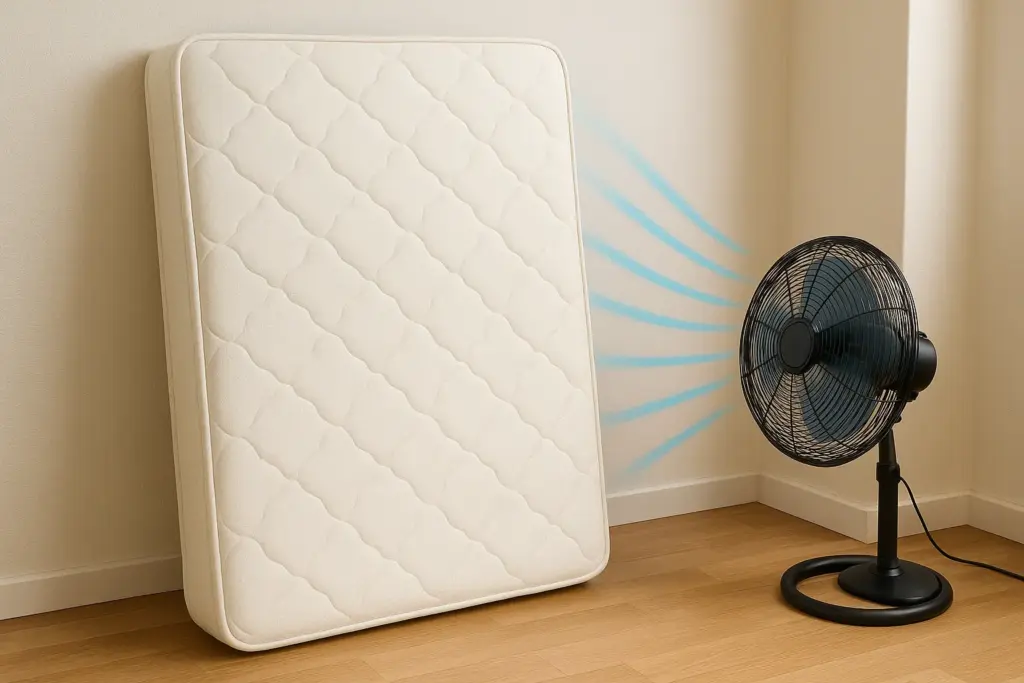
After applying any wet cleaning solution, remove all bedding and allow the mattress to air dry in a well-ventilated room with active airflow. Position fans to blow directly across the mattress surface, and consider using a dehumidifier to reduce ambient moisture. For best results, expose both sides of the mattress to airflow by propping it on its side or using mattress stands that allow air circulation underneath. This dual-sided drying reduces overall drying time significantly.
Sunlight provides natural deodorizing and antibacterial benefits while accelerating the drying process. If weather permits, move the mattress outdoors to a sunny, well-ventilated area for four to six hours. However, direct sunlight for extended periods can fade mattress covers and potentially damage certain materials, so limit outdoor drying to a single session and monitor for any adverse effects. Rotate the mattress periodically to ensure even drying on all surfaces.
Prevent Future Accidents
The most effective strategy for dealing with urine odor is preventing it from reaching your mattress in the first place. Waterproof mattress protectors create an impermeable barrier that blocks liquid from penetrating the mattress surface, eliminating the need for deep cleaning entirely. Modern protectors are designed to be virtually undetectable, with thin, quiet materials that don’t compromise comfort. For households with children, pets, or individuals prone to bedwetting, waterproof protection should be considered essential bedding.
Select a quality mattress protector with a breathable top layer made from cotton or bamboo, with waterproof backing made from polyurethane or vinyl. Encasement-style protectors that cover the entire mattress including the sides provide the most comprehensive protection against accidents that might spread beyond the sleep surface. Wash protectors regularly according to manufacturer instructions—typically weekly—to maintain hygiene and prevent allergen buildup.
For recurring urine issues, addressing the underlying cause prevents future mattress damage. Medical conditions such as urinary tract infections, diabetes, or sleep disorders may cause bedwetting in adults and older children—consult a healthcare provider if accidents occur regularly. Behavioral factors, stress, and medication side effects can also contribute to nighttime urination. For pets, housebreaking issues, anxiety, or territorial marking behaviors may lead to mattress accidents, requiring consultation with a veterinarian or animal behaviorist.
When to Call Professionals
Some urine odor situations exceed what home cleaning can effectively address, and professional intervention becomes the practical choice. Persistent odors despite multiple thorough cleaning attempts indicate deep penetration that requires industrial-grade equipment and specialized treatments. Professional steam cleaning uses higher temperatures and more powerful suction than consumer equipment, extracting deeply embedded contamination that home methods cannot reach.
Professional mattress cleaning services offer targeted treatments using enzyme cleaners and extraction equipment designed specifically for this purpose. These services typically provide on-site treatment, bringing all necessary equipment to your home for convenience. When selecting a service, choose one with specific mattress and urine odor experience, and ask about guarantees or follow-up treatments if odors persist. Professional cleaning typically costs between one hundred and three hundred dollars depending on mattress size and severity.
Consider replacement instead of continued cleaning when mattress age approaches seven to ten years, when cleaning costs approach replacement cost, or when visible mold or material degradation exists. Repeated flooding or long-term neglect may have allowed urine penetration too deep for effective treatment regardless of method. Critical warning: If you detect mold growth, musty odors that persist after cleaning, or significant material degradation, replacement is the safest option for health reasons.
Quick Fix Reference Guide
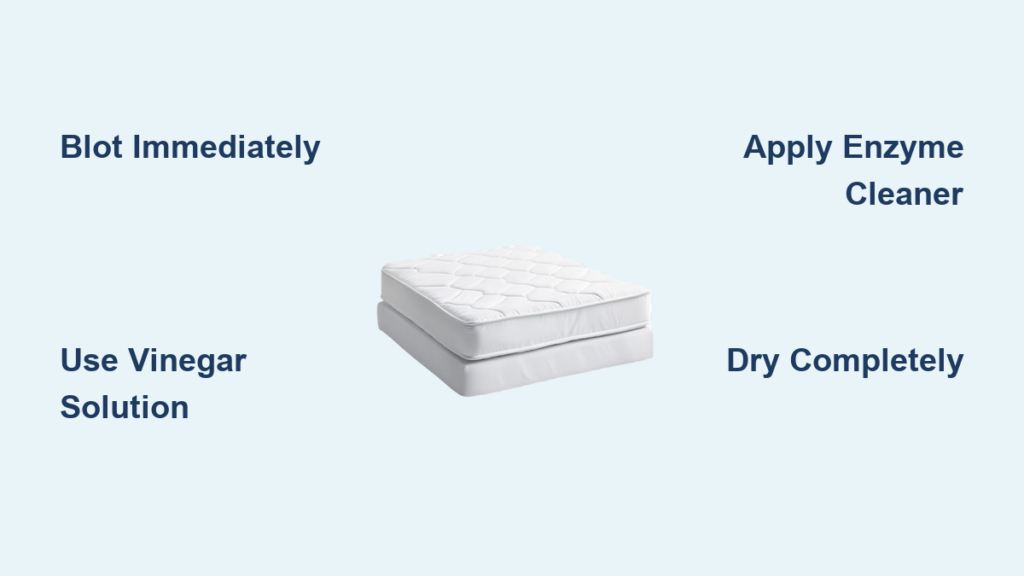
When urine hits your mattress, follow this sequence for best results. First, blot immediately with dry cloths using pressure, never rubbing. Second, spray vinegar solution (one-to-one with water) and blot again after ten minutes. Third, cover generously with baking soda and leave overnight. Fourth, vacuum thoroughly the next day. For best results on moderate to severe accidents, repeat the vinegar and baking soda process until odor disappears completely.
For set-in odors that resist initial treatment, follow the deep-clean protocol: vacuum thoroughly, apply enzyme cleaner and cover with plastic overnight, follow with hydrogen peroxide solution, dry completely, apply baking soda for forty-eight hours, then vacuum. This sequence addresses urine odor through multiple mechanisms, breaking down embedded compounds and neutralizing residual odors.
The most effective products for urine odor removal include enzyme-based cleaners specifically formulated for urine, three percent hydrogen peroxide for oxidation and stain lifting, white vinegar for pH neutralization, and baking soda for absorption and deodorizing. Prevention requires waterproof mattress protectors on all beds, weekly washing of bedding in hot water, prompt attention to any accidents, regular mattress vacuuming and inspection, proper room humidity (thirty to fifty percent), and addressing underlying medical or behavioral causes of recurring accidents. These simple steps protect your mattress investment and eliminate the need for deep cleaning entirely.