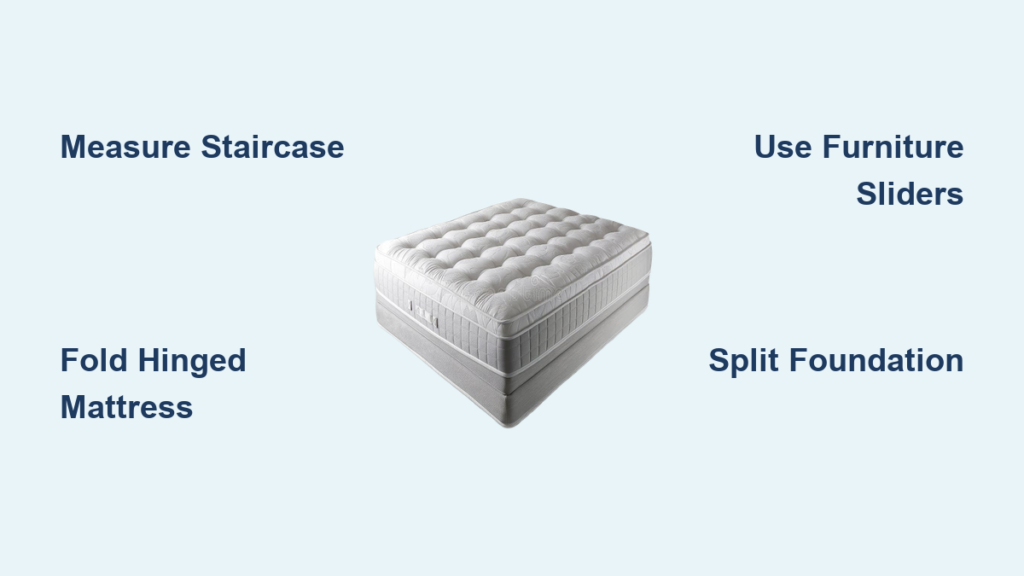
Moving a king-sized mattress up narrow, winding stairs feels like trying to solve an impossible puzzle. With standard dimensions of 76 inches wide by 80 inches long, a king mattress simply doesn’t cooperate with most residential staircases that measure just 30-36 inches wide. You’ve probably already discovered that if a queen mattress “just barely” made it up your stairs, a king will seem completely impossible. But don’t panic—thousands of homeowners have successfully navigated this challenge with the right techniques. The key is matching your specific mattress type and staircase configuration to the most effective moving strategy rather than wasting energy on approaches that won’t work for your situation.
The geometry of the problem explains why this task frustrates so many people. A king mattress can’t physically fit through a 32-inch-wide staircase when positioned flat—basic math confirms it’s impossible. The challenge intensifies with common staircase features like sharp turns, reduced headroom at landings, and narrow doorways that create bottlenecks. Understanding these specific obstacles helps you choose the right solution rather than fighting an uphill battle with the wrong approach. This guide covers every viable strategy, from DIY techniques you can implement yourself to specialized products designed specifically for difficult access situations.
Measure Your Staircase Before Attempting the Move
Before lifting a single corner of that mattress, conduct a thorough staircase assessment to identify which obstacles you’ll face. Measure the width of your staircase at its narrowest point—typically where it turns or near doorways. Check the height from stair tread to ceiling at landing areas where headroom might be restricted. Note any permanent fixtures like light fixtures, banisters, or wall decorations that could interfere with mattress passage. Finally, identify the tightest corner or turn and visualize how a mattress would need to navigate it.
This assessment reveals which solutions are viable for your specific situation. If your staircase has a single straight run with no tight turns, vertical positioning might work without any mattress modification. If you have a sharp turn at a landing with reduced headroom, you’ll need folding, compression, or split solutions. Skipping this measurement step wastes time on techniques that won’t work for your staircase configuration.
Identify Your Staircase’s Critical Bottlenecks
Pay special attention to these common problem areas that trap king mattresses mid-move:
– Landing headroom: Where the ceiling drops at turns, creating a “ceiling trap” that pins the mattress
– Doorway transitions: Narrow doorways at the top or bottom of stairs that create sudden width reductions
– Banister interference: Curved banisters that protrude into the staircase path
– Staircase pitch: Steeper staircases create more vertical clearance challenges
Mark these problem areas with painter’s tape before moving begins so your team knows where to exercise extra caution. This simple step prevents last-minute surprises that could damage your mattress or home.
Match Your Mattress Type to the Right Moving Strategy
Your mattress construction determines which techniques will work without causing damage. Choosing the wrong approach for your specific mattress type risks torn seams, damaged internal components, and voided warranties.
Innerspring Mattress Folding Techniques
Most king-sized innerspring mattresses feature a pre-engineered hinge along their center specifically designed for tight staircase navigation. This hinged construction allows you to fold the mattress approximately in half without damaging internal coils or border rods. Before attempting to fold, confirm your specific model includes this feature—many manufacturers design king innersprings with this hinge while queen sizes often lack it.
How to fold a hinged innerspring mattress:
1. Lay the mattress flat on the floor
2. Locate the center hinge line (usually visible as a slight seam)
3. Carefully fold the mattress in half along this pre-designed seam
4. Secure the folded position with 2-3 strong ropes tied tightly at intervals
5. The ropes serve dual purposes: keeping the mattress folded and providing carrying handles
Attempting to fold a non-hinged innerspring mattress will damage the internal coil structure, creating uncomfortable lumps and potentially voiding your warranty. If your king innerspring lacks a hinge and your queen “just barely” fit the stairs, professional moving services represent your best option.
Foam Mattress Compression Methods
Memory foam and latex mattresses offer significantly more flexibility than innerspring varieties because they lack internal wire structures. These foam mattresses can be folded, rolled, or curved around corners without structural concerns. Natural latex mattresses are particularly pliable—they’re often described as having a “jello-like” quality that allows them to bend around corners while maintaining integrity.
Effective DIY compression techniques for foam mattresses:
– Rolling method: Have one person control the roll while others secure it with ropes at intervals
– Folding approach: Fold in half and secure tightly with multiple ropes (works best for thinner foam mattresses)
– Vacuum sealing: Place in heavy-duty plastic bag, remove air with vacuum cleaner, then roll or fold the compressed bundle
One critical caution: Multilayer memory foam mattresses can suffer damage if folded for extended periods. Never store these mattresses folded long-term—only fold during transport and allow immediate expansion once in place.
Split Foundation Solutions for Impossible Staircases
When standard moving techniques fail, modular foundation systems provide the most reliable path forward for homeowners with extremely tight staircases.
Split King Foundation Advantages
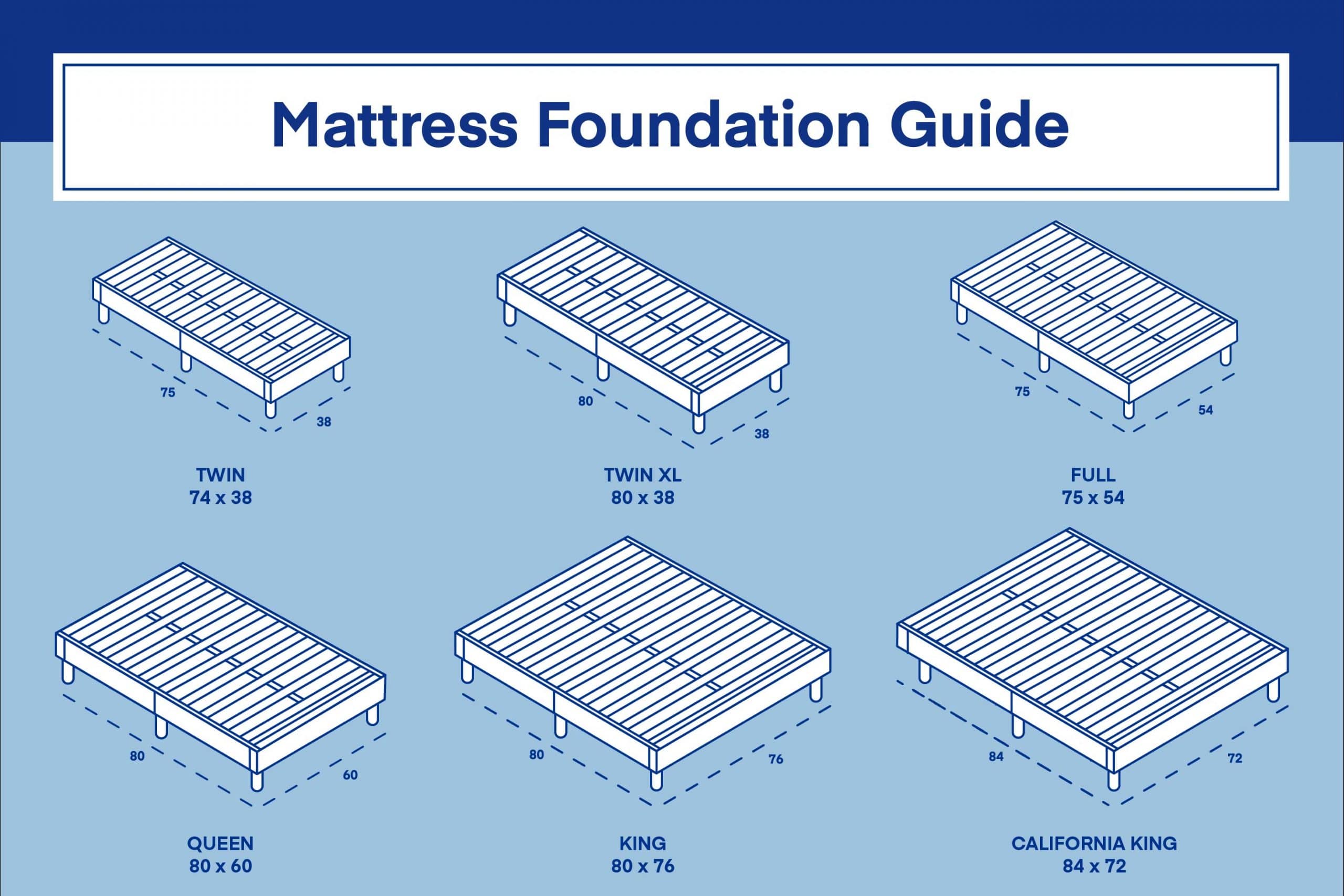
A split king foundation arrives in two separate twin XL-sized pieces rather than as one large unit. Each piece measures approximately 39 inches wide by 80 inches long—significantly smaller than a queen foundation and easily manageable even on narrow stairs. Once both pieces are in the bedroom, simply place them side by side to create the full king-sized foundation.
Why this works when other methods fail:
– Each section is smaller than a queen foundation
– No mattress modification required
– Simple assembly requires no tools
– Works with any mattress type (innerspring, foam, or hybrid)
If a queen foundation fit your stairs with minimal difficulty, a split king foundation should present no problem since each piece is smaller than a queen.
Four-Piece Modular Base Systems
For staircases with sharp turns, reduced headroom at landings, or extremely narrow doorways, four-piece modular base systems offer the ultimate solution. These knocked-down (KD) foundations break down into four separate sections, allowing each piece to be carried upstairs individually and assembled in the bedroom.
Assembly process for modular bases:
1. Carry each section upstairs separately
2. Position the sections in their designated locations
3. Connect adjacent sections using provided hardware
4. Place your mattress on top once fully assembled
This approach works particularly well for U-shaped staircases or those with multiple tight turns where even folded mattresses struggle to navigate.
Essential Equipment for Successful Mattress Moving

Professional movers succeed with difficult mattress transports because they use specialized equipment designed for the task. Gathering these tools before you begin dramatically improves your chances of success.
Furniture Sliders for Stair Navigation
Furniture sliders represent the most valuable tool for moving a king mattress up stairs. These flat, low-friction pads slip beneath mattress corners, allowing smooth movement across stair treads without catching on edges. Use four sliders—one at each corner—and have helpers lift and reposition them as the mattress moves upward.
Pro tip: For carpeted stairs, place sliders upside down (felt side down) to prevent snagging. For wooden stairs, use the smooth side down for maximum glide.
Heavy-Duty Carrying Straps
Standard rope or fabric straps distribute weight more evenly across carriers’ shoulders, reducing fatigue and improving grip. These straps typically feature hooks or loops that attach to mattress corners, creating convenient carrying points. For folded mattresses, ropes serve both to secure the fold and to provide carrying handles.
Critical safety note: Never attempt to move a king mattress alone—always enlist at least two to three strong helpers. Solo attempts frequently result in dropped mattresses, injuries, or damage to your home.
Step-by-Step Vertical Moving Technique
For staircases where folding isn’t necessary or possible, the vertical positioning technique often provides the best maneuverability.
Execute the Vertical Move Correctly
- Clear the pathway: Remove all obstacles from stairs and protect wall surfaces with old blankets
- Position the mattress vertically: Stand it on its end rather than laying it flat
- Place sliders beneath: Position furniture sliders under the bottom edge
- Coordinate your team: One person above pulling, one or more below pushing
- Move slowly: Pause frequently to assess position and adjust angles as needed
If the mattress becomes stuck, never force it free. Instead, carefully lower it back to a stable position, reassess the angle, and try a different approach. Often, rotating the mattress just a few degrees provides enough clearance to continue.
Navigate Doorway Transitions
Doorways often present unexpected challenges during mattress moving. The most effective technique involves positioning the mattress vertically, then angling one corner into the doorway first. Once that corner clears, pivot the mattress to bring the rest through. If the doorway remains too narrow, temporarily remove the door from its hinges to gain additional inches of clearance.
When Professional Movers Become Necessary
Hiring professional movers represents the wisest choice in several situations: when your staircase configuration is truly impossible for DIY methods, when the mattress is extremely expensive, when physical limitations prevent safe DIY moving, or when time constraints don’t allow for extended DIY efforts.
Cost considerations for professional mattress moving:
– Standard service: $100-$150
– Complex staircase: $150-$250
– White-glove delivery (includes setup): $250-$400
This investment often proves worthwhile compared to the risk of personal injury or costly mattress damage. Many mattress retailers offer delivery and installation services that include taking the mattress upstairs—confirm this service is available before purchasing your mattress.
Twin XL Alternative for Permanent Solution
An increasingly popular solution involves purchasing two twin XL mattresses instead of a single king. Two twin XL mattresses pushed together create an identical king-sized sleep surface, and bed bridge connectors eliminate any gap concerns. This configuration offers additional benefits including customizable firmness levels on each side and improved motion isolation.
Moving advantage: Each twin XL piece is significantly easier to transport individually than a single king mattress. Two people can easily carry each piece up even the tightest stairs without modification or special techniques.
Critical Mistakes That Damage Mattresses During Moves
Learning from others’ mistakes helps you avoid costly errors during your own mattress moving attempt. These common errors consistently cause problems:
- Moving alone: King mattresses require multiple helpers for safe transport
- Skipping measurement: Failing to assess the pathway before beginning
- Forcing stuck mattresses: Causes damage to the mattress, staircase, and potentially movers
- Neglecting protection: Results in scuffs, tears, or dirt that diminishes your new mattress
If your mattress becomes stuck mid-move, back up and try a different angle rather than forcing it through. Patience and careful repositioning almost always succeed where brute force fails.
Final Setup Tips After Successful Transport
Once you’ve successfully navigated your king mattress upstairs, proper setup ensures it performs as intended. Position the mattress on an appropriate foundation that provides adequate support across its entire surface. For foam mattresses, allow 24-72 hours for full expansion after compression during transport—consult your manufacturer’s recommendations for specific guidance.
With the right preparation, the right equipment, and the right technique for your specific mattress and staircase, getting a king mattress up even the tightest stairs is entirely achievable. The key is matching your approach to your specific obstacles rather than fighting an uphill battle with the wrong strategy. Whether you fold a hinged innerspring, compress a foam mattress, split your foundation, or call in professional help, a solution exists for your situation.