That sagging spot where you roll toward your partner every night, the annoying lump that keeps you tossing and turning, or the persistent squeak that disrupts your sleep—these common mattress problems don’t necessarily mean you need to buy a new one. Learning how to fix a bed mattress properly can save you hundreds of dollars while extending your mattress’s life by several years. Most issues have practical, cost-effective solutions that require minimal tools and basic DIY skills. This guide reveals proven techniques for addressing sagging, lumps, spring problems, foam compression, cover damage, and noise issues—so you can transform your uncomfortable mattress back into a restful sleep surface without breaking the bank.
Diagnose Your Mattress Problem
Before attempting any repair, identify exactly what’s wrong with your mattress. Different problems require different solutions, and misdiagnosis leads to wasted time and money. Start by removing all bedding and inspecting the sleep surface under good lighting. Run your hands across the mattress to feel for irregularities, press down in various areas to test support, and listen carefully as you move around for any squeaking or creaking sounds.
Common mattress issues fall into several categories: sagging appears as visible depressions where body weight has compressed materials permanently; lumps create uneven surfaces when internal materials shift or clump; broken springs produce pronounced firm spots or noise in innerspring mattresses; foam compression shows as body impressions or general thinning; cover damage includes tears, broken zippers, and worn fabric; and noise problems stem from worn springs or loose components. Once you’ve identified the primary problem, you can match it with the appropriate repair approach.
Fix Sagging Mattress Issues

Sagging is the most common mattress complaint, occurring when internal support materials compress permanently under repeated weight exposure. The depression typically forms where sleepers regularly rest, creating an uneven surface that fails to support proper spinal alignment.
Rotate and Flip the Mattress
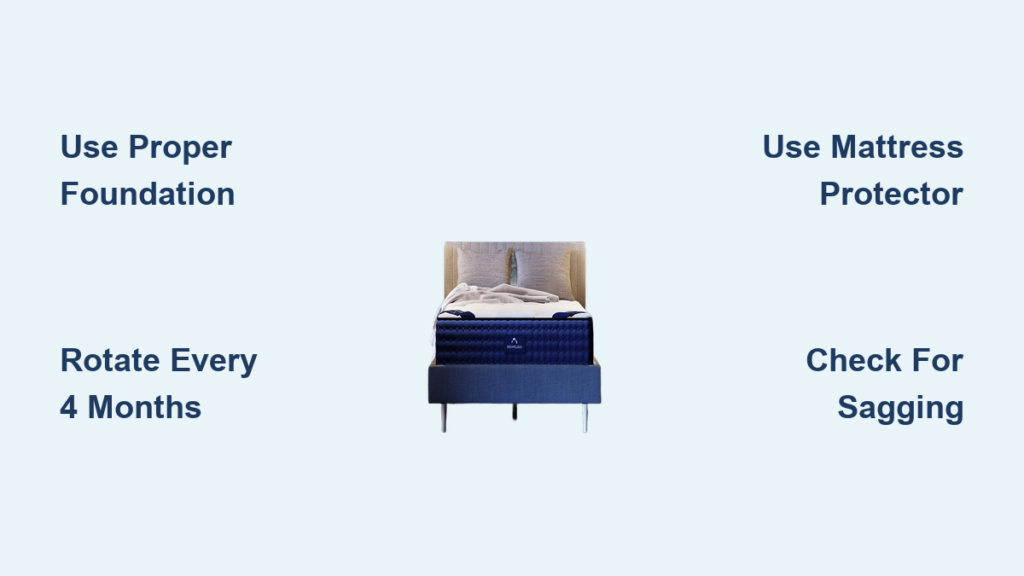
For mild sagging, redistributing wear patterns often helps. Rotate your mattress 180 degrees head-to-toe every two to three months—this moves the compressed area to a less-used portion of the sleep surface. If you have a double-sided mattress, flip it completely during each rotation. Single-sided mattresses should only be rotated, not flipped. This maintenance task takes five minutes and works best as a preventive measure or for addressing early-stage sagging before permanent damage occurs.
Add a Mattress Topper
When sagging has already developed, a quality mattress topper can restore comfort without replacing the entire mattress. Memory foam toppers between two and four inches thick effectively fill depressions and add cushioning. Choose a density of at least four pounds per cubic foot—higher density materials resist compression better and provide more consistent support. A two-inch topper addresses mild sagging, while four inches works for more pronounced depressions.
Install Support Beneath the Mattress
For more substantial sagging, adding support underneath can firm up the sleep surface. Bunky boards—solid plywood or composite boards placed between the mattress and bed frame—eliminate gaps that accelerate compression, particularly on slatted frames. Cut plywood to fit your bed frame, cover it with a thin pad for comfort, and place it under the mattress. High-density foam pads placed under affected areas provide targeted support for sagging concentrated in specific regions rather than across the entire surface.
Repair Mattress Lumps and Bumps
Lumps create uncomfortable, uneven sleep surfaces when internal materials shift, clump, or compress irregularly. This problem commonly affects foam mattresses where materials can migrate, and pillow-top mattresses where fiber padding becomes matted.
Manually Break Up Lumps
For foam mattresses with minor lumps, manual manipulation can redistribute materials effectively. Remove the mattress cover if possible, then work through the surface with your hands, pressing and kneading areas where lumps have formed. Focus on the edges of each lump, gradually working toward the center while applying firm pressure. Spend 15 to 30 minutes per lump, then allow the mattress to rest for 24 to 48 hours so materials can settle and redistribute naturally.
Vacuum and Fluff the Surface
A systematic approach combining vacuuming and manual fluffing addresses matted materials effectively. Use an upholstery attachment on your vacuum cleaner to thoroughly vacuum the entire mattress surface, which loosens embedded debris and helps separate matted fibers. Immediately after vacuuming, use your hands or a mattress brush to vigorously brush and fluff the surface in overlapping strokes. Repeat this process over several consecutive days, allowing the mattress to rest between sessions.
Address Broken Springs
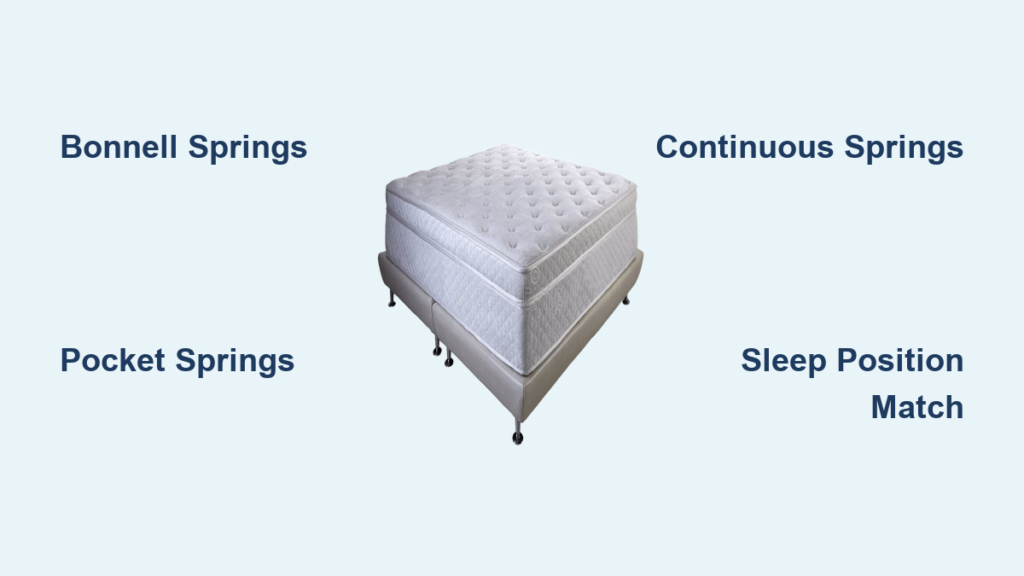
Innerspring mattresses rely on steel coils for structural support. When these components fail, symptoms include visible or felt protrusions through the surface, areas of unusual firmness, squeaking during movement, and generalized loss of support.
Temporarily Relieve Punctured Springs
If a broken spring has punctured through the mattress surface, creating a sharp point or visible bump, temporary relief is possible. Put on heavy work gloves to protect your hands, then use a sturdy object like a hammer handle to press the protruding spring back into the mattress. Apply firm, direct pressure until the spring tip retreats below the surface. This is a temporary fix—the spring will likely push through again under continued pressure—but it can extend your mattress’s usable life for weeks or months.
Add Support Under Affected Areas
For localized spring failures, placing firm support beneath the affected region can restore usable function. Cut a piece of high-density foam or plywood to fit the affected area plus several inches of overlap on all sides. Place this support layer between the mattress and your bed frame or foundation. This approach works best when only one or two springs have failed rather than widespread degradation throughout the mattress.
Restore Compressed Foam

Memory foam and latex mattresses compress over time as materials permanently deform under sustained pressure. This compression typically appears as body impressions in the sleep surface.
Apply Heat and Fluff Technique
Gentle heat makes compressed foam more pliable and responsive. Place a heating pad on low or medium heat over compressed areas for 15 to 20 minutes, then immediately flex and manipulate the foam with your hands to encourage expansion. Alternatively, run a hair dryer on medium heat over compressed sections while manually working the foam. After heating, allow the mattress to rest for several hours to fully expand.
Replace Localized Damaged Foam
When specific areas have compressed significantly while surrounding foam remains sound, targeted replacement can restore even support. Remove the mattress cover and locate the damaged section. Cut out the affected foam with a sharp utility knife, creating clean edges. Measure the removed section and purchase replacement foam of the same thickness and density. Cut the replacement piece to match exactly, insert it into the opening, and secure with spray adhesive if needed.
Patch Torn Mattress Covers
Small tears in mattress covers can be repaired effectively, while larger damage may require professional attention.
Repair Small Fabric Tears
For tears less than a few inches, fabric patches and appropriate adhesives work well. Apply fabric glue to the back of the tear, press edges together, and hold until the adhesive sets. For larger tears, cut a patch from matching fabric, apply fabric glue to both surfaces, press the patch firmly over the tear, and weight it down until dry. Allow at least 24 hours before putting bedding on the repaired area.
Stop Squeaking and Noise
Squeaking disrupts sleep and indicates friction between metal components or loose parts that need attention.
Identify the Noise Source
Squeaks originate from worn springs rubbing together, loose connection points between springs and border wire, or friction between mattress and foundation. Remove the mattress from its foundation and systematically press different areas while listening to isolate the noise source.
Lubricate Metal Components
For squeaks from metal-on-metal contact within spring units, lubrication provides effective relief. Apply silicone spray, WD-40, or paraffin wax to the contact points between affected coils. For coils rubbing together, inject lubricant between them using a thin applicator. After lubrication, work the area through several compression cycles to distribute the lubricant.
When to Replace Instead of Repair
Some mattress conditions indicate that repair attempts are impractical and replacement makes more sense.
Structural Integrity Failure
Mattresses experiencing structural failure should be replaced rather than repaired. Indicators include visible or felt damage to internal support components, severe sagging creating a hammock effect, or comfort layers so degraded they no longer provide adequate cushioning.
Hygiene and Health Issues
Certain mattress conditions require replacement for health reasons rather than repair. Visible mold or mildew growth, bed bug or dust mite infestations penetrating deep into the mattress structure, persistent stains from bodily fluids, and persistent odors that remain after thorough treatment all indicate health risks making replacement appropriate.
Prevent Future Mattress Damage
Proper maintenance prevents many problems before they develop, extending your mattress lifespan significantly.
Use Appropriate Foundation Support
Always match your mattress to a compatible foundation—innerspring mattresses typically require box springs, while foam mattresses perform best on solid foundations. Ensure the foundation provides even support without gaps or dips that cause localized stress.
Establish Rotation Schedule
Create a rotation schedule appropriate for your mattress type. Double-sided mattresses should be flipped monthly for the first three months, then quarterly thereafter. Single-sided mattresses should be rotated 180 degrees monthly for the first three months, then quarterly.
Quick Fix Reference Guide
| Problem | DIY Solution | When to Replace |
|---|---|---|
| Mild sagging | Rotate regularly, add topper | Sagging exceeds 2 inches |
| Lumps | Manual breakup, vacuum and fluff | Lumps recur repeatedly |
| Broken spring | Add local support pad | Multiple broken springs |
| Foam compression | Heat and fluff, add topper | Compression is deep and widespread |
Learning how to fix a bed mattress effectively saves money and extends sleep surface lifespan. Most common problems have practical solutions ranging from simple maintenance to targeted repairs. By accurately diagnosing issues, applying appropriate fixes, and implementing preventive maintenance, you can restore comfort and postpone replacement significantly. When repairs become impractical or health concerns arise, responsible disposal ensures your old mattress doesn’t simply become landfill waste.