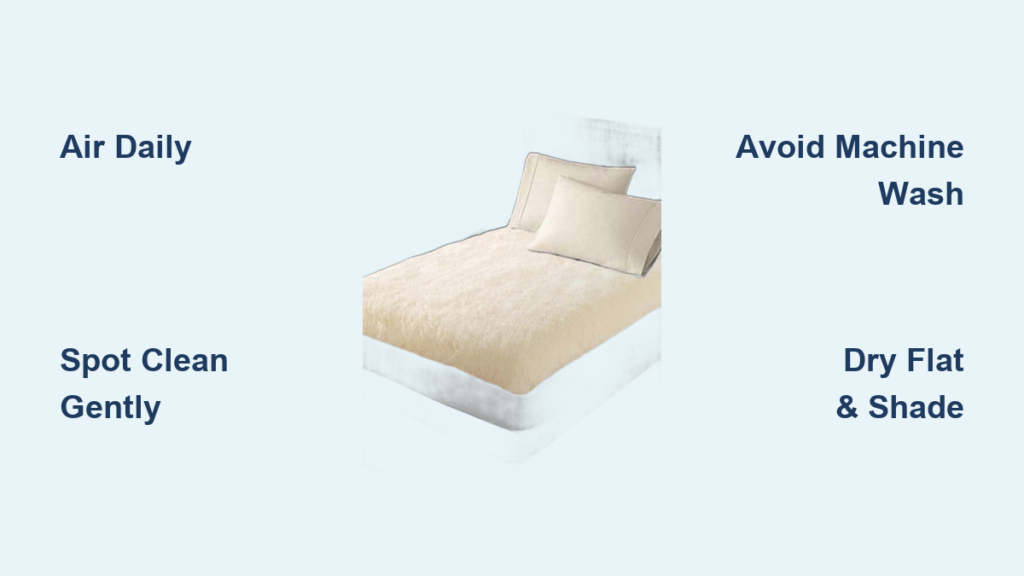
A sheepskin mattress pad adds luxurious comfort to your bed while offering natural temperature regulation and hypoallergenic properties that synthetic alternatives cannot match. However, maintaining this investment requires understanding the unique care needs of wool fibers and leather backing. Unlike standard bedding, sheepskin responds differently to cleaning methods, and improper techniques can cause permanent damage including shrinkage, matting, and loss of that signature softness you love. This comprehensive guide walks you through every aspect of sheepskin mattress pad care, from daily maintenance habits to deep cleaning methods, helping you preserve your topper’s quality for years to come.
The natural lanolin in wool fibers provides inherent resistance to bacteria, dust mites, and odors, which means your sheepskin topper stays fresher longer than synthetic options. This self-cleaning characteristic, combined with proper maintenance habits, reduces the frequency of intensive cleaning while extending the lifespan of your investment. Whether you’re dealing with a minor spill, preparing for seasonal storage, or establishing a long-term care routine, the following sections provide actionable guidance backed by proven methods.
Daily and Weekly Maintenance Habits
Establishing consistent daily and weekly maintenance habits forms the foundation of effective sheepskin care and significantly reduces the need for intensive cleaning sessions. The simplest yet most impactful daily practice involves unmaking your bed each morning and allowing the most active areas of your topper to breathe. Pull back your sheets, blankets, and comforter for at least one to two hours after waking. Throughout the night, your wool topper actively wicks moisture away from your skin to maintain comfortable temperatures, and this daily airing allows that moisture to release completely while keeping the surface fresh.
Weekly maintenance requires just a few minutes but delivers substantial benefits for your topper’s appearance and longevity. Give your sheepskin mattress pad a gentle shake to loosen any debris and restore its fluffy texture—this simple action prevents matting and keeps fibers lofted. After shaking, use a sheepskin brush to gently untangle fibers and remove surface dust or allergens that may have accumulated. Regular brushing maintains the natural loft and plush feel while preventing the compressed, dull appearance that develops from prolonged use without attention.
Monthly Rotation for Even Wear
Monthly care should include rotating and flipping your mattress topper to ensure even wear across all surfaces. If your topper features elastic corner straps, use them to reposition the topper from top to bottom, upside down, and from side to side. Alternating these positions with each monthly rotation promotes even settlement of the natural fibers, maintaining consistent comfort across the entire surface while preventing the uneven compression that develops when the same areas bear nightly weight.
Spot Cleaning for Everyday Stains

When spills or stains occur on your sheepskin mattress pad, immediate and appropriate action prevents permanent damage. For liquid stains, reach for soft towels and press gently against the spill to absorb as much moisture as possible. Never rub the stained area—rubbing causes wool fibers to mat, uncurl, and break down, creating permanent damage that cannot be reversed. For heavier spills, repeat the blotting process with fresh towels until no more moisture transfers.
Effective Stain Removal Techniques
General spot cleaning requires a solution of mild detergent specifically formulated for wool or a small amount of wool-safe cleaner diluted in lukewarm water. Dampen a clean cloth or sponge with this solution and gently dab the affected area rather than scrubbing. After treating the stain, dab again with fresh lukewarm water using a clean cloth to rinse away any detergent residue. Allow the area to air dry completely before replacing your sheets—never apply heat or use a hair dryer, as this damages wool fibers.
For stubborn spots that resist initial treatment, a traditional cleaning mixture offers additional cleaning power. Create a thick paste using baking soda, salt, and water, then apply it to the stained area and allow it to sit until completely dry. Once dry, remove the paste with a light brush or gentle shake, then allow the area to dry in shade. For residual stains, dampen the affected area with a small amount of lemon juice for natural bleaching power, then place in direct sunlight. Depending on stain severity, you may need to repeat this process two or three times for complete removal.
Why Machine Washing Poses Serious Risks
Machine washing your sheepskin mattress pad carries significant risks that typically outweigh any potential cleaning benefits. The primary concerns involve damage to both the delicate wool fibers and the leather backing that provides structural integrity. Even gentle washing machine cycles with cold water generate agitation that forces wool fibers to interlock more tightly, resulting in felting, shrinkage, and catastrophic loss of loft. Once fibers felt together, the soft, fluffy texture that makes sheepskin comfortable becomes a matted, compressed surface that cannot be restored.
Weight and Lanolin Loss Concerns
The weight factor presents another serious challenge. A wet sheepskin topper becomes extremely heavy, placing significant strain on washing machine components while creating dangerous imbalance during the spin cycle. This excess weight also makes handling a wet topper difficult and increases the risk of tearing the leather backing or damaging fibers during removal. Front-loading washers prove gentler than top-loading machines but still pose substantial risks to delicate sheepskin items.
Perhaps most importantly, machine washing strips the natural lanolin from wool fibers. This lanolin provides the dust-mite and mildew-resistant properties that contribute to wool’s inherent benefits. Once removed through harsh washing, these protective properties diminish significantly and cannot be easily restored. Manufacturers and care experts overwhelmingly advise against machine washing sheepskin mattress pads, recommending instead spot cleaning for small stains and professional cleaning or careful hand washing for more extensive cleaning needs.
Hand Washing Your Topper Safely

When your sheepskin mattress pad requires more thorough cleaning than spot treatment provides, hand washing offers a gentler alternative to machine methods. This approach demands careful attention to water temperature, detergent selection, and agitation levels to protect delicate fibers. Begin by filling a bathtub with cool or cold water—never use hot water, as heat causes wool to shrink and felt. Add a wool-specific detergent such as Eucalan, Kookaburra, or a gentle Woolite formula designed specifically for delicate wool items.
Complete Hand Washing Process
Submerge the topper gently into the water, allowing it to soak without excessive agitation. Avoid wringing or twisting the material. Instead, press down gently on the surface with flat hands to work the soapy water through the fibers and loosen dirt and debris. Allow the topper to soak for approximately fifteen to thirty minutes, then drain the tub and refill with clean cool water for rinsing. Gently press the topper again to remove soap residue, repeating the rinse process until no bubbles appear on the surface.
The drying phase requires equal care to protect your investment. Never wring or twist the topper, as this damages both fibers and leather backing. Instead, press gently to remove excess water, then lay the topper flat on a clean surface away from direct heat sources. Position it in a well-ventilated area with access to indirect sunlight. While still slightly moist, gently stretch and shape the topper to its original dimensions. Allow it to dry completely before use, which typically requires twenty-four to forty-eight hours depending on humidity levels.
Proper Drying Techniques

Drying represents one of the most critical phases of cleaning your sheepskin mattress pad—improper drying can undo the benefits of careful cleaning and potentially cause permanent damage. The fundamental rule for drying wool items involves avoiding direct heat sources and never using high temperatures. Lay the topper flat on a clean, dry surface in a well-ventilated area. If possible, position it where it receives indirect sunlight, which provides gentle warmth without the damaging effects of direct UV exposure.
Complete Drying Protocol
During drying, periodically rotate or flip the topper to ensure even drying across all surfaces. This practice prevents one section from remaining damp while others dry completely, which could lead to mildew growth or uneven compression. If space allows, hanging the topper over a wide clothesline or railing permits air circulation on both sides simultaneously. Ensure the topper is supported fully along its length to prevent stretching or distortion of the shape.
For faster drying in humid conditions, position fans to circulate air around the topper or use a dehumidifier in the room. Never place a wet topper in a small enclosed space without adequate ventilation. The drying process typically requires twenty-four to forty-eight hours depending on thickness and environmental conditions. Test the topper by pressing firmly on several areas to ensure no moisture remains before returning it to your bed—using a topper that is not completely dry can result in mold growth and musty odors that prove difficult to remove.
Extend Your Topper’s Lifespan
Extending the lifespan of your sheepskin mattress pad requires consistent care practices that protect fibers while maintaining their natural properties. The most important rule involves avoiding over-washing—sheepskin naturally resists odors and bacteria, and frequent washing strips away lanolin while damaging fibers. Rely on spot cleaning for small stains, deeper seasonal cleaning, and regular airing and sun exposure for routine maintenance rather than frequent washing.
Using a mattress protector over your sheepskin topper adds a layer of defense against spills, stains, and general soiling. Select a protector made from 100% cotton to maintain the breathability and temperature-regulating properties of the wool beneath. The correct order for making your bed is bottom sheet, mattress protector, topper, and then your top sheets and blankets. This arrangement protects both sides of the topper while allowing proper airflow essential for wool’s natural properties.
With proper care, a high-quality sheepskin mattress pad provides comfortable, healthy sleep for many years, making the investment in regular maintenance well worth the effort. The natural temperature regulation, hypoallergenic properties, and luxurious comfort you enjoy all depend on following these simple yet effective care guidelines for your sheepskin mattress pad.