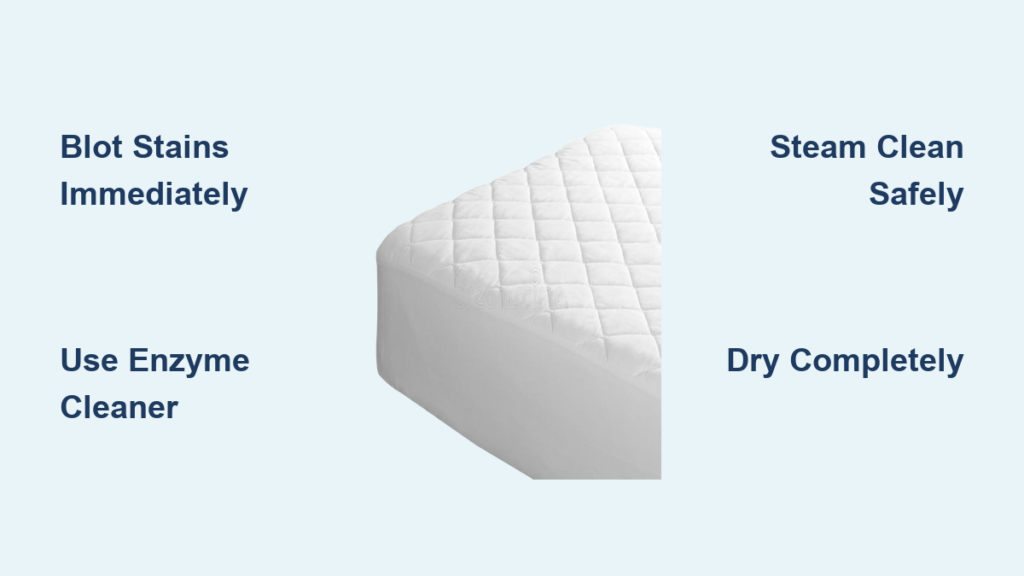
You’re staring at that stubborn coffee stain on your mattress cover but dreading the hassle of wrestling with fitted corners and zippers. Many modern mattress covers are designed as permanent encasements or simply too cumbersome to remove regularly. Learning how to clean a mattress cover without taking it off saves you time while protecting your investment against spills, allergens, and the daily accumulation of dead skin cells. This guide delivers proven methods for achieving professional results without the frustration of removal and reinstallation. You’ll discover exactly how to tackle fresh spills, embedded odors, and general soiling—all while your cover stays securely in place.
Gather Essential Cleaning Supplies Before Starting
Assemble these critical items before beginning your mattress cover cleaning project to avoid mid-process interruptions. For effective stain removal, enzyme-based cleaners work best on organic stains like urine and sweat by breaking down proteins at the molecular level. Keep mild dish soap diluted in water for general cleaning—it’s gentle enough for most covers but powerful enough to lift everyday grime. White vinegar serves as your natural antibacterial solution for light stains, while baking soda neutralizes stubborn odors without harsh chemicals.
Your toolkit must include a vacuum with upholstery attachments for preliminary debris removal and a soft-bristled brush to gently work solutions into fabric. Microfiber cloths absorb moisture better than regular towels, and spray bottles ensure even solution application. For steam cleaning, verify your machine has a mattress-specific attachment. Never start cleaning without these essentials—they’re the difference between a successful refresh and potential damage to your waterproof membrane.
Prepare Your Mattress Surface for Effective Cleaning
Begin by stripping all bedding and washing these items separately to prevent cross-contamination. Vacuum the entire mattress cover thoroughly using the upholstery attachment, focusing on seams and edges where dust mites accumulate. This crucial step removes loose particles that would otherwise turn into mud when cleaning solutions are applied. If your cover has a zipper, unzip it partially to allow better airflow during drying—this small action prevents trapped moisture that leads to mold growth.
Identify your cover’s material composition by checking manufacturer labels before applying any solution. Test all cleaners on an inconspicuous corner first to verify they won’t cause discoloration or damage. Position fans to blow across the mattress surface rather than directly at it—this creates optimal airflow without forcing moisture deeper into fibers. Proper preparation transforms your cleaning results from superficial to genuinely deep.
Treat Stains with Precision Before They Set

Act immediately on fresh spills by blotting (never rubbing) with a clean, dry cloth to absorb maximum liquid before it penetrates deeper. For protein-based stains like urine or blood, apply enzyme cleaner generously and allow 15-30 minutes of dwell time—this gives the enzymes time to break down organic matter at the molecular level. Work from the stain’s outer edges inward to prevent spreading, and always use cold water since heat sets protein stains permanently.
Coffee and tea stains require a white vinegar solution (one part vinegar to two parts water) to neutralize tannins. For oily food stains, pre-treat with dish soap to break down grease before applying water-based cleaners. Pet owners should use enzymatic cleaners specifically formulated for urine—these contain bacteria that digest uric acid crystals rather than just masking odors. The faster you respond to stains, the higher your success rate for complete removal.
Deep Clean the Entire Surface Without Over-Saturating
Divide your mattress into quadrants and tackle one section at a time to ensure thorough coverage. Mix one teaspoon of mild soap per cup of lukewarm water in a spray bottle—this ratio provides effective cleaning without excessive suds that are difficult to extract. Lightly mist each section until damp (not wet), as over-saturation risks moisture penetrating to the mattress beneath. Use a soft-bristled brush with gentle circular motions to work the solution into fibers, paying special attention to high-traffic areas near pillow zones.
Immediately follow each cleaned section with firm blotting using dry microfiber towels to extract loosened dirt and excess moisture. Move systematically across the mattress, overlapping sections slightly to avoid missed spots. This method prevents the common mistake of applying too much solution at once, which leads to prolonged drying times and potential mold growth. Complete surface cleaning takes just 20-30 minutes but dramatically refreshes your entire sleep surface.
Use Steam Cleaning for Chemical-Free Deep Sanitization
Steam cleaning kills dust mites and bacteria without harsh chemicals, making it ideal for allergy sufferers and homes with children. Fill your steam cleaner with distilled water to prevent mineral buildup, and attach the upholstery head designed for fabric surfaces. Hold the cleaning head 2-4 inches above the cover surface and move slowly to allow steam penetration—this high-temperature treatment sanitizes while lifting embedded dirt.
Make slow, overlapping passes across the entire surface, spending extra time on visibly soiled areas. Immediately blot with clean, dry microfiber towels to extract moisture and lifted residue—this two-step process (steam then extraction) prevents over-wetting. Steam cleaning typically requires 30-45 minutes but delivers professional-level results. Never skip the blotting step, as residual moisture creates ideal conditions for mold growth.
Refresh and Deodorize with Baking Soda Overnight
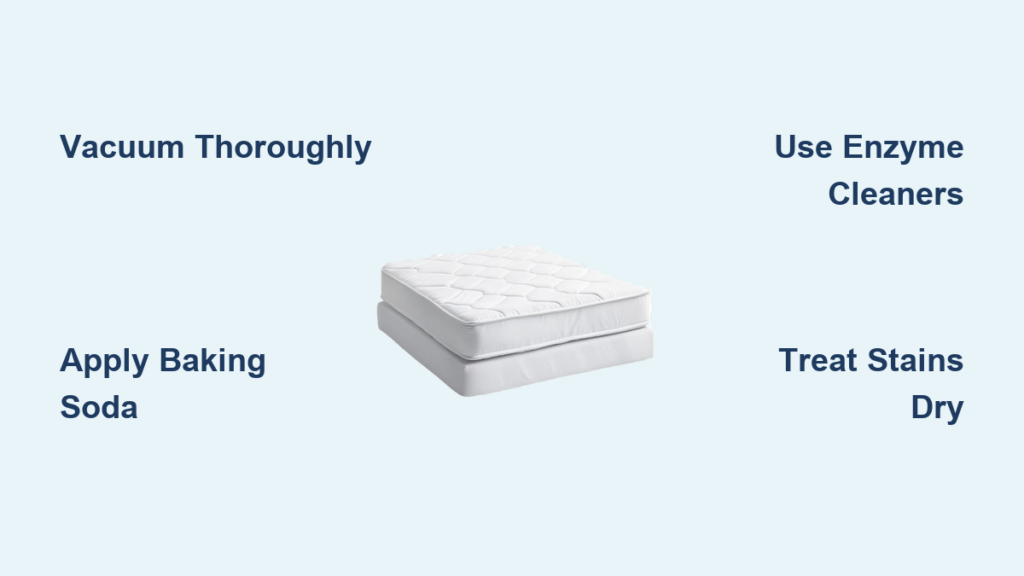
Baking soda neutralizes odors at the molecular level without masking them with artificial fragrances. Generously sprinkle baking soda across the entire mattress surface, including edges and seams where odors concentrate. For enhanced freshness, mix in a few drops of lavender or tea tree essential oil—these provide pleasant scents while adding antimicrobial properties. Allow the baking soda to sit for at least 4 hours, but overnight treatment delivers maximum odor absorption.
The extended dwell time lets baking soda’s porous structure trap odor molecules while its alkaline nature neutralizes acidic compounds from sweat and body oils. Before vacuuming, gently brush the baking soda into fabric fibers with a soft brush to reach deeper layers. Make multiple vacuum passes in different directions to ensure complete removal—residual powder creates dust when you sleep. This simple process eliminates even stubborn pet or smoke odors without chemicals.
Dry the Cover Completely to Prevent Mold Growth

Inadequate drying causes more problems than the original stain—moisture trapped in mattress covers breeds mold within 24-48 hours. After cleaning, press clean, dry towels firmly across the entire surface to extract maximum moisture. Change towels frequently as they become saturated, continuing until minimal moisture transfers. Position multiple fans to blow across (not directly at) the mattress surface, creating cross-ventilation that accelerates evaporation.
Open windows to improve natural airflow, and run a dehumidifier in the room to extract ambient moisture. For waterproof covers, pay special attention to seams where water pools. Verify complete dryness by pressing a clean white cloth firmly against multiple areas—you should see no moisture transfer. Never rush this step; most covers require 4-12 hours to dry completely depending on humidity levels. Skipping thorough drying guarantees future mold problems.
Match Cleaning Methods to Your Specific Cover Material

Waterproof covers require minimal moisture application since the backing traps liquid between layers. Use light misting rather than soaking, and increase drying time significantly. Avoid bleach and harsh chemicals that degrade waterproof membranes—stick to enzyme cleaners and mild detergents. Natural fiber covers (cotton, bamboo) absorb more solution but dry slower; use cool water to prevent shrinkage and avoid direct sunlight during drying.
Synthetic blends tolerate more aggressive cleaning but generate static that attracts dust—use anti-static spray after cleaning. Wool covers require professional cleaning methods; avoid liquid treatments that cause felting. Always check manufacturer instructions first—some high-end covers have specific cleaning requirements to maintain warranties. Using the wrong method for your material can cause irreversible damage.
Solve Common Cleaning Problems Immediately
Lingering odors after cleaning indicate incomplete treatment or moisture retention. Verify complete dryness first—many “odors” are actually mildew from trapped moisture. For persistent smells, apply baking soda again and extend dwell time to 24 hours. Discoloration usually results from improper stain treatment; test hydrogen peroxide (3%) on a hidden area before spot-treating yellowed sections.
If cleaning causes fabric damage, stop immediately and assess the extent. Small tears may be repairable with fabric glue, but significant damage often requires professional attention. Never use heat to speed drying—it sets stains and damages fibers. When in doubt, consult a professional cleaner before attempting further DIY fixes that could worsen the problem.
Maintain Cleanliness Between Deep Cleaning Sessions
Vacuum your mattress cover weekly with the upholstery attachment to remove dust mites and dead skin cells before they embed deeply. Address spills immediately with blotting and spot cleaning—waiting allows stains to set permanently. Apply baking soda monthly for odor prevention, letting it dwell overnight before vacuuming.
Use a fitted sheet as a protective barrier that absorbs most body oils and sweat—you can wash this weekly while extending your cover’s time between deep cleans. Rotate your mattress quarterly to distribute wear evenly across the cover surface. These simple habits reduce deep cleaning frequency by 50% while maintaining a healthier sleep environment.
Know When to Call Professional Cleaning Services
Severe contamination from flood water, sewage, or extensive pet damage requires industrial equipment beyond home capabilities. Large mold infestations need professional remediation that addresses both visible growth and underlying moisture issues. Antique or high-end mattress covers with special materials often warrant expert care to avoid accidental damage.
Check your mattress warranty—some manufacturers require professional cleaning to maintain coverage. Professionals bring specialized training, industrial-grade equipment, and guarantee results that DIY methods can’t match. When selecting a service, verify their experience with mattress covers specifically and confirm their methods align with your cover’s material requirements.
Extend Your Mattress Cover’s Lifespan with Proper Care
Replace covers showing thinning fabric, holes, or persistent odors despite thorough cleaning—these indicate compromised protection. Most covers last 3-5 years with proper care, but heavy use may require more frequent replacement. Maximize longevity by addressing spills immediately, using protective sheets, and following manufacturer care instructions.
Maintain indoor humidity below 50% to prevent mold growth, and protect covers from direct sunlight that causes fading. Regular rotation distributes wear evenly across the surface. With consistent care using these in-place cleaning methods, your mattress cover provides years of reliable protection without the hassle of frequent removal and reinstallation.