Your child spends 10-12 hours each day sleeping—a critical period when growth hormone is secreted, bones lengthen, and the spine decompresses from daily activities. Selecting the right mattress for your child directly impacts their physical development, sleep quality, and overall well-being. A poor-quality mattress can cause spinal misalignment, disrupted sleep patterns, and even affect concentration and mood during waking hours. This comprehensive guide will show you exactly how to choose a mattress for your child that supports healthy growth while avoiding costly mistakes most parents make. You’ll learn specific size requirements, ideal firmness levels, safety certifications to verify, and budget considerations that ensure years of quality rest for your growing child.
Why Your Child’s Mattress Affects Spinal Development
Children’s bodies undergo significant physical changes during sleep that directly impact their long-term health. When a mattress fails to provide proper support, your child’s spine can fall out of neutral alignment, creating pressure points that lead to restless nights and potential posture problems. During deep sleep cycles, bones lengthen and muscles recover—processes that require proper spinal positioning to function optimally. A mattress that’s too soft allows hips and torso to sink too deeply, while one that’s too firm creates uncomfortable pressure points, particularly for side sleepers.
Quality sleep directly affects your child’s daytime performance. Children who sleep well demonstrate improved academic performance, better emotional regulation, and stronger immune systems. Before purchasing, evaluate your child’s current sleep habits, age, and how long you want the mattress to last. Consider the mattress construction type, firmness requirements, and safety certifications to ensure you’re selecting a sleep surface that actively supports development rather than hindering it.
Select the Perfect Mattress Size for Your Child’s Age
Choosing the right size depends on your child’s current height, sleeping habits, and room space while accounting for future growth potential. Selecting a size that accommodates both current needs and growth trajectory typically offers the best long-term value.
Crib and Toddler Bed Mattress Dimensions
For infants, only firm, flat mattresses should be used to prevent suffocation hazards. Standard crib mattresses measure precisely 27 inches wide by 52 inches long with extra-firm construction designed specifically for early development. When transitioning to a toddler bed, consider junior-size options with lower height profiles around 25.5 inches, allowing independent bed access. Since these use non-standard dimensions, manufacturers typically provide matching sheets, and some companies offer trade-in programs toward larger beds once your child outgrows the junior setup.
Standard Sizes for School-Age Children
Twin mattresses (38″ x 75″) remain the most popular choice for children’s bedrooms. If your child is tall or you anticipate significant growth spurts, the Twin XL (38″ x 80″) provides 5 extra inches in length, extending the mattress’s usable life by 2-3 years. For children who move extensively during sleep or share their bed with pets, a Full mattress offers 16 additional inches of width compared to a Twin, creating ample space for comfortable movement throughout the night.
Bunk Bed and Trundle Mattress Specifications
Top bunk mattresses must stay between 5-8 inches thick to maintain guardrail safety. Most top bunks require guardrails to extend at least 16 inches above the mattress surface—using a mattress that’s too thick compromises this protection. Trundle beds require even thinner mattresses (typically around 5 inches) to slide smoothly beneath the main bed. Standard trundle dimensions are 72 inches long by 39 inches wide, designed specifically to fit within the trundle frame while providing comfortable support.
Compare Mattress Construction Types for Children
Understanding different mattress constructions helps you select a surface that matches your child’s comfort preferences and sleep habits. Each type offers distinct advantages for growing bodies.
Innerspring Mattresses for Active Sleepers
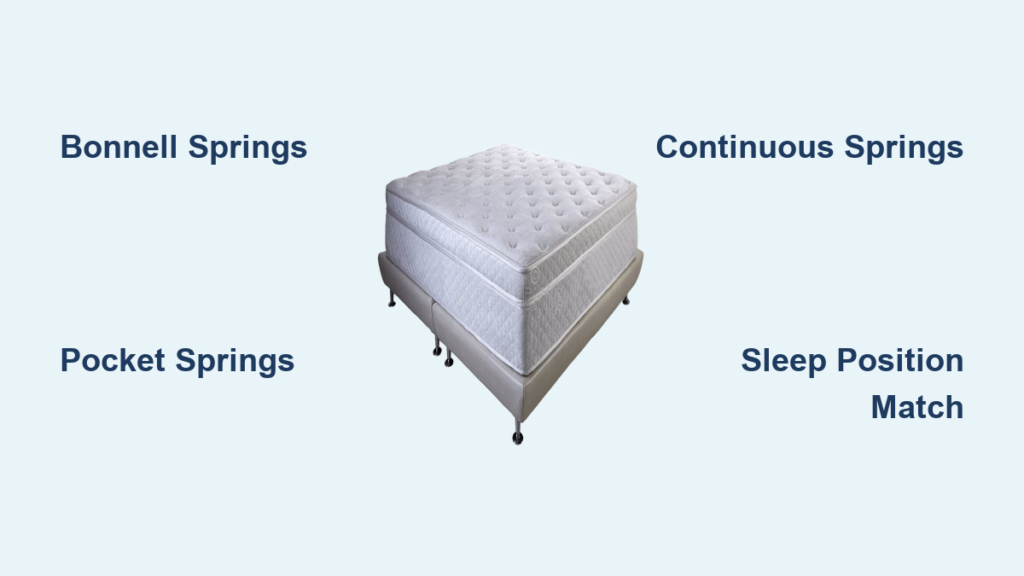
Innerspring mattresses use interconnected metal coils to deliver support with the signature “bounce” many children love. These typically cost less than foam alternatives and excel at cooling due to natural airflow through the coil system. They work well for back and stomach sleepers needing medium-firm support. While coils can eventually sag, children aren’t heavy enough to significantly stress them, making innerspring a durable option for kids’ rooms.
Memory Foam for Proper Spinal Alignment
Memory foam mattresses feature foam layers with memory foam on top and dense polyfoam base, allowing your child to sink in and feel cradled. This provides excellent spine alignment and pressure relief, particularly for side sleepers needing cushioning at shoulders and hips. Many manufacturers infuse gel to address heat retention—a critical feature for children who sleep hot. The main drawback is potential heat retention, and very soft options may lack adequate support for children under 10.
Latex Mattresses for Allergy-Prone Children
Natural or synthetic latex foam conforms to the body while providing consistent support regardless of sleep position. Latex offers a cooler sleep surface compared to traditional memory foam and naturally resists dust mites, mold, and mildew—ideal for children with allergies. With a lifespan of up to 15 years (versus 7-10 for standard foam), latex represents excellent long-term value despite higher initial cost and weight.
Hybrid Mattresses for Temperature Control
Hybrid mattresses combine foam comfort layers with coil support cores, offering benefits from both constructions. Many feature latex or memory foam top layers for contouring comfort while pocketed coils provide responsive support and promote airflow. These beds suit children who change positions frequently, sleep hot, or need both pressure relief and motion isolation. While typically more expensive, hybrids provide foam-like comfort with innerspring-like support and superior cooling.
Determine the Ideal Firmness Level for Your Child
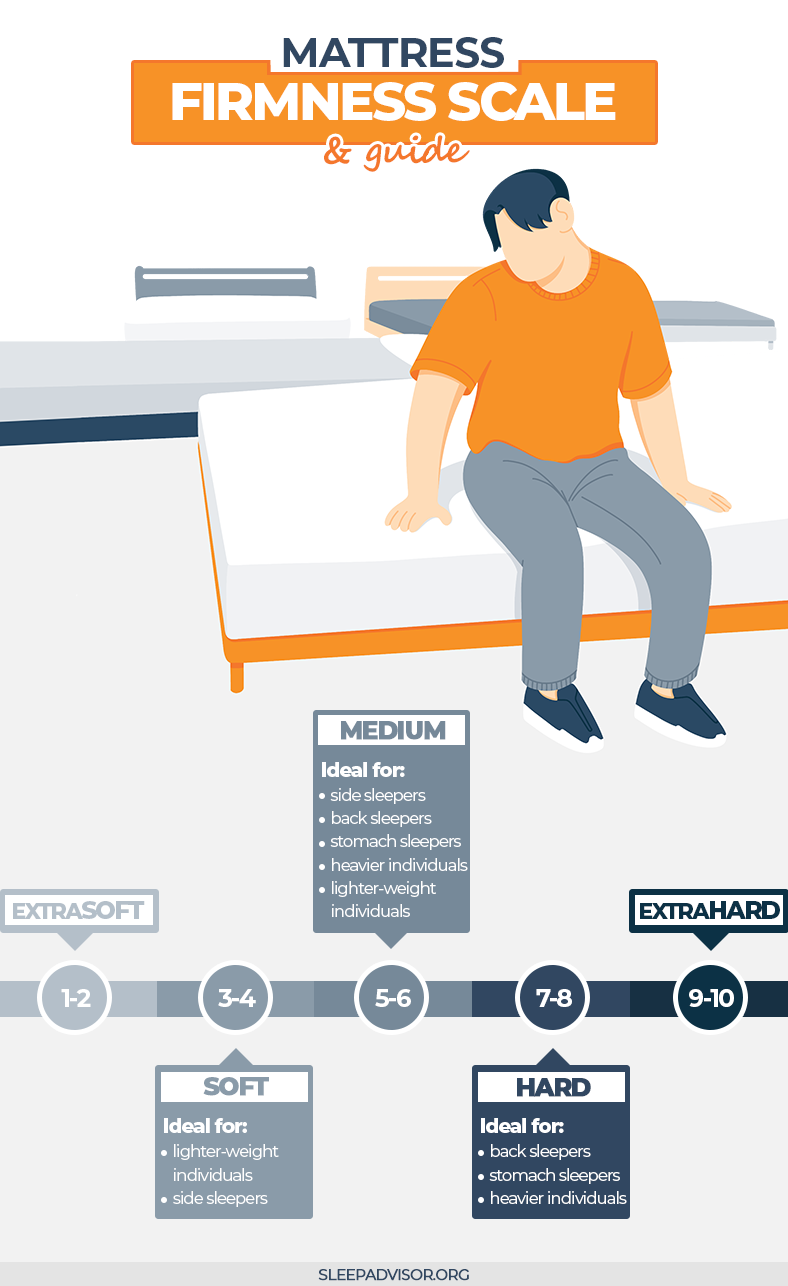
Mattress firmness significantly affects sleep quality and spinal development, making this selection particularly important for growing children.
Medium-Firm: The Gold Standard for Growing Bodies
For most children, medium-firm (6-7 on a 10-point scale) provides the ideal balance between supportive alignment and comfortable cushioning. Too-soft mattresses cause hips to sink too deeply, creating spinal misalignment that affects posture over time. Too-firm surfaces create pressure point discomfort, particularly for side sleepers, preventing proper spinal decompression. Medium-firm surfaces help maintain neutral spine positioning and reduce nighttime restlessness.
Match Firmness to Your Child’s Sleep Position
- Side sleepers: Soft to medium-soft (2-4 on firmness scale)
- Stomach sleepers: Slightly firmer (3-4) to prevent lower back strain
- Back sleepers: Soft to medium (3-5) for spine curve cushioning
- Combo sleepers: Soft to medium-soft (3-4) for position flexibility
Flippable Mattresses: Grow With Your Child
Dual-sided mattresses offer two firmness levels in one product, adapting to developmental stages. The firmer side promotes proper spinal alignment for children under 8, while the softer side provides cushioning for older children. This design extends the mattress’s useful life by evolving with your child’s needs and potentially saving money by eliminating premature replacement.
Verify Critical Safety Certifications Before Buying

Safety certifications ensure mattress materials are free from harmful substances and meet strict standards for children’s products.
Must-Have Certifications for Children’s Mattresses
- CertiPUR-US: Verifies foam made without ozone depleters, flame retardants, heavy metals, formaldehyde, or phthalates
- OEKO-TEX Standard 100: Confirms absence of harmful substances
- GOLS/GOTS: Certifies organic materials meet environmental and social criteria
Bunk Bed Safety Guidelines You Must Follow
For top bunks, maximum mattress height is 6-6.3 inches (15-16 cm) to ensure guardrails remain effective. Some manufacturers specify up to 8 inches—always check your bed frame’s specifications. Trundle mattresses should be 5 inches or less to slide smoothly beneath the main bed. Using an overly thick mattress on a top bunk creates dangerous fall risks.
Avoid These Hazardous Materials
Steer clear of mattresses containing formaldehyde, mercury, lead, or other heavy metals. The term “fiberglass-free” has become increasingly important, as some budget mattresses use fiberglass as a fire barrier that can become airborne if the cover is damaged. Be skeptical of unnecessary anti-microbial treatments and unregulated “orthopaedic” claims.
Maximize Mattress Durability for Long-Term Value
A quality children’s mattress should maintain supportive properties throughout years of use.
Expected Lifespan by Type
- Standard foam: 7-10 years
- Latex: Up to 15 years
- Innerspring: 7-10 years (longer with children’s lighter weight)
- Hybrid: 8-12 years
Quality Indicators for Long-Lasting Performance
Look for mattresses with 10-15 year warranties indicating manufacturer confidence. Higher-density foams resist sagging, while thicker coils in innerspring constructions maintain support. Quality slats tested to support significant weight (some up to 800 pounds) provide essential foundation support. Edge reinforcement prevents rolling off and maximizes usable sleep surface.
Smart Budgeting Strategies for Children’s Mattresses
Children’s mattress prices range from $70 to $1,799, with quality options typically falling between $250-$500.
Understanding Price vs. Value
Budget foam mattresses often sag within 2-3 years, making them a false economy. Quality hybrids starting around $250 offer better long-term value through extended lifespan. Consider total cost of ownership rather than just initial price—a mattress lasting 10 years provides better value than one needing replacement after 3 years.
Take Advantage of Trial Periods
Choose mattresses with extended trial periods—industry standard is 100 nights, but some offer full-year trials. This gives your child adequate adjustment time while allowing you to observe sleep quality improvements. Comprehensive warranties, including some “Forever Warranties,” protect your investment with free shipping and returns eliminating additional costs.
Maintain Your Child’s Mattress for Longevity
Proper care extends your mattress’s lifespan while ensuring continued comfort and hygiene.
Essential Protective Covers
Waterproof or stain-resistant covers are non-negotiable for children’s mattresses. Modern covers are noiseless, breathable, and machine-washable while providing stain resistance and antimicrobial properties. These protect against accidents, maintain cleanliness, and reduce allergen exposure—particularly valuable for younger children.
Foundation and Support Requirements
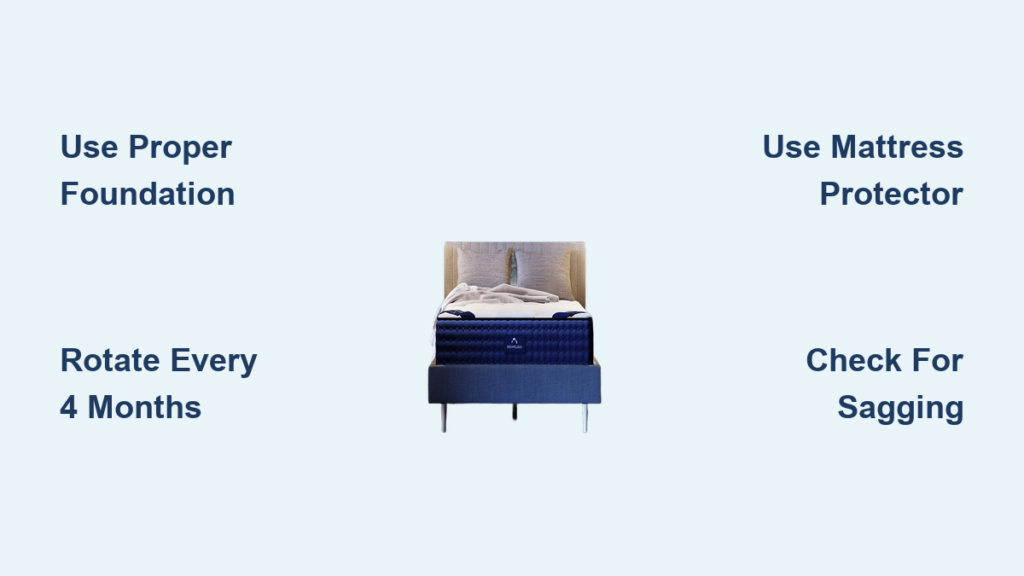
Quality slats made from 100% natural wood with proper spacing allow airflow, reducing moisture buildup. Box springs work well for innerspring mattresses, while some bunk beds use high-density base foam layers that provide sturdy support directly on bed slats. Rotating the mattress periodically distributes wear evenly and extends lifespan.
When choosing how to select a mattress for your child, focus on size compatibility, medium-firm support, safety certifications, and durable construction. The right mattress actively supports spinal development, improves sleep quality, and provides long-term value through proper material selection and maintenance. By avoiding common mistakes and prioritizing your child’s specific needs, you’ll invest in years of quality rest that supports their growth, development, and overall well-being. Remember that a quality mattress isn’t just a purchase—it’s an investment in your child’s health that pays dividends in better mood, improved concentration, and stronger physical development.