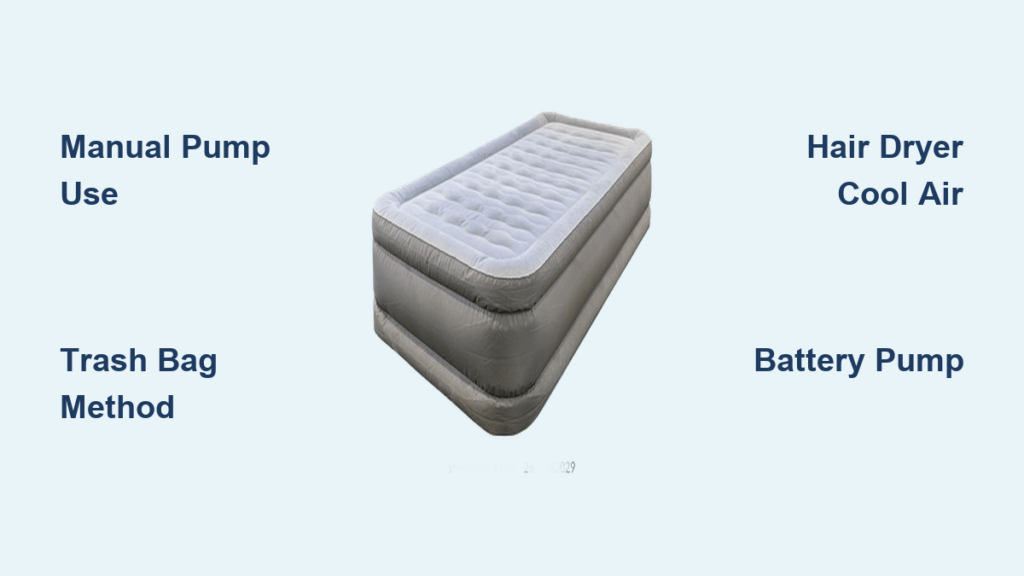
You’re camping in the wilderness, facing an unexpected power outage, or simply can’t find your air mattress pump—and you need to inflate your mattress without electricity. This frustrating scenario happens more often than you might think, but don’t worry: multiple effective solutions exist regardless of your circumstances. Whether you’re at home during a blackout or miles from the nearest outlet on a camping trip, you can achieve a comfortable night’s sleep using common household items or simple techniques. This guide reveals all the practical methods that actually work, so you’ll never be stranded with a flat air mattress again.
The key to success lies in understanding which method fits your specific situation and equipment. Each approach has distinct advantages depending on what you have available, how much time you have, and whether you’re indoors or outdoors. By the end of this guide, you’ll know exactly how to inflate your air mattress without electricity using whatever resources you have at hand—no more sleeping on the floor when the power goes out or forgetting your pump.
Identify Your Air Mattress Valve System Before Starting
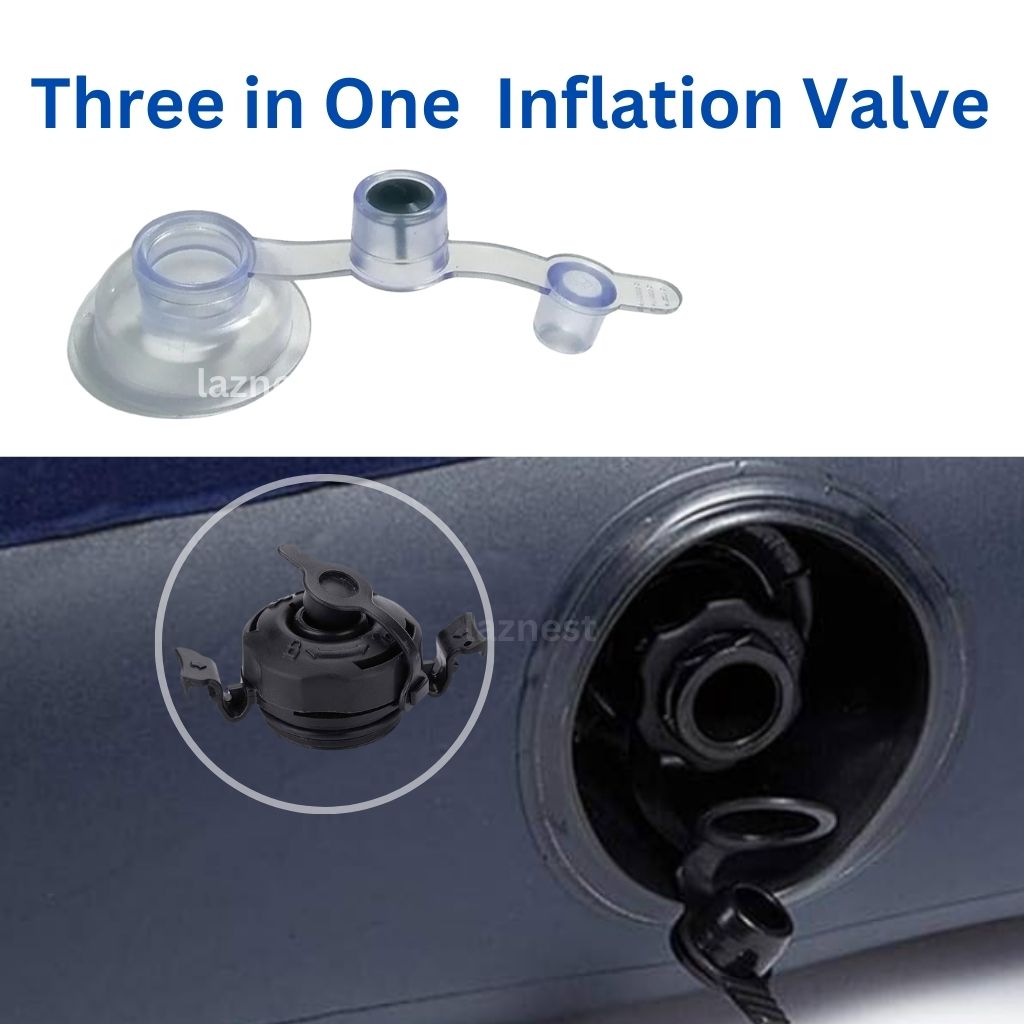
Your air mattress valve type determines which inflation methods will work effectively and how you should execute them. Most modern air mattresses use one-way valves that allow air to enter but prevent it from escaping, letting you remove your mouth or inflation device between breaths without losing previously pumped air. This feature makes methods like mouth inflation or intermittent bag squeezing practical since each breath adds to the total volume.
Two-way valves present a more challenging scenario because removing your mouth or inflation device causes immediate air loss. For these valves, you must maintain continuous contact with the valve throughout the entire process—keeping your mouth on the valve while breathing in through your nose and exhaling through your mouth. This continuous airflow pattern prevents pressure loss between breaths but requires more coordination.
Valve size and shape also significantly impact your success. Most air mattress valves are larger than the nozzles found on bike pumps, hair dryers, and similar equipment, which is why sealing solutions like duct tape or specialized attachments become necessary. Recognizing your specific valve characteristics helps you anticipate these challenges and prepare appropriate solutions before beginning.
Inflate Using Manual Hand or Foot Pumps
Manual pumps offer the most straightforward solution for inflating an air mattress without electricity. These purpose-built devices require no power source, operating entirely through physical exertion to draw in and force air through a hose into your mattress valve. Hand pumps engage your arm and shoulder muscles through repeated compression, while foot pumps let you use your legs and body weight, reducing upper body fatigue.
To use a manual pump:
- Locate your mattress valve and attach the pump’s hose securely
- Begin the pumping motion (pushing down and pulling up for hand pumps)
- Continue until reaching your desired firmness level
The primary advantage of manual pumps is their reliability—they never depend on battery charge or wall outlets. They’re designed specifically for air mattresses with appropriate valve connections and airflow capacity, eliminating the need for improvisation. Most manual pumps are lightweight and portable, making them excellent companions for camping trips or emergency situations where electrical access might be limited.
Deploy Battery-Powered Portable Pumps
Battery-powered pumps provide the perfect middle ground between manual effort and electric convenience. These self-contained units carry their own power supply, typically using standard AA batteries or rechargeable battery packs, making them ideal when wall outlets are unavailable but you want to avoid physical exertion.
Simply attach the pump’s nozzle to the mattress valve, activate the pump, and let it fill the mattress automatically. The process completes significantly faster than manual pumping and requires no physical exertion beyond setup and monitoring. Their portability is the primary advantage—they’re compact enough to pack for camping trips, store in a vehicle for emergency situations, or keep at a vacation home without worrying about electrical compatibility.
Before relying on a battery pump, always test the batteries and ensure they’re fully charged. Cold weather can dramatically reduce battery performance, so carrying spare batteries as backup addresses this concern effectively.
Execute the Trash Bag Inflation Method

When specialized equipment is completely unavailable, a simple garbage bag transforms into an effective inflation device. This method leverages a common household item to create a manual air bellows effect:
- Select the thickest plastic trash bag available (lawn and leaf bags work best)
- Swing or fan the bag to capture air
- Cinch the opening closed with your hands to trap the air
- Position the bag’s opening over the mattress valve with a tight seal
- Squeeze the bag forcefully to push air into the mattress
This process requires repeating multiple times to achieve adequate inflation. Each cycle adds a modest amount of air, with the mattress gradually firming over numerous repetitions. While this method cannot achieve full, firm inflation for larger mattresses, even partial inflation provides a significantly more comfortable sleeping surface than a completely flat air mattress.
Modify a Hair Dryer for Air Mattress Inflation
A hair dryer can serve as an improvised air mattress pump when set to its cool air function. Critical safety rule: never use hot air as it can melt or deform the vinyl components of your air mattress.
To execute this method:
– Lay the mattress flat on the ground
– Press the end of the hair dryer over the intake valve
– Turn on the dryer (cool setting only)
– Wrap the connection with duct tape to improve the seal
A useful adaptation involves attaching a vacuum cleaner crevice tool to the hair dryer end to create a more precise fit over the valve opening. Remember that hair dryers cannot fully inflate an air mattress—you’ll achieve partial inflation that you can supplement with another technique.
Repurpose a Vacuum Cleaner for Inflation
Many vacuum cleaners can inflate an air mattress by reversing their airflow direction:
- For vacuums with reverse/blow modes: set to reverse flow, attach hose to valve
- For standard vacuums: detach hose from dirt collection and connect to airflow outlet
- Press hose end over mattress valve and activate vacuum
Bag-style vacuums work particularly well for this purpose. Critical warning: avoid over-inflation as vacuums aren’t designed for sustained pressure required for mattress inflation.
Use a Leaf Blower for Rapid Inflation

Leaf blowers provide substantial airflow and can inflate an air mattress relatively quickly:
- Never use gas-powered leaf blowers indoors (dangerous carbon monoxide)
- Electric models can be used indoors (though noisy)
- Press the blower’s end over the mattress valve
- Cup your hand around the connection for better seal
The primary advantage is speed—they can inflate a mattress much faster than most alternative methods. However, the noise level makes them unsuitable for indoor use in shared spaces or late-night situations.
Adapt a Bike Pump for Air Mattress Use
Bicycle pumps can inflate air mattresses with some adaptation:
- Press the pump’s nozzle firmly against the mattress valve
- Wrap duct tape around both the valve and nozzle to create a secure connection
- Operate the pump by pressing the lever up and down
- Lay the mattress flat before beginning for even inflation
This method requires significantly more pumping cycles than inflating a bike tire due to the larger volume, but it’s effective when other options aren’t available.
Resort to Mouth Inflation as Emergency Solution
Mouth inflation should be considered a last resort due to the significant physical effort required:
- For one-way valves: create a tight seal, exhale fully, remove mouth between breaths
- For two-way valves: maintain continuous contact while breathing in through nose
- Clean the valve before starting for hygiene
This method is extremely labor-intensive and will leave you physically tired, but it requires no external equipment and will eventually achieve complete inflation if you persist.
Compare Methods for Your Specific Situation
Choose the best method based on these factors:
- For speed: Battery-powered pumps or leaf blowers (outdoors only)
- For no equipment: Trash bag method provides best balance
- For partial inflation: Hair dryers or vacuum cleaners work well
- For indoor/quiet use: Manual pumps, battery pumps, or trash bag method
Implement Essential Safety Precautions
Follow these critical safety guidelines regardless of method:
- Never use hot air from any source on your air mattress
- Don’t over-inflate—stop when mattress feels firm but has some give
- Never use gas-powered equipment indoors (carbon monoxide risk)
- Test tape in inconspicuous area first to avoid residue damage
Apply Proven Tips for Successful Inflation
Maximize your results with these practical techniques:
- Lay the mattress completely flat before beginning inflation
- Create the best possible seal between your inflation device and valve
- Monitor inflation progress and stop at your preferred firmness level
- Slightly over-inflate in warm conditions to compensate for overnight contraction
When electricity isn’t an option, having multiple reliable methods at your disposal ensures you’ll never be stuck with a deflated air mattress again. Whether you’re camping, facing a power outage, or simply forgot your pump, these proven techniques will get you sleeping comfortably in no time—no electrical outlet required.