Waking up with a stiff, aching back after a night of restless tossing and turning is a reality for millions of sleepers. Your mattress—whether too firm, too soft, or simply worn out—could be the hidden culprit behind your morning misery. Replacing an entire mattress represents a significant investment, but a strategically chosen mattress topper offers a targeted solution to transform your sleep surface without breaking the bank. The critical question every back pain sufferer needs answered is simple yet essential: how thick should a mattress topper be for back pain relief? This definitive guide cuts through marketing hype to deliver evidence-based thickness recommendations that actually work, tailored specifically to your body type, sleep position, and pain severity.
Choosing the wrong thickness creates a false solution—too thin and you’ll feel no difference; too thick and you risk destabilizing your entire sleep surface. The ideal thickness creates that perfect balance where cushioning meets structural support, allowing your spine to rest in neutral alignment throughout the night. By the end of this guide, you’ll know exactly which thickness category matches your unique needs, understand why density matters just as much as inches, and have actionable recommendations for finding lasting back pain relief without unnecessary guesswork.
The 2 to 4 Inch Thickness Sweet Spot for Back Pain
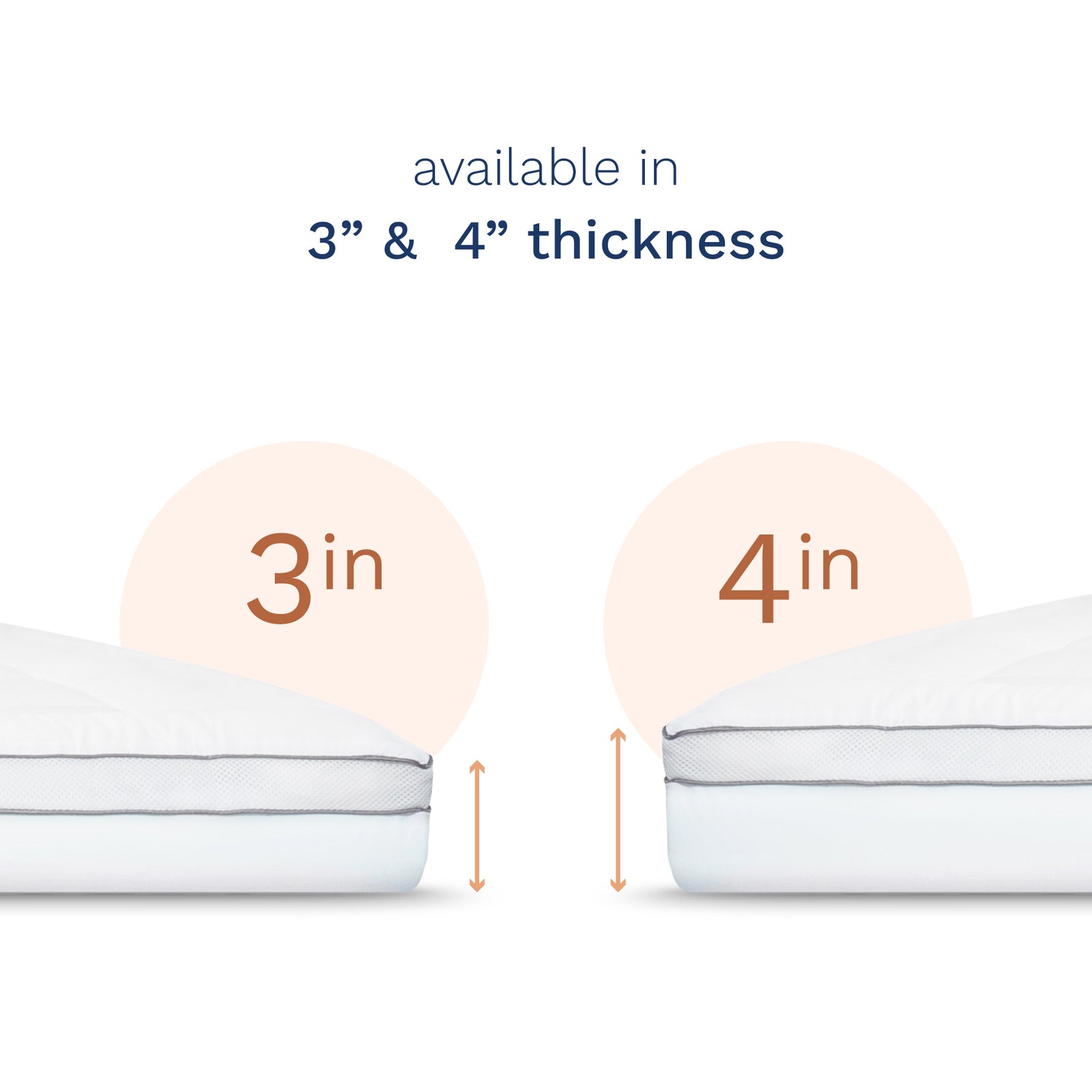
When shopping for a mattress topper specifically to alleviate back pain, thickness isn’t just a number—it’s the determining factor between meaningful relief and wasted money. Toppers under 2 inches simply lack the structural integrity to modify your mattress’s support profile significantly. These ultra-thin options might add a hint of plushness, but they can’t bridge the gap created by mattress sagging or provide the necessary spinal reinforcement that back pain sufferers require.
On the opposite end, toppers exceeding 4 inches often create more problems than they solve. Excessive depth leads to instability, making it difficult to move during sleep and causing your hips to sink too deeply—a recipe for misaligned spines and intensified morning pain. Sleep Advisor’s testing confirms this critical balance: “A topper designed for back pain relief needs medium thickness to deliver proper balance between conformability and support… Anything more than 4 inches or less than 2 inches might have a questionable effect.”
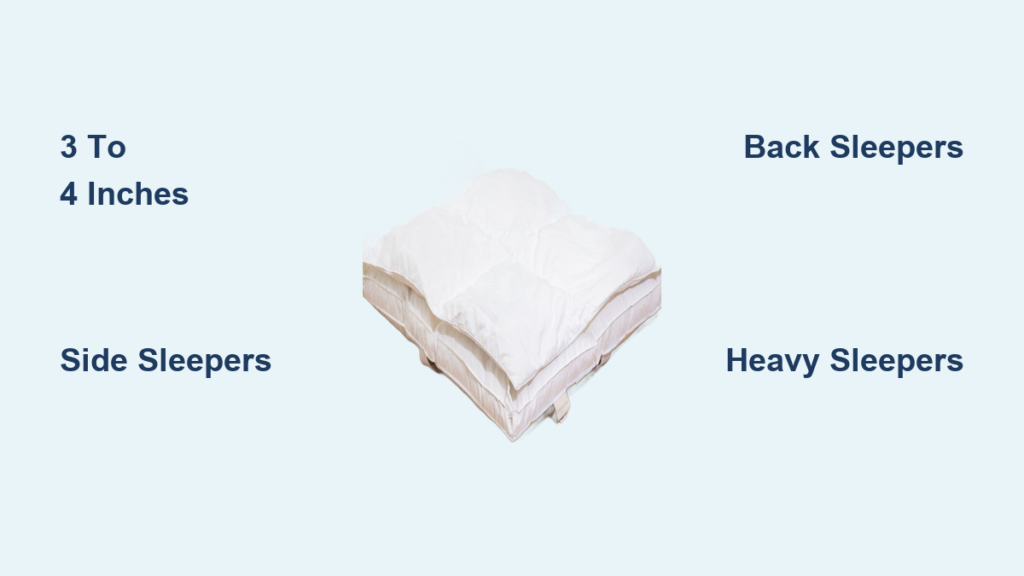
For most back pain sufferers, the 3 to 4 inch range delivers the most reliable results. This thickness provides enough material to contour around pressure points while maintaining sufficient resistance to keep your spine properly aligned. Your specific needs within this range depend on three critical factors: your dominant sleep position, body weight, and pain severity—each of which dramatically impacts how your body interacts with the topper.
Match Topper Thickness to Your Sleep Position

Your sleeping position determines exactly where your body needs cushioning versus support. Choosing the wrong thickness for your position turns potential relief into additional pain.
Side Sleepers: Target 3 to 4 Inches for Shoulder and Hip Relief
When you sleep on your side, your shoulders and hips bear the brunt of your body weight, creating two critical pressure points that can lead to radiating pain. A mattress that’s too firm prevents these areas from sinking enough to maintain spinal alignment, while one that’s too soft allows your hips to drop too low, straining lower back muscles all night.
Side sleepers battling back pain need substantial cushioning depth—specifically 3 to 4 inches—to allow proper contouring around your shoulder and hip bones. Andrew Buchan, Director at Strictly Beds & Bunks, emphasizes this point: “Choose a thicker topper (around four inches) to keep your spine aligned and prevent those pressure points from becoming a problem.” This extra depth fills the space beneath your waist, preventing that painful C-shaped spinal curve that leaves side sleepers stiff and sore.
Back Sleepers: Optimize with 2 to 3 Inches of Balanced Support
Back sleepers need the Goldilocks zone of support—enough cushioning for the lumbar region to prevent excessive arching, but sufficient firmness to keep hips from sinking too deeply. The wrong thickness throws off this delicate balance, either creating uncomfortable pressure points or allowing your spine to fall out of neutral alignment.
For back sleepers with pain, the ideal thickness lands squarely between 2 and 3 inches. This range provides enough give to cushion the lower back and tailbone without sacrificing the structural support your spine needs. Sleep Standard guidelines confirm this recommendation, noting back sleepers should “aim for a topper that’s two to three inches thick. This provides comfort without letting you sink so deeply that it throws your spine out of alignment.” This balanced profile addresses both cushioning and support requirements critical for pain-free back sleeping.
Stomach Sleepers: Choose 1 to 2 Inches for Stability Over Softness
Stomach sleeping creates the most challenging spinal alignment issues, as your midsection tends to sink into soft surfaces, forcing your lower back into a painful hyper-extended arch. The solution requires minimal cushioning that prevents this dangerous sinking while maintaining a relatively flat sleep surface.
Stomach sleepers need the thinnest profiles—just 1 to 2 inches—to avoid exacerbating lower back strain. Anything thicker allows your abdomen to sink too deeply, intensifying the spinal arch that causes pain. Your priority should be firmness and stability over plushness, ensuring your body remains relatively flat across the sleep surface. This counterintuitive approach (thinner for stomach sleepers) is essential for preventing that familiar morning lower back ache.
How Body Weight Determines Your Ideal Thickness
Your body weight fundamentally changes how a mattress topper performs, as heavier individuals compress foam more significantly than lighter sleepers. Understanding this relationship prevents the common mistake of selecting a topper that feels perfect in the store but fails under real-world use.
Light Sleepers (Under 130 Pounds): Thinner Profiles Work Best
If you weigh less than 130 pounds, your body doesn’t compress foam as deeply, meaning thinner profiles provide adequate support. For light side sleepers, 2 to 3 inches delivers sufficient cushioning for shoulders and hips without excessive sinking. Back and stomach sleepers in this category often find optimal relief with just 2 inches of topper thickness. The key is avoiding toppers designed for average or heavy sleepers, which may feel too soft and cause you to sink unnaturally.
Average Weight Sleepers (130-230 Pounds): Standard Thickness Delivers Balance
Representing most adult sleepers, this weight range aligns with standard testing conditions and product specifications. Side sleepers need the full 3 to 4 inches for proper pressure relief at critical points, while back sleepers typically find 3 inches provides the ideal balance. Stomach sleepers should target 2 to 3 inches—enough for comfort without creating destabilizing softness. This middle weight range benefits most from the standard thickness recommendations found in most product descriptions.
Heavy Sleepers (Over 230 Pounds): Never Skimp on Thickness
Heavier sleepers exert significantly more pressure, compressing thinner toppers until they “bottom out” against the mattress foundation. When this happens, the topper loses all cushioning effect and can actually intensify pressure points rather than relieving them.
If you weigh over 230 pounds, prioritize a 4-inch high-density topper regardless of sleep position. Sleep Standard guidelines explicitly state heavier sleepers should “opt for a 4-inch topper across all sleep positions to ensure proper support and pressure relief that won’t collapse under your weight.” This additional thickness provides the necessary material depth to distribute weight effectively and deliver consistent support night after night.
Why Density Matters as Much as Thickness
While thickness gets all the attention, density (measured in pounds per cubic foot) determines whether your topper maintains supportive properties over time. Low-density foams (2-3 PCF) feel soft initially but compress permanently, creating body impressions that become new pain points. For back pain sufferers, these budget options rarely deliver lasting relief.
Medium-density foams (3-5 PCF) hit the sweet spot for back pain applications. Sleep Advisor recommends “pads with densities between 3 and 5 pounds per cubic foot” as they offer “a balance of spinal support, comfort, and durability.” This range provides enough structural integrity to maintain proper spinal alignment while still contouring to relieve pressure points.
High-density foams (over 5 PCF) deliver maximum firmness and longevity, making them ideal for heavy sleepers or those with severe back pain. When shopping, prioritize density alongside thickness—a 3-inch high-density topper will outperform a 4-inch low-density option for most back pain sufferers.
Expert-Approved Thickness Chart for Back Pain Relief
Use this quick-reference chart to identify your ideal thickness based on body weight and sleep position:
| Body Weight | Sleep Position | Recommended Thickness |
|---|---|---|
| Under 130 lbs | Side | 2–3 inches |
| Under 130 lbs | Back/Stomach | 2 inches |
| 130–230 lbs | Side | 3–4 inches |
| 130–230 lbs | Back | 3 inches |
| 130–230 lbs | Stomach | 2–3 inches |
| Over 230 lbs | Any Position | 4 inches |
For severe or chronic pain, consider moving up one thickness level within your category. The extra investment often pays dividends in reduced pain and improved sleep quality.
Maximize Your Back Pain Relief: Pro Tips
Selecting the right thickness is just the beginning. To maximize back pain relief:
– Allow 24-48 hours for your new topper to fully expand after unpacking
– Pair your topper with a supportive pillow that maintains neutral spine alignment
– Rotate your topper monthly for the first six months to prevent uneven wear
– Remember: a topper cannot fix a fundamentally broken mattress—if sagging exceeds two inches, replacement may be necessary
The right mattress topper thickness transforms your existing bed into a supportive sleep surface that promotes spinal alignment and reduces nighttime discomfort. By matching thickness to your specific needs and prioritizing adequate density, you give your back the chance to recover and heal, setting the foundation for pain-free mornings and more productive days. Start with these evidence-based recommendations, invest in quality materials, and experience the difference proper support makes for back pain relief.