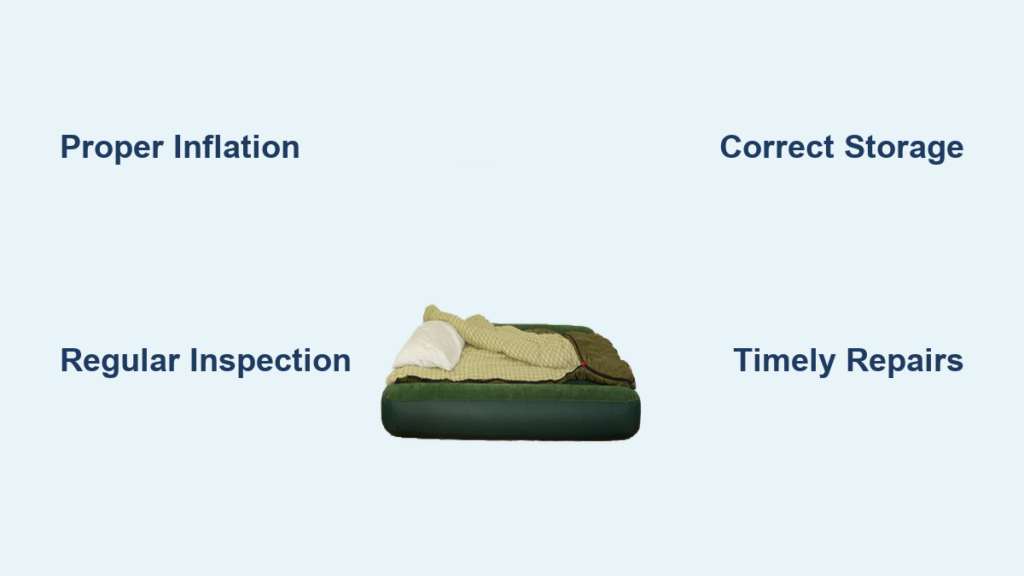
You’ve probably asked yourself “how long do air mattresses last” after watching a guest mattress slowly deflate overnight or noticing cracks forming on your camping bed. Air mattresses serve as essential sleep solutions for millions, whether as temporary guest beds, camping essentials, or even primary sleeping surfaces for some households. The answer isn’t simple—most quality air mattresses last between two to eight years, but this massive range depends entirely on how you use and care for them. Understanding the factors that determine air mattress lifespan helps you maximize your investment and avoid the frustration of premature failures that leave you scrambling for last-minute sleeping arrangements.
The reality is that an air mattress used occasionally for weekend guests might serve you faithfully for nearly a decade, while one functioning as your everyday bed could need replacement within 12 months. This guide cuts through the confusion by revealing exactly how usage patterns, materials, maintenance habits, and storage conditions impact longevity—giving you the knowledge to extend your air mattress life and recognize when replacement becomes necessary.
Occasional Use Lifespan: Guest Rooms and Camping
When you use an air mattress primarily for hosting overnight visitors or periodic camping trips, you can expect reliable service for three to seven years, with premium models potentially reaching eight years of trouble-free use. This extended lifespan occurs because the mattress experiences minimal stress between uses, allowing seams, valves, and internal chambers to fully recover from inflation cycles.
Maximizing Occasional Use Longevity
After each use, thoroughly deflate your air mattress and return it to its manufacturer-provided carry bag before storing. This simple step protects against dust accumulation, pest damage, and environmental factors that degrade materials over time. Every few months during storage, inflate the mattress to check for developing issues—this periodic “exercise” prevents valves from seizing and helps you catch small leaks before they become major problems.
For camping applications, always place a ground tarp beneath your air mattress to protect against punctures from hidden sticks, stones, or sharp debris. Avoid over-inflation when outdoors, as daytime heat causes air expansion that stresses seams beyond their design limits. Consider models specifically designed for camping with UV-resistant materials if you frequently use your mattress in direct sunlight.
Regular Home Use Lifespan: Guest Beds
Air mattresses serving as consistent secondary sleeping surfaces face increased wear that reduces their expected lifespan to two to five years. The repeated inflation/deflation cycles, nightly weight distribution, and potential exposure to spills create cumulative stress that eventually degrades critical components.
Protecting Your Regular-Use Air Mattress
Invest in a high-quality waterproof mattress protector to shield against accidental spills and nightly perspiration that breaks down vinyl materials. Maintain proper inflation levels—neither over nor under-inflated—by checking firmness before each use. Over-inflation strains seams while under-inflation creates uneven pressure points that accelerate material fatigue.
Choose models with reinforced construction features like double-wall design and welded seams rather than glued alternatives. These premium construction elements distribute weight more evenly and withstand repeated stress better than basic single-layer designs. Look for weight capacities of at least 600 pounds as an indicator of robust materials capable of handling regular use.
Daily Use Lifespan: Primary Sleeping Surface

When an air mattress becomes your nightly sleeping solution, expect a significantly reduced lifespan of one to three years. Continuous pressure, body heat fluctuations, and nightly weight shifts subject materials to relentless stress that inevitably leads to premature failure.
Extending Daily-Use Air Mattress Life
Prioritize models specifically designed for regular use with TPU (thermoplastic polyurethane) or reinforced vinyl construction. These premium materials resist cracking and maintain flexibility better than standard PVC under constant pressure. Reinflating your mattress each evening maintains proper firmness and prevents internal chambers from developing permanent creases that weaken structural integrity.
Consider adding a foam topper to distribute weight more evenly across the surface, reducing pressure points that accelerate wear. Schedule regular inspections for developing weak spots, particularly along seams and around valves where failures most commonly occur with daily use.
Material Quality Impact on Longevity
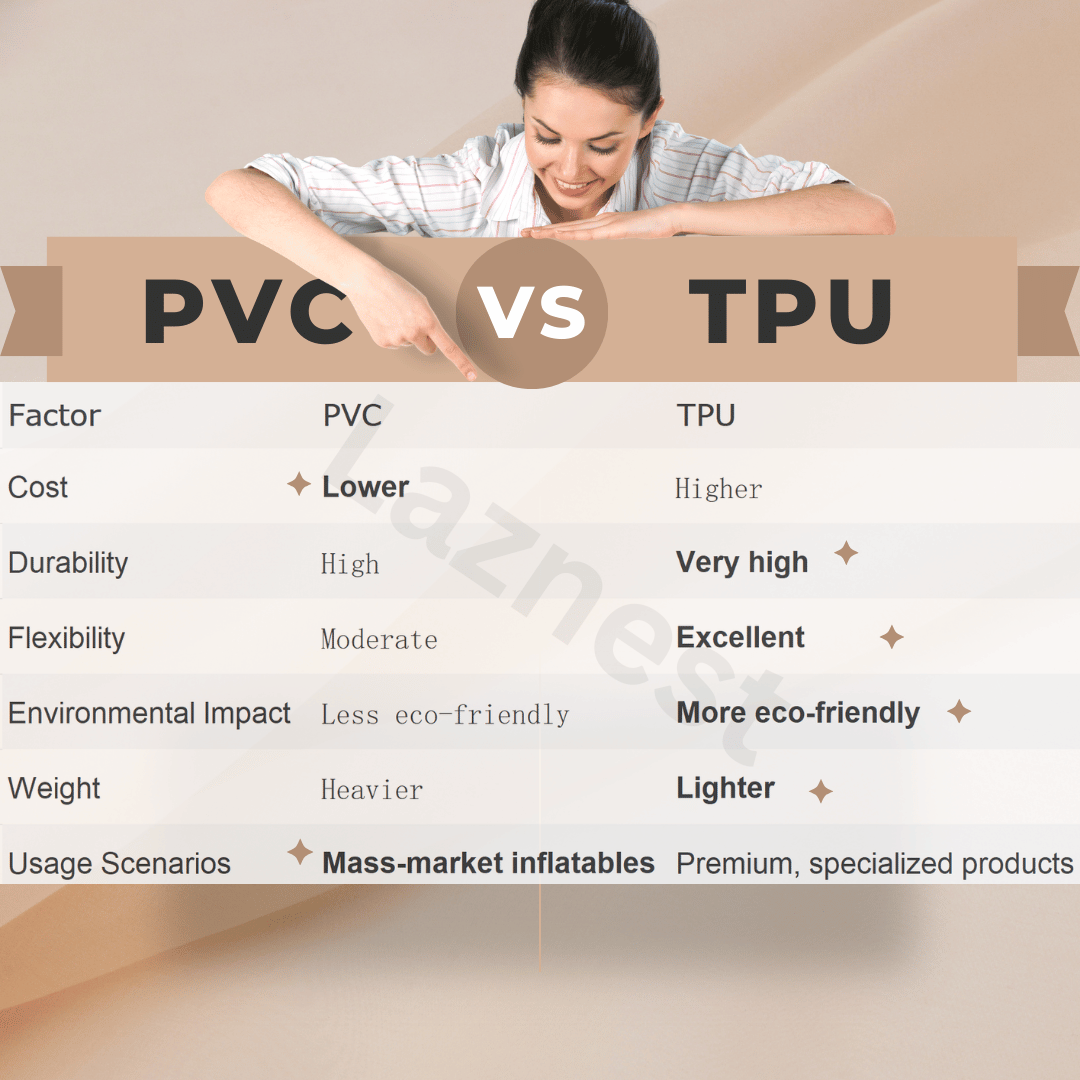
The materials used in your air mattress directly determine how long it lasts. Budget models constructed from thin vinyl typically fail within months of regular use, while premium materials like TPU and reinforced PVC withstand years of service with proper care.
Choosing Long-Lasting Materials
Thermoplastic polyurethane represents the gold standard for air mattress durability, offering exceptional resistance to punctures, UV damage, and temperature fluctuations. Unlike standard vinyl that becomes brittle over time, TPU maintains flexibility across seasons while resisting the cracking that plagues lower-quality materials.
When shopping, examine product specifications for material thickness—measured in gauges—with higher numbers indicating thicker, more durable construction. Avoid extremely thin mattresses marketed solely on portability, as their reduced material thickness guarantees shorter service life regardless of care practices.
Proper Inflation Techniques for Extended Life
Incorrect inflation represents one of the most common causes of premature air mattress failure. Over-inflating creates dangerous pressure on seams that leads to blowouts, while under-inflation causes uneven weight distribution that wears down specific areas faster than others.
Finding the Perfect Inflation Level
Your air mattress should feel firm but still show slight creases in the material when properly inflated—these subtle wrinkles indicate the vinyl isn’t stretched beyond its elastic limits. Inflate to this level rather than filling until the surface appears completely smooth and taut.
Use the built-in pump’s auto-shutoff feature if available, or stop inflating when you feel resistance during manual pumping. Allow the mattress to adjust for 15-20 minutes after initial inflation before making final adjustments, as materials continue settling under their own weight.
Storage Practices That Prevent Premature Failure
How you store your air mattress between uses significantly impacts its longevity. Improper storage creates weak points, promotes mold growth, and accelerates material degradation even when the mattress isn’t in active use.
Ideal Storage Conditions
Always store a completely deflated air mattress in a cool, dry location away from direct sunlight and sharp objects. The original carry bag provides optimal protection, but a sealed plastic container works for long-term storage. Never store heavy items on top of folded mattresses, as this compresses materials and creates permanent weak spots.
Before storing, ensure the mattress is completely dry to prevent mold growth during storage periods. Keep it away from potential pest habitats—stored air mattresses can attract rodents seeking nesting materials, so avoid basements or garages where pests are common.
Repair Options vs. Replacement Timing
Minor damage doesn’t necessarily mean your air mattress has reached the end of its service life. Understanding when to patch versus when to replace saves money while maintaining reliable performance.
Effective Patching Techniques
For small punctures less than 1/4 inch, use a vinyl repair kit specifically designed for air mattresses. Clean the area thoroughly, apply adhesive according to instructions, and press the patch firmly for several minutes to ensure proper bonding. Allow 24 hours for the adhesive to cure completely before reinflating.
Patches work best on flat surfaces away from seams and valves. Multiple patches concentrated in one area, damage near structural components, or repeated failures in the same location indicate it’s time for replacement rather than continued repairs.
Warning Signs Your Air Mattress Needs Replacement
Several clear indicators signal it’s time to replace rather than continue repairing your air mattress. Frequent leaks requiring repeated patching demonstrate general material degradation where new weak points develop faster than you can repair them.
Critical Failure Indicators
Visible cracks, tears, or noticeably thinning material represent irreversible damage to the mattress structure. A valve that no longer seals properly creates a fundamental failure that typically cannot be economically repaired. Most seriously, mold or mildew growth inside air chambers creates health hazards that warrant immediate replacement regardless of the mattress’s apparent condition.
If you find yourself reinflating multiple times throughout the night or notice significant sagging despite proper inflation, your mattress has likely reached the end of its useful life and replacement will provide better comfort and reliability.
Warranty Protection Insights
Understanding warranty coverage helps protect your investment against premature failures. Standard warranties typically cover manufacturing defects for one to three years, while premium adjustable models often include extended coverage of five to twenty years for mechanical components.
Maximizing Warranty Benefits
Before purchasing, carefully review warranty terms to understand what’s covered and required for claims. Keep your proof of purchase and register the product with the manufacturer when possible. Note that warranties typically exclude damage from misuse, improper inflation, or normal wear and tear—proper maintenance remains essential regardless of warranty coverage.
Premium adjustable air mattresses often include comprehensive warranty packages with 100% parts coverage for the first five years and labor coverage for subsequent years. These extended warranties reflect manufacturer confidence in product durability while protecting your investment against unexpected mechanical failures.
Final Lifespan Summary and Recommendations
How long air mattresses last ultimately depends on the intersection of usage frequency, material quality, and maintenance practices. Occasional use yields three to seven years of service, regular home use provides two to five years, and daily primary use typically results in one to three years of reliable performance. Premium materials like TPU and reinforced construction features significantly extend these ranges when combined with proper care.
Invest in quality construction for your intended usage pattern, maintain proper inflation levels, store correctly between uses, and address minor damage promptly through proper patching techniques. When repairs become frequent or the mattress no longer provides adequate support and comfort, replacement becomes the most practical solution for ensuring restful sleep and avoiding last-minute accommodation emergencies.