Choosing the right crib mattress size isn’t just about comfort—it’s a critical safety decision that affects your baby’s wellbeing every night. With newborns spending 14 to 18 hours daily sleeping during their first months, the precise fit between crib and mattress directly impacts entrapment risks, suffocation hazards, and overall sleep safety. Navigating the maze of standard versus mini crib measurements, understanding federal safety regulations, and avoiding dangerous gaps requires clear, actionable information. This crib mattress size chart delivers exactly that—breaking down every dimension you need to know while explaining why proper fit prevents potentially life-threatening situations. Whether you’re setting up your first nursery or replacing an aging mattress, this guide ensures your baby sleeps safely in a properly sized sleep environment that meets all CPSC safety standards.
Why Standard Crib Mattress Dimensions Matter for Safety
The standard crib mattress size in the United States follows strict federal guidelines designed to eliminate dangerous gaps between mattress and crib walls. A properly fitting standard crib mattress measures exactly 52 inches in length by 28 inches in width, with thickness not exceeding 6 inches. These regulated dimensions ensure compatibility across all full-size cribs manufactured under federal guidelines, creating a consistent sleep surface that meets Consumer Product Safety Commission requirements.
However, understanding the minimum acceptable dimensions provides crucial context for proper fit. The CPSC specifies that crib mattresses must be at least 27.25 inches wide by 51.625 inches long to account for manufacturing tolerances while ensuring a snug fit. This means your mattress might measure anywhere from 27.25 to 28 inches wide and 51.625 to 52 inches long while still meeting compliance standards. The intentional slight undersizing compared to crib interior dimensions (28 inches wide and 52 ⅜ inches long) creates the ideal relationship that prevents hazardous gaps.
How to Verify Proper Standard Mattress Fit
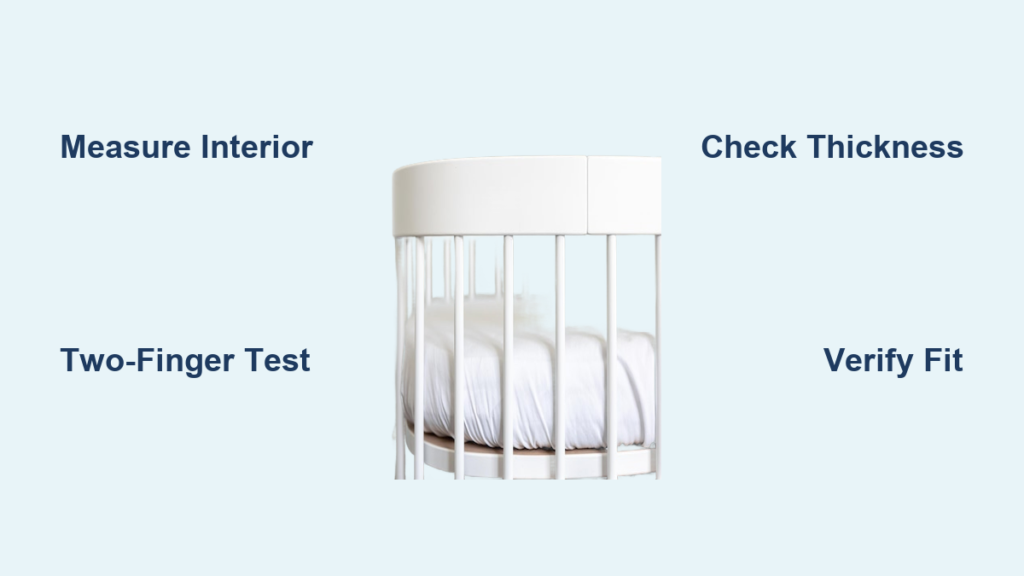
The two-finger test provides a simple method to confirm your mattress fits correctly within the crib. Push the mattress flush against one side of the crib and attempt to slip two fingers between the mattress edge and the opposite crib wall. If you can fit more than two fingers in any gap, the mattress is too small. If you cannot fit even one finger, the mattress fits properly. The ideal fit allows insertion of two fingers with some resistance—the mattress is snug but slides into position without excessive force.
Common Standard Mattress Mistakes to Avoid
Many parents mistakenly assume all standard crib mattresses are identical in size. While they must meet minimum CPSC dimensions, slight variations exist between manufacturers. Never assume a mattress will fit based on packaging claims alone—always verify measurements against your specific crib’s interior dimensions. Additionally, resist the temptation to use rolled towels or additional bedding to fill gaps, as this creates serious suffocation hazards. If your mattress doesn’t fit properly after installation, return it immediately for a correctly sized replacement.
Mini Crib Mattress Dimensions: Avoiding Dangerous Gaps
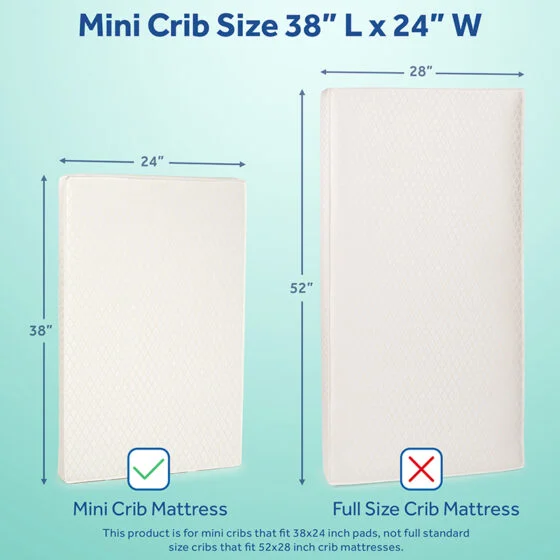
Mini cribs serve families with limited nursery space or those needing portable sleeping solutions, but their non-standard dimensions require special attention. Unlike standard cribs, mini cribs lack federal regulation for dimensions, meaning sizes vary significantly between manufacturers. The typical mini crib mattress measures 24 inches wide by 38 inches long, approximately 4 inches narrower and 14 inches shorter than standard crib mattresses.
Why Mini Crib Mattresses Aren’t Interchangeable
Using a standard crib mattress in a mini crib creates dangerous gaps that violate safety standards, while using a mini mattress in a standard crib results in even larger, more hazardous gaps. The smaller scale of mini cribs means any sizing discrepancy has proportionally greater impact—what might be a minor gap in a standard crib becomes a serious entrapment risk in a mini crib.
How to Measure Your Mini Crib Correctly
Because mini crib sizes lack standardization, measuring your specific equipment becomes essential before purchasing a mattress. Use a rigid tape measure to record the interior width at multiple points (some mini cribs have curved sides) and the interior length from end to end. Compare these measurements directly against any mattress specifications—never rely solely on general size categories like “mini crib size.” When in doubt, contact the mini crib manufacturer to confirm compatible mattress dimensions for your specific model.
Bassinet Mattress Sizes: Precision for Newborn Safety

Bassinets serve as convenient sleep spaces for newborns during the first few months but present unique sizing challenges. Unlike cribs, bassinets have no standardized dimensions, so mattress sizes vary widely depending on the manufacturer and model. The average bassinet mattress measures approximately 32 inches long by 16 inches wide, though this can differ significantly based on the bassinet’s design.
Why Bassinet Mattress Thickness Matters
Bassinet mattresses are notably thinner than crib mattresses, with typical thickness ranging from 1 to 1.5 inches. This reduced thickness reflects their intended purpose for newborns and the smaller scale of bassinet construction. However, the smaller dimensions mean that even minor sizing discrepancies create proportionally larger relative gaps, making accurate measurement essential when replacing bassinet mattresses.
How to Replace Bassinet Mattresses Safely
Most bassinets come with their own mattresses included, reducing the need for separate purchases. If you must replace your bassinet mattress, exercise extreme caution in measuring and selection. Measure the interior dimensions of your specific bassinet at multiple points, as some models feature curved or shaped interiors requiring precise matching. When in doubt, contact the bassinet manufacturer directly for compatible replacement mattress specifications rather than guessing based on general size categories.
CPSC Safety Regulations You Must Know
https://www.cpsc.gov/Newsroom/News-Release-Details/CPSC-Tests-Crib-Mattresses-for-Safety-Standards-As-Part-of-Continuing-Initiative-to-Prevent-Infant-Deaths
Federal safety regulations establish the foundation for crib mattress standards in the United States, ensuring all commercially available mattresses provide adequate protection for sleeping infants. Understanding these regulations helps you evaluate mattress options and recognize when products meet required safety thresholds.
Critical Thickness Limits for Growing Babies
The CPSC strictly regulates mattress thickness, stating that crib mattresses should not exceed 6 inches in height when measured from seam to seam. This limitation exists because thicker mattresses reduce the effective height of crib railings, potentially allowing toddlers to climb out and fall. When infants can stand in their cribs, a thick mattress positions them closer to the rail tops, increasing escape attempts and fall risks significantly.
Firmness Requirements That Prevent SIDS
The American Academy of Pediatrics strongly recommends infants sleep on a firm, flat surface covered only by a fitted sheet, with no other bedding, pillows, or soft objects in the sleep environment. A proper crib mattress should remain flat and supportive without appreciable sinking around the baby’s head or body. Soft or plush mattresses increase suffocation risk and are associated with higher SIDS incidence—never compromise on firmness for perceived comfort.
How to Measure Your Crib Like a Professional
Proper measurement technique ensures you select a crib mattress that provides the secure fit required for safe infant sleep. Many parents make the mistake of measuring the exterior dimensions or relying on the stated crib size, which can lead to incorrect mattress selections.
Step-by-Step Interior Measurement Guide
- Use a rigid tape measure (not a flexible sewing tape)
- Measure interior width at the widest point, from inside edge to inside edge
- Measure interior length at the longest point, from end wall to end wall
- Record measurements at multiple points (some cribs have curved sides)
- Compare against mattress specifications before purchasing
When Your Crib Doesn’t Meet Standard Dimensions
If your crib measures significantly smaller or larger than the standard 28 inches by 52 ⅜ inches, contact the crib manufacturer to verify whether your crib meets federal crib regulations. Cribs falling outside acceptable dimensional ranges may not provide a safe sleep environment even with a properly sized mattress. Never attempt to modify a crib to accommodate an incorrectly sized mattress—this creates additional safety hazards.
Mattress Material Comparison: Finding Your Best Option

Crib mattresses come in several construction types, each offering distinct advantages in support, durability, weight, and chemical safety. Understanding these differences helps you select the right mattress for your specific needs while ensuring your baby receives proper support.
Innerspring vs. Foam Mattresses: Safety Considerations
Innerspring mattresses rely on metal springs for structural support and typically offer excellent durability while maintaining consistent firmness over time. They’re heavier than foam alternatives, which can make sheet changes slightly more challenging but indicates higher material density. Foam mattresses are lighter and easier to lift but require careful evaluation of density—higher-density foam maintains firmness characteristics longer than lower-density alternatives.
Organic Mattress Certification Essentials
Quality organic mattresses feature natural latex cores, organic cotton fabric casings, and organic wool as a natural flame barrier. To verify authentic organic claims, look for third-party certifications like GOTS (Global Organic Textile Standard). A truly organic crib mattress should contain more than 70 percent organic materials by weight—beware of “greenwashed” products making vague organic claims without certification.
Transitioning to a Toddler Bed: Mattress Compatibility
The transition from crib to toddler bed typically occurs between 18 months and 3 years of age, but understanding mattress compatibility makes this milestone smoother while maintaining safety.
When to Transition Based on Safety Signs
The most critical indicator for transition is when your child begins climbing out of the crib or attempting to escape. Climbing behavior creates significant fall risks, necessitating immediate transition regardless of age. Children approaching 35 inches in height may have outgrown the safe sleeping capacity of a standard crib, as the crib railing reaches only to their chest while standing inside.
Why You Don’t Need a New Mattress
Standard crib mattresses and toddler bed mattresses are identical in size, making conversions straightforward. When a convertible crib transforms into a toddler bed configuration, the original crib mattress continues to work perfectly. This compatibility eliminates the need to purchase a separate toddler mattress during the transition period, saving money while providing continuity that eases the adjustment for your child.
Crib Mattress Size Comparison Reference
| Mattress Type | Width | Length | Thickness | Primary Use |
|---|---|---|---|---|
| Standard Crib | 27.25-28″ | 51.625-52″ | Up to 6″ | Full-size cribs, toddler beds |
| Mini Crib | 24″ | 38″ | 3-5″ | Portable cribs, small spaces |
| Bassinet | ~16″ | ~32″ | 1-1.5″ | Bassinets, co-sleepers |
| Toddler | 27.25-28″ | 51.625-52″ | Up to 6″ | Toddler beds (same as crib) |
| Twin | 38″ | 75″ | Standard | Next bed after toddler |
Essential Safety Checklist for Your Crib Mattress
Ensuring proper crib mattress fit requires attention to multiple critical factors beyond simple dimensions. Your mattress must be appropriately sized for your specific crib, maintain firm support throughout its lifespan, and comply with all relevant safety regulations. Gaps between the mattress and crib walls should never exceed one finger’s width, and the mattress must not exceed 6 inches in thickness when measured seam to seam.
Always measure your crib’s interior dimensions before purchasing a mattress and verify that the selected mattress provides a snug fit. When in doubt about proper fit, the two-finger test provides immediate verification. Invest in a new mattress rather than using heavily worn or secondhand options that may have lost firmness or accumulated contaminants. By prioritizing proper sizing, firm support, and verified materials, you create a safe sleep environment that supports healthy development while minimizing SIDS risks. If sizing questions arise during your selection process, always err on the side of caution—your baby’s safety is worth the extra effort to ensure everything fits perfectly.