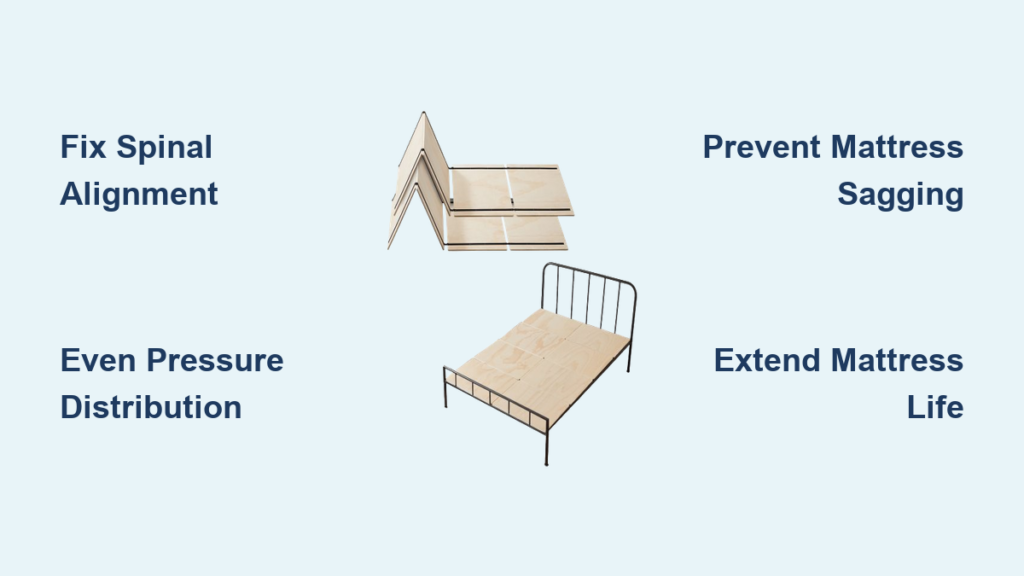
Waking up with a stiff, aching back despite investing in a premium mattress? You’re not alone. Millions of sleepers struggle with morning discomfort caused not by their mattress quality, but by what’s underneath it. When your mattress sinks between bed frame slats or compresses over weak foundation areas, your spine loses its natural alignment, forcing muscles to work overtime all night. This hidden support problem transforms restorative sleep into a cycle of pain and fatigue. An under-mattress board—often called a bunkie board—provides the missing foundation your spine needs, creating the stable surface that allows your mattress to perform as designed and finally deliver the back pain relief you’ve been searching for.
The connection between proper mattress support and spinal health is more critical than most realize. Modern bed frames, especially sleek platform beds and minimalist slatted designs, frequently lack the continuous solid surface required for optimal spinal alignment. Without this foundation, even high-end memory foam or hybrid mattresses fail to distribute pressure effectively, creating painful pressure points that strain your lower back. Adding the right under-mattress board often solves this invisible problem, transforming your sleep surface from a source of pain to a pathway for healing.
Why Under-Mattress Boards Fix Back Pain

Your spine maintains its natural S-curve during rest when properly supported, allowing muscles to fully relax and intervertebral discs to decompress. Without adequate foundation support, your mattress dips into gaps between bed frame slats or compresses over weak spots, forcing your spine out of alignment. This misalignment triggers muscle strain that manifests as the morning stiffness and pain that plague back pain sufferers—even those who’ve invested in premium mattresses.
Maintain Natural Spinal Alignment
Proper spinal alignment during sleep represents the foundation of back pain prevention. When your spine maintains its natural curves throughout the night—without sinking into gaps or tilting over uneven surfaces—muscles relax, intervertebral discs decompress, and you wake without the stiffness that accompanies misaligned sleep. The firm, continuous surface provided by an under-mattress board ensures your spine stays properly positioned regardless of how you move during the night.
Without adequate support, even the best mattresses fail to deliver their intended benefits. Memory foam mattresses, for example, need a firm foundation to achieve their characteristic body-contouring response. When these mattresses bottom out over gaps in a slatted frame, they lose their ability to distribute pressure effectively and may actually increase pressure on sensitive areas rather than reducing it. An under-mattress board provides the consistent underlying surface these specialized constructions require to function as designed.
Even Pressure Distribution
Back pain frequently develops from excessive pressure concentrated at specific body regions—particularly the lumbar area, hips, and shoulders. Mattresses are engineered to distribute this pressure across the sleeping surface, but this function depends entirely on having adequate underlying support. When a mattress sits on an uneven foundation, pressure distribution fails at the points where the mattress compresses into gaps or over unsupported areas.
The firm, continuous surface of an under-mattress board ensures pressure distributes evenly across your entire mattress surface. This even distribution reduces peak pressure at sensitive areas, decreases the effort required for position changes during sleep, and minimizes the micro-awakenings that occur when pressure discomfort becomes too intense for continued deep sleep. For chronic back pain sufferers, these improvements in pressure management translate directly to reduced pain intensity and improved morning function.
Choosing the Right Board Thickness
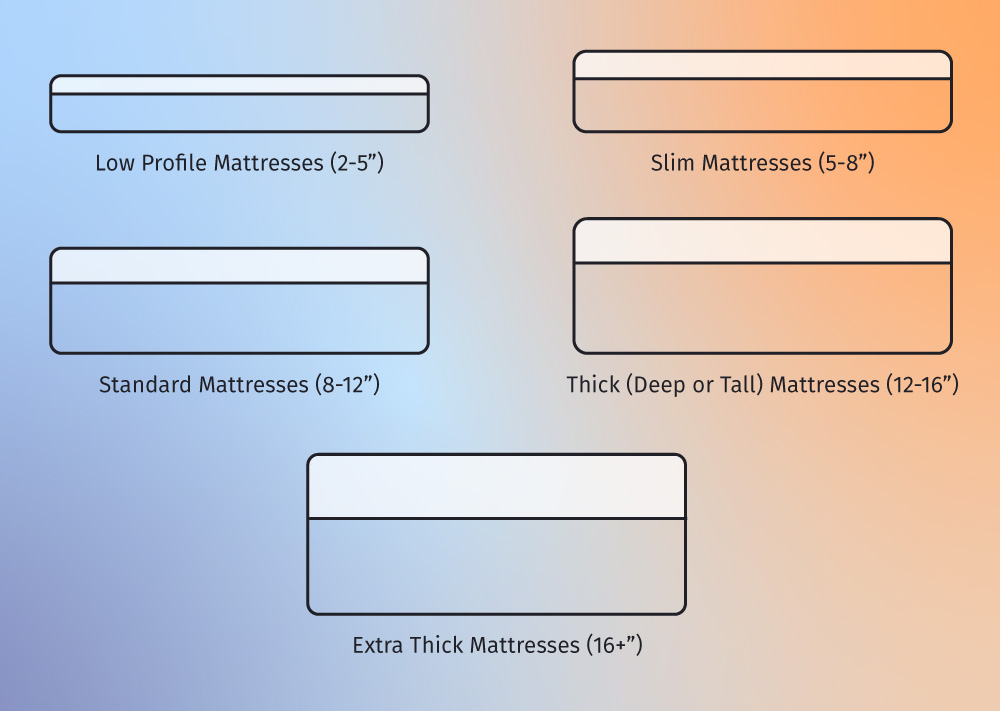
Under-mattress boards come in varying thicknesses that affect both support firmness and overall bed height. Selecting the appropriate thickness for your needs ensures you receive the back pain relief benefits you’re seeking without unwanted side effects like excessive bed height or flexibility that undermines support.
Thin Versus Thick Options
Thinner boards, typically around 0.5 inches thick, provide substantial support while adding minimal height to your sleep system. These low-profile options work well for platform beds that already have solid surfaces but need additional rigidity, or for sleepers who prefer their beds close to the ground. A quality 0.5-inch board delivers significant support while remaining virtually invisible once the mattress is placed atop it.
Thicker boards in the 1-2 inch range offer more rigid support and greater durability, making them suitable for heavier individuals, couples, or back pain sufferers requiring maximum stabilization. The additional thickness prevents any flexing under heavy loads and typically indicates denser core materials that maintain their supportive properties over longer service lives. However, the added height may affect users who have difficulty accessing higher beds or who prefer low-profile sleep systems.
Load Capacity Guidelines
Maximum weight capacity represents a critical specification when selecting an under-mattress board for back pain relief. Quality boards are rated to support specific total weights across their surface, with premium models handling up to 500 pounds. This capacity accommodates most adult sleepers, including those with higher body weights who require reinforced support systems to achieve adequate spinal alignment.
The 500-pound rating applies to distributed weight across the entire board surface rather than point loads at specific locations. For couples, this capacity provides adequate safety margins even when both individuals approach average adult weights, ensuring the board maintains its structural integrity and supportive properties throughout years of nightly use. Lighter boards in the 15-25 pound range may prove insufficient for heavier individuals or couples, potentially flexing or compressing in ways that undermine back pain relief.
Matching Your Mattress Type
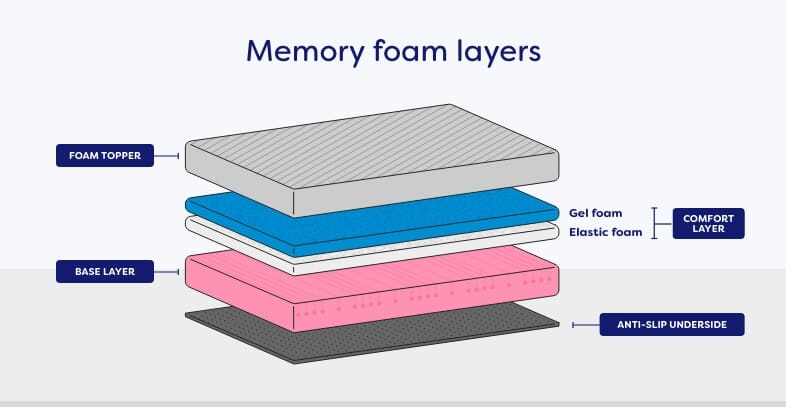
Different mattress constructions respond differently to under-mattress board support, and understanding these variations helps you maximize your investment’s benefits. While virtually all mattress types benefit from adequate underlying support, the magnitude of improvement varies based on construction and inherent support requirements.
Memory Foam Mattresses
Memory foam mattresses derive substantial benefit from under-mattress boards due to their dense construction and sensitivity to foundation quality. Without adequate support, memory foam compresses more deeply than intended, creating excessive sinkage that strains the lower back rather than supporting it comfortably. The contoured embrace that makes memory foam appealing when properly supported becomes a source of discomfort when the mattress bottoms out over gaps in an inadequate foundation.
A solid under-mattress board ensures memory foam performs as designed—contouring to body curves while providing responsive support that maintains spinal alignment. For back pain sufferers who selected memory foam specifically for its pressure-relieving properties, adding a proper support board often unlocks benefits that were present in the mattress design but unreachable due to foundation deficiencies.
Hybrid and Latex Mattress
Hybrid mattresses combining innerspring coils with foam comfort layers also benefit significantly from bunkie boards, as the coils require consistent underlying support to maintain their responsive characteristics. When hybrids sit on uneven foundations, coil migration creates uneven sleeping surfaces that undermine the balanced support these mattresses are designed to provide.
Latex mattresses similarly require firm, even support to maintain their pressure-relolving properties and prevent accelerated degradation. The natural resilience of latex makes it less prone to permanent compression than memory foam, but inadequate support still compromises performance and comfort over time.
Solving Bed Frame Problems
Many back pain cases trace directly to bed frame deficiencies that under-mattress boards can address. Understanding which frame issues create support problems helps you diagnose your situation and select the appropriate solution.
Slatted Frame Challenges
Slatted bed frames represent the most common application for under-mattress boards, as the gaps between slats create uneven support that accelerates mattress sagging and disrupts sleep quality. Even frames with closely-spaced slats allow some mattress compression between the slats, creating a ripple effect across the sleeping surface that undermines spinal alignment.
A bunkie board eliminates these gaps by providing continuous support across the entire mattress footprint. The board bridges the spaces between slats, ensuring the mattress experiences uniform underlying support regardless of spacing. One customer specifically noted that measuring their bed frame and selecting a properly-sized bunkie board resolved the support issues their slatted frame created, allowing their mattress to perform as intended.
Platform Bed Considerations
Platform beds with solid surfaces may not require additional support boards, though lower-quality platforms with thin or flexible panels can benefit from added rigidity. The solid construction of quality platform beds typically provides adequate support for most mattress types, but budget platforms or those designed primarily for aesthetic appeal may flex under load in ways that compromise mattress performance.
Adding an under-mattress board to a platform bed with inadequate rigidity transforms the sleep surface from a marginally-supportive setup to a stable foundation that maximizes mattress benefits. The relatively modest investment required often provides more back pain relief than replacing the platform bed entirely.
Installation for Maximum Benefit
Proper installation ensures your under-mattress board provides consistent, effective support throughout its service life. While the process requires minimal effort, attention to a few key details prevents problems and maximizes benefits.
Preparation Steps
Before installing your under-mattress board, measure both your bed frame interior dimensions and your mattress specifications to ensure proper fit. The board should match or slightly exceed the frame interior dimensions, providing complete support coverage without interference from frame components. Queen size boards measuring 58 inches by 80 inches represent the standard dimension for queen mattresses, though verifying your specific measurements before purchasing prevents costly mistakes.
Inspect your bed frame for damaged, missing, or uneven slats that could affect sleep quality even with the additional support. Replacing damaged slats or adding support rails where needed creates the proper foundation for bunkie board effectiveness. Cleaning the installation area by vacuuming between slats and wiping down surfaces prepares a clean, dry environment for board placement.
Proper Positioning
Position the under-mattress board centered within the bed frame to ensure equal support coverage on all sides. The board should rest firmly without rocking or tilting, indicating proper contact across its entire surface. For slatted frames, confirm the board contacts multiple slats rather than bridging across them in ways that could create pressure points.
Once properly positioned, carefully lower your mattress onto the board without displacing the board’s alignment. For heavier mattresses, enlisting assistance protects against strains and ensures the board remains properly positioned during installation. After installation, test the sleep surface by applying pressure at various locations to confirm consistent support without soft spots or uneven areas.
Extending Mattress Lifespan
Beyond immediate back pain relief, under-mattress boards provide substantial value by protecting your mattress investment. The ability to extend mattress service life significantly makes bunkie boards one of the most cost-effective sleep accessories available.
Mattresses degrade unevenly when subjected to repeated stress from inadequate underlying support. The compression that occurs over gaps between slats or weak foundation areas is not fully recoverable, gradually reducing the mattress’s pressure-relieving properties. Under-mattress boards prevent this uneven degradation by providing consistent support that distributes weight evenly across the mattress surface. This even distribution eliminates the localized compression that causes sagging and body impressions, allowing the mattress to maintain its intended comfort and support characteristics throughout its full service life.
Maximizing Your Investment
For those experiencing morning back stiffness, unexplained sleep disruption, or mattress discomfort on platform or slatted bed frames, adding a quality under-mattress board provides the supportive foundation necessary for restorative, pain-free sleep. The relatively modest investment required yields substantial returns in improved sleep quality, enhanced daily function, and extended mattress service life.
If you’ve struggled with back pain despite trying various solutions, consider whether your bed frame might be the hidden culprit undermining your mattress’s ability to support your spine. A simple under-mattress board may provide the difference between waking refreshed and pain-free versus starting each day with stiffness and discomfort. Given the modest cost and minimal effort required, exploring this solution represents one of the most practical steps you can take toward better sleep and reduced back pain.