When shopping for a new mattress, most consumers focus on firmness, materials, or price—but overlook one critical specification that affects every aspect of sleep quality: mattress thickness. The average mattress thickness directly impacts your pressure point relief, spinal alignment, durability, and even how easily you can get in and out of bed. Understanding the standard range of 8-14 inches—and why your specific needs might require something outside this average—transforms mattress shopping from overwhelming to targeted. Whether you’re a lightweight side sleeper needing extra cushioning or a senior prioritizing accessibility, matching thickness to your body and sleep habits creates the foundation for truly restorative sleep. This guide reveals exactly how to determine your ideal mattress depth based on your unique circumstances.
Why Your Mattress Thickness Matters for Better Sleep
Mattress thickness isn’t just about how plush your bed looks—it’s the foundation of your sleep support system. The depth of your mattress directly influences how pressure distributes across your body, whether your spine maintains proper alignment through the night, and how long your mattress will last before sagging or developing body impressions. A mattress that’s too thin fails to provide adequate cushioning for pressure points like hips and shoulders, while one that’s too thick can cause excessive sinkage that misaligns your spine. The average mattress thickness of 10-12 inches works for most adults, but individual factors like sleeping position and body weight mean this standard won’t serve everyone equally well.
How Mattress Thickness Affects Spinal Alignment and Pressure Points

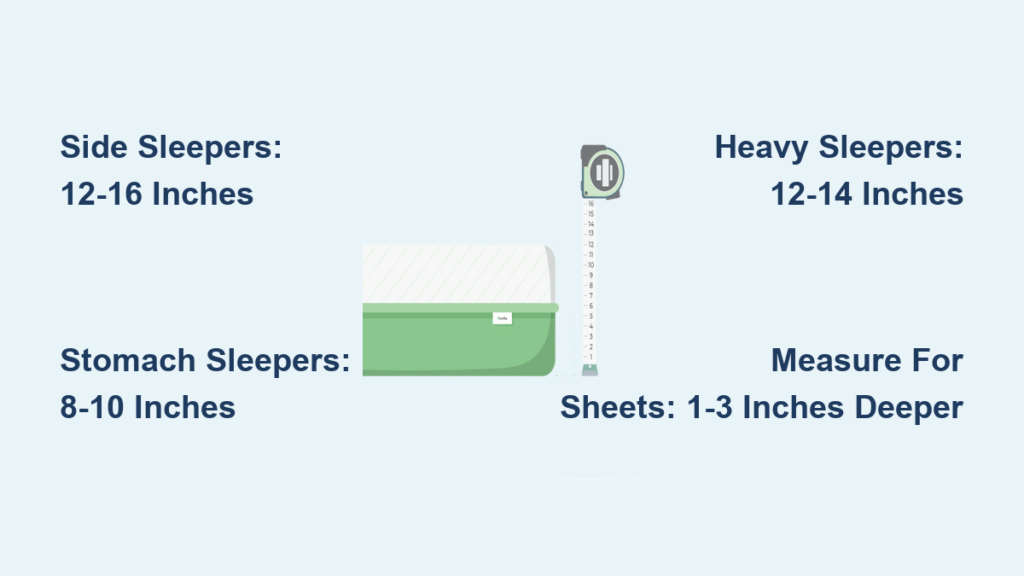
Your mattress must support your body’s natural curves while preventing pressure buildup in vulnerable areas. Thicker mattresses (12-16 inches) typically provide more material for side sleepers’ shoulders and hips to sink into comfortably, maintaining spinal alignment without creating painful pressure points. Back sleepers generally need less depth—10-12 inches provides enough cushioning while keeping the spine properly aligned. Stomach sleepers often require thinner options (8-10 inches) to prevent their midsection from sinking too deeply, which would create unnatural spinal curvature and lower back strain. If you wake with shoulder, hip, or back pain regularly, your mattress thickness may be the culprit rather than your sleeping position itself.
Low Profile Mattresses (2-5 Inches): When Thin Is the Right Choice
Low profile mattresses serve specialized purposes where minimal thickness is essential. These ultra-thin options typically consist of a basic support core with little to no dedicated comfort layer, creating a firm sleeping surface ideal for temporary or space-constrained situations.
Best Applications for Ultra-Thin Mattresses: Cribs, Air Beds, and Murphy Beds
Crib mattresses for infants follow strict safety standards requiring 5-6 inch thickness to prevent climbing hazards. Air mattresses for overnight guests and fold-away beds benefit from thin profiles that make them lightweight and easy to store. Murphy bed owners must select mattresses 10 inches thick or less to ensure proper cabinet closure—10 inches represents the ideal balance between comfort and mechanical compatibility. If you’re considering a low profile mattress for adult sleeping, test it thoroughly; the minimal material often fails to provide adequate pressure relief for adult body weights, leading to discomfort in key pressure points.
Standard Mattress Thickness (8-12 Inches): Why 10 Inches Is the Sweet Spot
Standard profile mattresses dominate the market for good reason—they offer the optimal balance of comfort layers (2-4 inches) and support core (6-8 inches) for most adult sleepers. This 10-12 inch range accommodates the majority of sleep positions and body types while fitting standard bed frames and sheet sizes.
How to Determine If Standard Thickness Works for Your Body Weight
Average-weight sleepers (130-230 pounds) typically find perfect comfort in the standard 10-12 inch range regardless of sleeping position. Back sleepers receive adequate support without feeling like they’re on concrete, side sleepers get enough cushioning for shoulder and hip relief, and stomach sleepers can find appropriately firm options. If you’re an average-weight combination sleeper who changes positions throughout the night, the versatility of standard thickness provides consistent support across all orientations. Before assuming you need something thicker, test a quality 10-12 inch mattress—most sleepers discover this standard range delivers ideal performance when properly matched to their firmness preference.
Thick Mattresses (12-16 Inches): Essential for Side Sleepers and Heavy Individuals

Thick mattresses offer enhanced cushioning through additional comfort layers and more substantial support cores. These deep-profile options appeal to sleepers who need maximum material to contour around their body’s curves or who prefer an elevated sleeping surface.
What to Look for in Thick Mattress Construction to Avoid Sagging
Side sleepers weighing over 130 pounds generally need 12-16 inches of thickness to prevent shoulder and hip pain—without sufficient material to compress around these bony areas, thinner mattresses feel excessively firm. Heavier sleepers (over 230 pounds) also benefit significantly from thick profiles because their body weight compresses mattress materials more deeply. When selecting a thick mattress, ensure the support core comprises at least 50% of total thickness—this prevents the “quicksand” effect where you sink too deeply without adequate foundation support. Quality thick mattresses resist sagging better than thinner options due to their robust construction, potentially extending usable lifespan by several years compared to low-quality alternatives.
Match Mattress Thickness to Your Sleeping Position
Your primary sleeping position provides the strongest guidance for selecting appropriate mattress thickness, as different positions create distinct pressure patterns that thick or thin mattresses address differently.
Why Side Sleepers Need 12-16 Inches of Mattress Depth
Side sleepers place concentrated pressure on shoulders and hips, requiring the thickest mattresses for optimal comfort. Without sufficient depth (12-16 inches), these pressure points rest on an overly firm surface, disrupting sleep and causing morning pain. The additional thickness allows shoulders and hips to sink comfortably while maintaining spinal alignment. If you’re a side sleeper experiencing shoulder or hip pain, try a thicker mattress before assuming your sleeping position is the problem—the right depth may eliminate discomfort entirely.
Stomach Sleepers: Why Thinner 8-10 Inch Mattresses Prevent Back Pain
Stomach sleepers face unique challenges because sleeping face-down allows the midsection to sink deeply into the mattress if it lacks sufficient support. These sleepers typically need thinner mattresses (8-10 inches) with firmer constructions to prevent the spine from bending into a U-shape, which creates significant lower back strain. The ideal stomach sleeper mattress provides enough support to keep the body relatively flat while still offering some cushioning for the chest and abdomen. Test thinner options thoroughly—many stomach sleepers mistakenly choose thicker mattresses that feel plush initially but cause back pain within weeks.
Choose Mattress Thickness by Body Weight
Your body weight fundamentally changes how any mattress feels and performs, making thickness recommendations closely tied to where you fall on the weight spectrum.
Heavy Sleepers (>230 lbs): Why Minimum 12-14 Inch Thickness Is Non-Negotiable

Heavier sleepers sink into mattresses more deeply than lighter individuals, requiring thicker profiles to prevent bottoming out. These sleepers generally need mattresses at least 12-14 inches thick to achieve adequate pressure relief without sacrificing support. The thicker construction provides more material for the comfort system to compress while still offering pressure relief, along with a robust support core that resists sagging under increased weight. When selecting a thick mattress as a heavier sleeper, pay particular attention to support core quality—low-density foams may compress prematurely, leading to sagging within months. High-quality thick mattresses can provide 8-12 years of comfortable sleep for heavier individuals when properly matched to their weight.
Avoid These Common Mattress Thickness Mistakes
Many shoppers make critical errors when selecting mattress thickness that compromise sleep quality and mattress longevity. Recognizing these pitfalls helps you make an informed decision that serves your needs for years.
Don’t Buy Too Thin: How Inadequate Thickness Causes Premature Sagging
Selecting a mattress thinner than your body weight and sleeping position require leads to inadequate pressure relief and accelerated wear. Lightweight sleepers (<130 lbs) often make this mistake, choosing thinner mattresses that feel too firm because their lower body weight doesn’t compress the materials sufficiently. Average-weight sleepers who select mattresses below 8 inches typically experience premature sagging and body impressions as the thin support core fails to handle daily stress. Before purchasing a thin mattress, test it thoroughly for at least 10 minutes in your primary sleeping position—what feels firm in the store may feel like concrete after weeks of use.
Deep Pocket Sheet Requirements for Thick Mattresses
Mattress thickness directly affects your bedding needs, particularly regarding fitted sheets. Standard sheets accommodate mattresses up to 12-14 inches thick, while thicker options require specialty deep-pocket sheets.
Measure Your Mattress Correctly to Find Perfect-Fitting Sheets
Your fitted sheet pocket depth should be 1-3 inches greater than your mattress thickness. For example, a 10-inch thick mattress requires sheets with 11-13 inch pocket depth. Measure your complete sleep system including any toppers—adding a 2-inch topper to a 10-inch mattress creates a 12-inch total depth requiring deeper sheets. When in doubt, measure your specific mattress thickness rather than relying on manufacturer specifications, as compressed shipping dimensions often differ from actual in-use thickness.
How to Measure Mattress Thickness for Accurate Replacement
Accurate measurement ensures you select the correct replacement mattress and appropriate bedding. Measure from the bottom of the mattress to the highest point of the sleeping surface in its uncompressed state.
Why Compressing the Mattress Gives False Thickness Readings
To measure correctly, place the mattress on a flat surface and measure straight up from the floor to the top crown—do not compress the mattress during measurement, as pressing down produces artificially low readings. Pillow-top layers contribute to total thickness and must be included in your measurement. For innerspring or hybrid mattresses, this includes all external materials from bottom ticking to the highest point of comfort layers. Proper measurement prevents the frustration of purchasing sheets that don’t fit or a replacement mattress that sits too high or low in your existing bed frame.
Frequently Asked Questions About Mattress Thickness
What Is the Average Mattress Thickness? (Spoiler: It’s Not What You Think)
The most common mattress thickness falls between 10 and 12 inches, representing the standard profile that accommodates most adult sleepers. This range offers balanced comfort layers and support cores across various sleeping positions and body types. However, the mathematical average across all mattress types sits around 10 inches, with standard profiles (8-12 inches) dominating the market.
How Thick Should a Memory Foam Mattress Be for Lasting Comfort?
A quality memory foam mattress should be at least 10 inches thick for most adults, with 10-14 inches representing the optimal range. Mattresses thinner than 8 inches typically lack sufficient material for effective body contouring and pressure relief, and they develop impressions more quickly. High-density memory foam in the 10-14 inch range provides the best balance of cushioning and support for lasting comfort.
Final Thickness Selection Checklist: Get It Right Before You Buy
Before purchasing, verify these critical thickness considerations:
– Side sleepers: Minimum 12 inches for shoulder/hip comfort
– Stomach sleepers: 8-10 inches to prevent spinal misalignment
– Heavy sleepers (>230 lbs): 12-14 inches with quality support core
– Seniors/mobility issues: 8-10 inches for easier bed access
– Murphy beds: Maximum 10 inches for proper function
– Measure existing mattress if replacing to ensure proper sheet fit
The average mattress thickness of 10-12 inches serves most shoppers well, but understanding your specific needs ensures you select a mattress that truly matches your body and sleep habits. Consider your sleeping position, body weight, mobility needs, and practical requirements like bed height and sheet compatibility—this targeted approach creates the foundation for years of quality sleep. Test mattresses in your preferred thickness range for at least 10-15 minutes before purchasing, and you’ll find the perfect depth for your perfect night’s rest.