That persistent squeak every time you roll over isn’t just annoying—it’s actively sabotaging your sleep quality. When your mattress creaks with every movement, you’re likely losing valuable minutes (or hours) of deep, restorative sleep each night. The good news? Most squeaky mattress problems can be fixed without replacing your entire bed setup. This guide reveals exactly how to identify the source of your squeak and apply the right fix—often with items already in your home—to restore peaceful, quiet sleep tonight.
Pinpoint Exactly Where Your Bed Squeaks
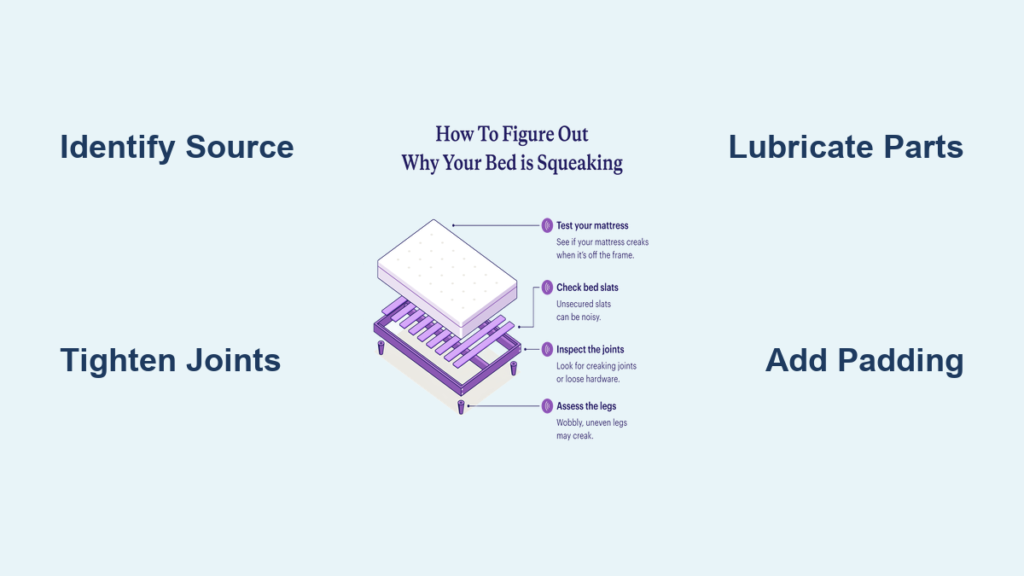
Before wasting time on ineffective fixes, you must identify the precise source of the noise. Most people mistakenly blame the mattress when the squeak actually comes from the box spring or bed frame—wasting effort on the wrong component.
Start by removing your mattress and placing it directly on the floor. Lie down and shift positions—if it still squeaks, the problem is within the mattress itself (common with innerspring models). If the noise stops, the issue lies elsewhere.
Next, test the box spring by pressing firmly on different sections. Listen carefully for metal-on-metal sounds indicating coil friction. If no squeaks occur here, focus on the bed frame. Gently rock the frame while listening for creaking at joints, connection points, and where wooden slats meet the frame rails.
What to Look For During Inspection
- Loose bolts at corner joints and headboard attachments
- Rusty or stripped hardware that no longer grips properly
- Visible gaps where wooden components separate during movement
- Areas where metal parts rub together (look for shiny spots indicating friction)
Fix Innerspring Mattress Squeaks Without Replacement

Innerspring mattresses develop squeaks when coils rub against each other as tension decreases with age. While severe cases require replacement, these solutions often provide immediate relief:
Rotate Your Mattress to Shift Pressure Points
Turn your mattress 180 degrees so the head becomes the foot. If your mattress is double-sided, flip it over too. This redistributes pressure to less-worn coils and often silences localized squeaks. Perform this rotation every 3-6 months regardless of squeaking to extend your mattress’s lifespan.
Add a Mattress Topper for Instant Noise Reduction
Place a thick memory foam topper (at least 2 inches) directly on your squeaky mattress. This creates a buffer between your body and the noisy coils while improving comfort. Ensure the topper fits snugly to prevent shifting during the night.
Install a Bunkie Board Under Your Mattress
A bunkie board (or thin plywood sheet) placed between your mattress and bed frame converts your sprung setup into solid support. This eliminates squeaks caused by uneven support from slats or metal coils. Measure your mattress dimensions precisely before cutting the board to size.
Silence Bed Frame Squeaks in 15 Minutes
Bed frames cause more squeaking problems than mattresses themselves—fortunately, these fixes take minimal time and effort.
Tighten Every Connection Point Immediately
Grab your wrenches and screwdrivers for a systematic inspection:
– Check all corner joints on metal and wooden frames
– Tighten headboard and footboard attachments
– Secure center support legs and crossbars
– Replace stripped screws with longer or thicker alternatives
After tightening, sit on the edge of the bed and rock side-to-side—any remaining movement indicates additional connections need attention.
Apply the Right Lubricant for Your Frame Material
Metal frames: Spray silicone lubricant or WD-40 sparingly at joints, then work the frame back and forth to distribute. Wipe excess to prevent dust buildup.
Wooden frames: Rub beeswax or candle wax directly onto friction points. The natural wax reduces noise without damaging wood surfaces or leaving oily residues.
Create Friction Buffers Between Slats and Frame
Cut felt tape or fabric scraps to fit between wooden/metal slats and frame rails. Secure with double-sided tape to prevent movement. This simple cushioning eliminates the wood-on-wood or metal-on-metal contact causing most frame squeaks.
Stop Box Spring Squeaks Without Professional Help

Box springs develop maddening squeaks when internal coils rub together—a problem that worsens with age and use.
Lubricate Internal Coils Through the Bottom Panel
Remove the box spring and flip it upside down. Carefully remove the fabric backing (usually stapled) to expose the springs. Spray WD-40 evenly across all coils, paying special attention to contact points. Reattach the backing with fresh staples before returning the box spring to your bed.
Rotate (Don’t Flip) Your Box Spring
Unlike mattresses, box springs have distinct top and bottom surfaces. Rotate it 180 degrees every 3-6 months to distribute wear evenly across the coil system. This simple maintenance prevents localized wear that leads to squeaking.
Replace Problematic Box Springs with Foundations
When lubrication fails, consider replacing your box spring with a mattress foundation. These use wooden slats instead of coils, eliminating the metal-on-metal contact that causes squeaks. Foundations provide similar support without the noise issues of traditional box springs.
Use Smart Cushioning to Eliminate Squeaks
Creating strategic buffers between moving components often works better than lubrication alone.
Under-Mattress Solutions
- Place a thin foam sheet between mattress and frame
- Use rubber washers where bed legs contact the floor
- Slide felt pads between slats on platform beds
Quick Household Alternatives
No specialized materials? Try these immediately available solutions:
– Stuff old socks between noisy slats
– Place folded towels under squeaky mattress corners
– Wrap fabric scraps around metal joints
These temporary fixes provide instant relief while you plan permanent solutions.
Know When to Replace Instead of Repair
Some squeaks indicate components beyond repair. Replace rather than fix when:
Your Mattress Shows These Warning Signs
- Visible coils protruding through the surface
- Permanent body impressions deeper than 1.5 inches
- Squeaks persist despite rotation and topper use
- Age exceeds 7-10 years (typical mattress lifespan)
Your Box Spring Needs Retirement When
- Wood frame shows cracks or breaks
- Coils produce constant noise regardless of lubrication
- You’ve tried multiple fixes without success
- Age exceeds 5-8 years (typical box spring lifespan)
Your Bed Frame Requires Replacement If
- Wood shows significant cracks or splitting
- Metal components are bent or rusted through
- Hardware replacement costs exceed 50% of new frame price
- The structure feels unstable even after tightening
Prevent Future Squeaks with Simple Maintenance
Stop squeaks before they start with these preventative measures:
Quarterly Bed Check Routine
- Tighten all bolts and screws throughout the frame
- Apply beeswax to wooden joints or silicone to metal connections
- Rotate mattress and box spring to distribute wear evenly
- Check for levelness and use shims under legs if needed
Environmental Protection Tips
Maintain consistent humidity levels in your bedroom—extreme dryness causes wood to shrink and create gaps, while excessive moisture makes wood swell and rub. Use a humidifier in winter and ensure proper ventilation during humid months to keep wooden components stable.
Bed-Type Specific Fixes That Actually Work

Different bed constructions require targeted solutions:
Metal Frame Beds
Tighten all bolts, then apply silicone lubricant to joints. Add rubber washers between metal components at connection points. For persistent squeaks, wrap joints with electrical tape as temporary cushioning.
Platform Beds
Focus on slat-to-frame contact points—place felt pads between slats and frame rails. Ensure slats are properly spaced (no more than 3 inches apart) and secured with brackets. Tighten all frame connections before addressing slats.
Adjustable Beds
Lubricate hinge points with silicone spray according to manufacturer instructions. Tighten all specialized hardware unique to adjustable mechanisms. Check for proper alignment of moving sections that can cause rubbing.
Troubleshoot Stubborn Squeaks That Won’t Go Away
When standard fixes fail, consider these less obvious causes:
Check Hidden Connection Points
- Inspect where headboards attach to walls
- Examine wall anchor points for looseness
- Test mattress protectors for shifting fabric noise
- Verify all legs make full contact with flooring
Address Floor-Level Issues
Place felt pads under bed legs on hard surfaces. For carpeted floors, ensure legs sink evenly into the padding—uneven sinking creates rocking motion that causes squeaks. Use a spirit level to check for wobble and add shims as needed.
A squeaky mattress doesn’t have to ruin your sleep—most problems can be fixed with targeted solutions that address the actual source of the noise. By systematically identifying whether your mattress, box spring, or bed frame causes the squeak, then applying the specific fix for that component, you’ll restore quiet to your bedroom tonight. Remember that regular maintenance prevents most squeaks from developing in the first place, saving you future frustration and expense. With these proven techniques, you can transform your noisy bed into a peaceful sleep sanctuary without breaking the bank.