
Your baby’s diaper explosion just soaked through the crib sheet and hit the mattress. That sinking feeling hits you—how do you clean it right without harming your little one or ruining the waterproof layer? You need fast, safe solutions that actually work on those stubborn stains and odors. Most parents grab whatever cleaner is handy, but harsh chemicals can linger on surfaces where babies breathe and touch all day. This guide delivers proven techniques using everyday household items to sanitize your waterproof crib mattress without damaging its protective coating. You’ll learn precisely how to remove poop stains, eliminate lingering smells, and prevent mold growth—all while keeping your baby’s sleep environment toxin-free.
Immediate Action Steps for Fresh Accidents
When accidents happen (and they will), your first 10 minutes determine whether stains set permanently. Never pour water directly onto the mattress—that forces liquids into seams where mold hides. Instead, scrape off solids with a paper towel folded into a stiff edge, working from the outside inward to avoid spreading. Blot vigorously with clean microfiber cloths to absorb moisture; never rub, as friction pushes stains deeper into the vinyl surface. For urine or vomit, skip the instinct to use ammonia-based cleaners—these react with baby waste to create dangerous fumes. Keep a dedicated emergency kit in your nursery with 2% hydrogen peroxide spray (safe for babies when diluted) for instant sanitizing before deep cleaning begins.
How to Neutralize Odors Before Stain Removal
Persistent smells mean bacteria are still active beneath the surface. Mix 1 cup cold water with 2 tablespoons baking soda in a spray bottle—never hot water, which cooks proteins into the fabric. Lightly mist the affected area and let it sit for exactly 5 minutes (longer dries into a crust that attracts dust). For sour milk or formula smells, add 5 drops of food-grade citric acid to the solution; it breaks down organic compounds without bleaching the mattress cover. Always test any mixture on the mattress edge first for 24 hours to check for discoloration, especially on colored waterproof layers.
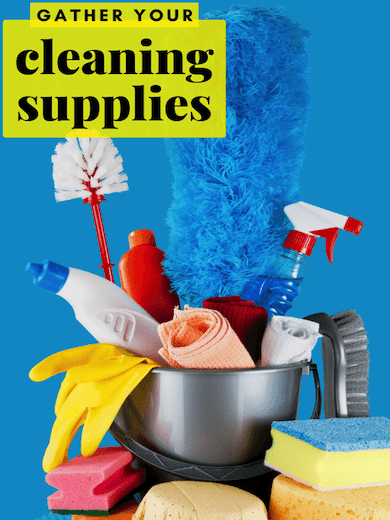
Essential Cleaning Supplies That Won’t Damage the Mattress
Why Dish Soap Beats Commercial Baby Cleaners
Most “baby-safe” wipes contain methylisothiazolinone, a preservative linked to skin irritation in infants. Instead, use unscented dish soap like Dawn Platinum—its grease-cutting enzymes tackle milk and food stains without harsh residues. Dilute 1 teaspoon in 2 cups cool water (hot water degrades waterproof coatings). For disinfection without fumes, replace bleach with electrolyzed water: run tap water through a $20 electrolysis pen for 30 seconds to create hospital-grade sanitizer that evaporates cleanly. Skip magic erasers—their melamine foam abrades the waterproof surface over time, creating microscopic holes where mold takes root.
Tools That Reach Problem Areas Without Scratching
Your standard sponge leaves streaks in mattress seams. Cut a microfiber cloth into 1-inch strips and thread through a plastic seam ripper to clean tight corners where diaper cream accumulates. For stubborn buildup along zipper tracks, use a soft-bristled toothbrush dipped in your soap solution—never metal brushes that puncture vinyl. Keep a squeegee with a rubber blade (like windshield models) to push moisture toward edges after cleaning; this cuts drying time by 70% compared to air-only methods.
Step-by-Step Deep Cleaning Process That Prevents Mold
Removing Set-In Stains Without Bleach
For yellowed stains from old urine accidents, skip the Pinterest hacks involving vinegar. Vinegar’s acidity degrades polyurethane waterproof layers within 3 uses. Instead, make an enzyme paste: mix 2 tablespoons meat tenderizer (contains papain enzymes) with 1 tablespoon cool water. Apply only to stained areas with a cotton swab, cover with plastic wrap, and wait 2 hours—any longer dries into a sticky mess. Wipe clean with a damp microfiber cloth. For blood stains, dab with hydrogen peroxide on a cloth (never spray directly), then immediately neutralize with baking soda paste to prevent oxidation.
The 4-Phase Drying Method Pediatricians Recommend
Air-drying alone invites mold growth inside the mattress core. Phase 1: Blot with dry towels for 10 minutes. Phase 2: Position mattress vertically against a wall in direct sunlight for 30 minutes (UV kills surface bacteria). Phase 3: Place upright in front of a fan on low speed for 2 hours—never high speed, which forces moisture deeper. Phase 4: Rotate mattress and repeat phases on the other side. Always check seams with your palm for residual warmth; cold spots indicate trapped moisture. Total drying time should never exceed 4 hours.
Critical Mistakes That Ruin Waterproof Mattresses
/how-to-steam-clean-a-mattress-5101192-hero-0a1a68a684094d4588f265761ec6fbc6.jpg)
Why Steam Cleaners Destroy the Barrier
That handheld steamer might seem perfect for sanitizing, but temperatures above 120°F melt the thermoplastic polyurethane (TPU) coating on 95% of crib mattresses. This creates invisible pinholes where liquids seep into the foam core—causing permanent odors you can’t remove. Even “low-heat” settings exceed safe limits. If you must disinfect after illness, use pre-moistened hydrogen peroxide wipes designed for baby gear (like Clorox Anywhere Wipes), then immediately wipe with a water-dampened cloth to remove residue.
The Fabric Softener Trap
Adding dryer sheets to your wipe solution leaves a waxy buildup that repels future cleaning efforts. This film traps bacteria against the mattress surface, causing recurring rashes. Test for buildup by rubbing a damp white cloth on the mattress—it’ll yellow if residues are present. Fix it by wiping with 1 part rubbing alcohol to 3 parts water, then reapplying a baby-safe waterproofing spray like Nikwax TX.Direct.
Long-Term Protection Strategies for Busy Parents
How Often to Clean Based on Baby’s Stage
Newborns need spot-cleaning after every spit-up (3-5 times weekly). For mobile babies who stand in cribs, deep clean monthly to remove handprint oils that degrade waterproofing. During teething, increase to weekly—drool contains enzymes that eat through vinyl. Always clean immediately after potty training accidents; toddler urine has higher pH that etches surfaces within hours.
Creating a Stain-Resistant Barrier
After deep cleaning, extend protection with a DIY sealant: mix 1 tablespoon beeswax pellets with ¼ cup coconut oil in a double boiler. Once cooled to room temperature, rub a thin layer onto the dry mattress with a microfiber cloth. This fills microscopic pores in the waterproof layer without making surfaces slippery. Reapply every 3 months or after steam exposure.
When to Replace vs. Repair Your Mattress
Identifying Irreparable Damage
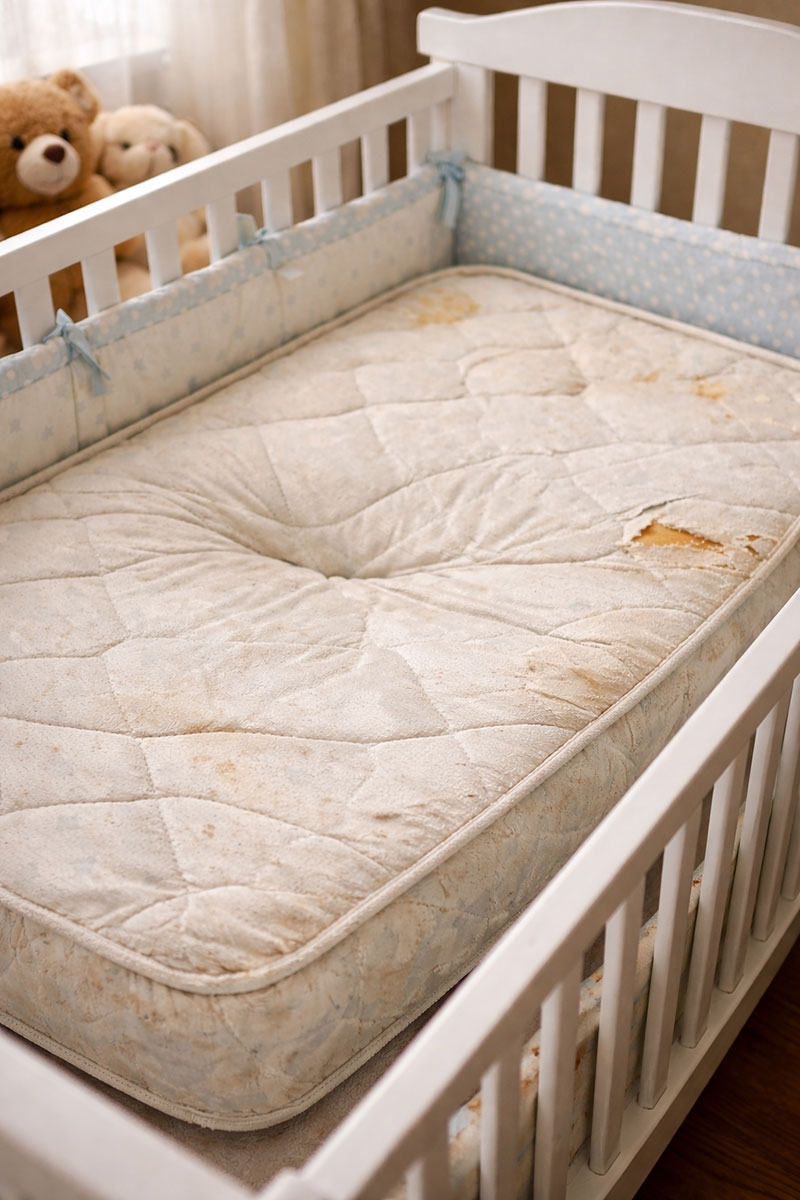
Check for these failure signs monthly: Press your palm firmly on the mattress—if it feels spongy or cool in spots, moisture has compromised the core. Visible bubbling under the cover means delamination has occurred. Yellow streaks that won’t lift with enzyme treatment indicate permanent urine saturation. Any of these mean replacement is necessary; no cleaning method can restore structural integrity once foam absorbs liquids.
Emergency Fixes for Nighttime Emergencies
When replacement isn’t immediate, contain damage overnight: Cover affected areas with food-grade silicone baking mats (not plastic wrap, which traps heat). Place a folded towel under the mattress to absorb upward seepage. In the morning, vacuum the towel thoroughly before reuse to prevent transferring bacteria.
Final Note: Regular maintenance prevents 80% of deep-cleaning emergencies. Always use a fitted sheet over waterproof mattresses—even “waterproof” surfaces need this extra barrier against abrasive fabrics. For ongoing care, wipe surfaces weekly with a 50/50 water-vodka solution to neutralize odors without drying the vinyl. Remember that no mattress lasts beyond 3 years in active use; track your purchase date and replace proactively. If stains persist after trying these methods, consult your mattress manufacturer—some offer specific cleaning protocols for their materials that avoid warranty voiding. Your baby spends 14+ hours daily on this surface; investing 10 minutes weekly in proper care creates a truly safe sleep sanctuary.