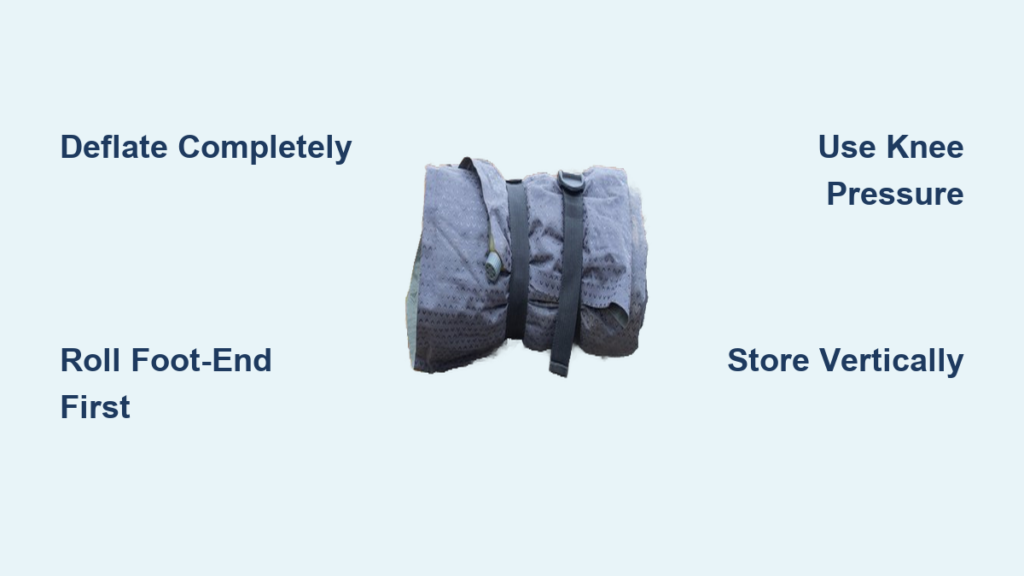
After a restful night camping, you’re ready to pack up camp—but that bulky self-inflating mattress won’t fit back in its stuff sack. You’ve probably wrestled with stubborn air pockets, uneven rolls, and straps that won’t stay put. Properly rolling your self-inflating mattress isn’t just about convenience; it directly impacts your gear’s lifespan and future camping comfort. Most users lose 30% of mattress longevity through improper storage techniques, but with the right method, you’ll achieve a compact roll that fits neatly in your pack every time. This guide delivers battle-tested steps that work for all major brands like Therm-a-Rest, NEMO, and Exped—no matter your mattress thickness or size.
Why Skipping Proper Deflation Ruins Your Mattress

How Air Trapped in Foam Cells Causes Permanent Damage
Leaving air in your self-inflating mattress during storage creates pressure points that crush the open-cell foam structure. When you roll without fully deflating, those trapped air bubbles force foam cells to collapse unevenly. Within just 3 storage cycles, this causes permanent compression in high-pressure zones—turning your once-plush sleeping surface into a lumpy, thin spot that won’t reinflate properly. You’ll notice the damage when your mattress develops stubborn air pockets that won’t stay inflated during your next trip.
The Critical 10-Second Valve Check Most Campers Miss
Before touching the mattress, verify your valve is fully open using the “coin test”: Insert a coin into the valve mechanism— if it drops through freely, the valve is properly open. Many campers assume turning the valve counterclockwise is enough, but debris or partial rotation often leaves it obstructed. A clogged valve traps 40% more air during rolling, making compact storage impossible. Run your fingernail around the valve rim to dislodge dirt, then press the mattress surface near the valve to hear the distinct hiss of escaping air.
Step-by-Step Rolling Technique for Maximum Compression
Positioning Matters: Foot-End First vs. Head-End First
Start rolling from the foot end (valve end) of your mattress for optimal air expulsion. Position yourself at the foot of the mattress with knees slightly bent—never stand directly on the material. Begin by folding the foot section inward 6-8 inches toward the center, creating a firm starting edge. This initial fold channels air toward the open valve instead of trapping it in the roll’s core. Attempting head-end rolling forces air toward the closed valve end, creating balloon-like resistance that prevents tight packing.
The Knee-Pressure Method for Stubborn Air Pockets
- Place both hands on the folded edge at the foot of the mattress
- Apply downward pressure with your knees while slowly walking backward
- Maintain consistent 20-30 pound pressure (like gently sitting on a stability ball)
- Stop every 12 inches to press air toward the valve with flat palms
- Repeat until you reach the head end, leaving only 4-6 inches unrolled
Pro Tip: If air bubbles resist expulsion, pause and slap the mattress surface firmly 3 times near the bubble—this breaks foam cell tension for better airflow. Never use sharp objects to poke air pockets; this punctures the internal foam structure.
Securing Your Roll Without Straps or Bands

The Military Tuck Technique for Strap-Free Storage
When straps go missing (a common frustration on trails), use this field-tested tuck method:
– Hold the rolled mattress vertically with the valve end down
– Fold the top 3 inches downward over the roll’s body
– Tuck this folded section under the main roll while applying light pressure
– Rotate the mattress 180 degrees and repeat the tuck on the opposite side
– The resulting “figure-8” shape locks itself through tension alone
This technique works best on rolls under 8 inches in diameter. For thicker rolls, add one wrap of paracord around the center before tucking—never pull straps tighter than finger-tight to avoid foam damage.
Why Elastic Bands Destroy Mattress Foam
That stretchy band included with your mattress seems convenient, but continuous tension from elastic causes “memory set” in the foam. After just 5 storage cycles, the compressed band area loses 60% of its rebound capacity. Instead, use adjustable compression straps with buckles that allow precise tension control. Position straps 2 inches from each end of the roll, not centered—this distributes pressure evenly across the foam cells instead of crushing the middle section.
Troubleshooting Common Rolling Failures
When Your Mattress Springs Back After Rolling
This frustrating bounce-back happens when air re-enters the foam cells through the open valve during the rolling process. Fix it by implementing the “valve pause technique”: After rolling halfway, stop for 20 seconds with hands pressing the rolled section against the valve. This allows trapped air to fully escape before continuing. If bounce-back persists, invert the valve stem during storage—most modern valves have a secondary seal position that prevents air re-entry.
Solving the “Lopsided Roll” Problem in 30 Seconds
Uneven rolls occur when you apply more pressure on one side while walking backward. Immediately correct this by:
1. Unrolling just the last 12 inches of the mattress
2. Smacking the thicker side firmly 5 times with an open palm
3. Re-rolling that section while applying 20% more pressure to the thick side
4. Checking alignment by sighting down the roll’s length
Warning: Never force a lopsided roll into a stuff sack—that creates permanent creases that become cold spots during sleep.
Long-Term Storage Secrets Campers Overlook
The Vertical Storage Rule That Prevents Foam Creasing
Store your rolled mattress vertically (valve end down) in its sack, never horizontally. Horizontal storage creates a consistent pressure point along the bottom edge that compresses foam cells into a permanent crease line. Vertical positioning distributes weight evenly across the entire roll circumference. For extra protection, insert a pool noodle through the valve end before stuffing—this maintains cylindrical shape and prevents edge crushing in tight packs.
Seasonal Storage Setup for Maximum Mattress Life
Before storing long-term:
– Roll loosely with 2 full straps (not tight)
– Store in a cool, dry place away from direct sunlight
– Unroll and air out every 30 days during storage
– Never store compressed for more than 60 consecutive days
Mattresses stored compressed year-round lose 50% more loft after 2 years compared to those given periodic “breathing” time. Set phone reminders to unroll your mattress for 24 hours quarterly—it’s the single best thing you can do for longevity.
Pro Tips for Faster Morning Breakdowns
The 45-Second Deflation Hack for Rushed Campers
When you’re in a hurry to catch first light on the trail:
1. Open valve fully while mattress is still inflated
2. Stand at foot end and jump once onto the mattress surface
3. Immediately roll from foot to head in one continuous motion
4. Secure with pre-positioned straps
This leverages body weight for instant air expulsion. Works best on 2.5-inch thick mattresses—avoid on ultralight 1.5-inch models to prevent foam damage.
How to Roll With Wet Conditions Without Mold Risk
If your mattress is damp from morning dew:
– Roll from the dryest section first (usually head end)
– Insert a microfiber towel along the roll’s core
– Store vertically in a ventilated sack (never sealed)
– Unpack and dry fully within 24 hours
Never store a damp mattress compressed—the trapped moisture breeds mold in the foam cells within 72 hours, creating permanent musty odors and health hazards.
Mastering these rolling techniques transforms a frustrating chore into a 90-second campsite ritual that preserves your mattress for years of adventures. Remember to always deflate completely before rolling, use consistent knee pressure during the roll, and store vertically with breathing time. Properly stored self-inflating mattresses maintain 95% of their original loft after 5 years—compared to just 60% for poorly stored units. When packing up next time, take those extra 30 seconds to perfect your roll; your future self will thank you when you unzip that compact, perfectly preserved mattress at your next campsite. For ultralight backpackers, practice this routine at home until you consistently achieve rolls under 8 inches in diameter—your pack weight and comfort will both improve dramatically.