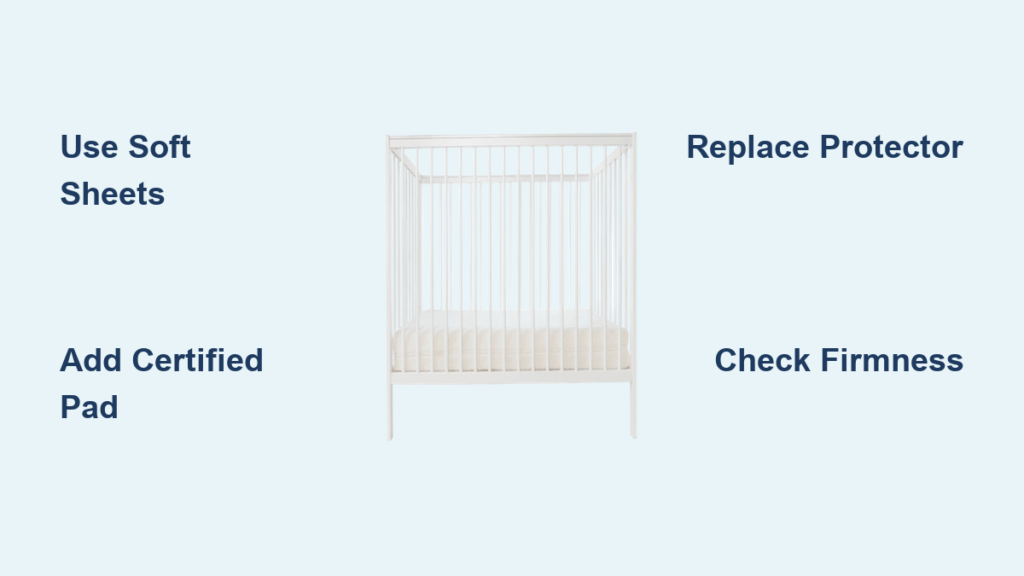
Your baby’s sleep surface feels uncomfortably hard against your touch, and you’re wondering how to make a crib mattress softer while keeping your little one safe. You’re not alone—many parents instinctively want to create a plush, cushioned sleep environment for their newborn, only to discover that crib mattresses are intentionally firm. This firmness isn’t a design flaw but a critical safety feature. In this guide, you’ll learn legitimate, safety-approved methods to enhance comfort without creating suffocation risks, understand why firmness matters for infant sleep, and discover when what seems like a mattress issue might actually be something else entirely.
Why Crib Mattresses Feel Harder Than Adult Mattresses
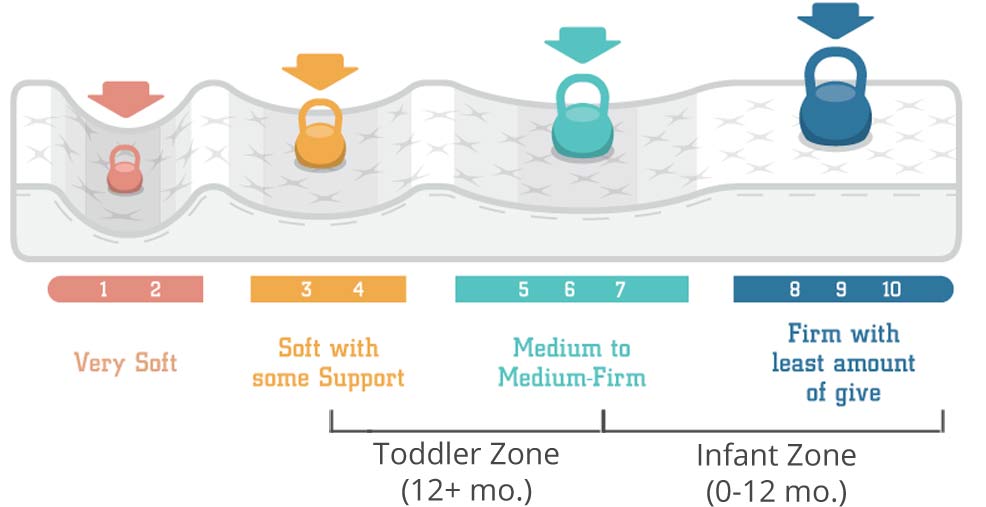
Crib mattresses maintain significantly firmer density than adult sleep surfaces to prevent suffocation hazards. When you press your hand on a compliant crib mattress, it should immediately rebound without leaving an indentation. This critical feature ensures your baby’s delicate face won’t sink into the surface during sleep, keeping airways clear at all times. The American Academy of Pediatrics explicitly recommends firm sleep surfaces to reduce SIDS risk, meaning that what feels uncomfortably hard to you is actually functioning as designed for infant safety.
Many parents mistakenly believe their crib mattress is too firm when it’s actually meeting safety standards perfectly. Newborns have different physical needs than adults—their developing bodies actually benefit from the consistent support of a firm surface. Before attempting to soften your crib mattress, test its firmness properly: press firmly in multiple spots. If it quickly returns to its original shape without creating a depression, your mattress is working correctly. Only consider modifications if you’ve verified through proper testing that the firmness exceeds standard safety parameters.
Check Your Mattress Construction Before Attempting Softening
Identify Your Mattress Type for Appropriate Solutions
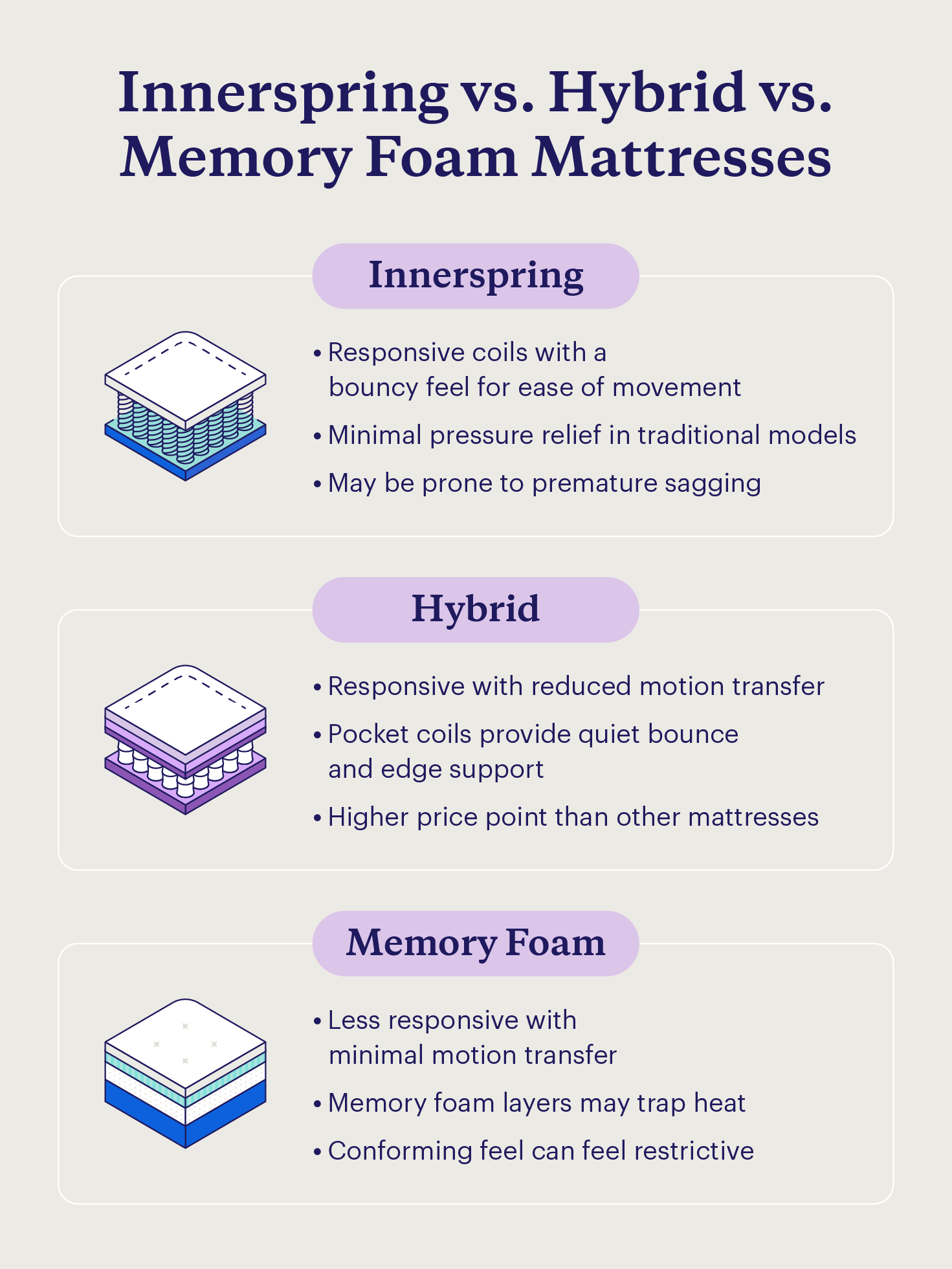
Foam, innerspring, and hybrid crib mattresses each respond differently to softening attempts. Foam models typically feel hardest initially but develop slight give over months of use. Innerspring mattresses often provide more natural cushioning due to their coil structure, though the top comfort layer determines overall firmness. Hybrid models combine both technologies, offering balanced support that many parents find suitable without modification.
Recognize When Replacement Beats Softening
Examine your mattress for damage signs that indicate replacement rather than softening is needed. Look for permanent indentations deeper than 1/4 inch, compressed foam areas, or coil protrusions. A mattress that doesn’t return to its original shape within seconds has likely exceeded its functional lifespan. Also verify proper crib fit—your mattress should sit snugly with no gaps wider than two fingers along the edges. Gaps create dangerous entrapment hazards regardless of firmness level, making replacement urgent.
Add Comfort Layers Without Creating Hazards

Use Properly Fitted Crib Sheets for Immediate Surface Improvement
The safest immediate solution involves switching to premium crib sheets made from ultra-soft, breathable cotton or bamboo blends. These sheets reduce tactile harshness while maintaining critical breathability. Ensure sheets fit snugly with deep pockets (typically 6-8 inches) that stay securely in place without bunching. Avoid stretchy “universal fit” sheets that may come loose during sleep—properly fitted sheets shouldn’t require tucking or adjusting after initial placement.
Select Certified Mattress Pads Designed for Infant Safety
When choosing additional padding, look specifically for products carrying JPMA (Juvenile Products Manufacturers Association) certification or other recognized safety endorsements. These thin (under 1/2 inch), breathable pads add minimal cushioning while maintaining proper firmness. Avoid adult mattress toppers, feather beds, or memory foam pads—these create dangerous soft surfaces that increase suffocation risk. The pad should feel barely noticeable when pressed, maintaining the immediate rebound characteristic of safe infant sleep surfaces.
Optimize Your Entire Sleep Environment for Comfort
Choose Breathable Bedding That Enhances Surface Feel
Layer temperature-appropriate sleep sacks rather than adding bulk under your baby. A well-fitted sleep sack provides warmth and security without compromising the sleep surface. For cooler nights, select sleep sacks with appropriate TOG ratings instead of adding blankets that could shift and create hazards. The right sleep sack keeps your baby comfortable while preserving the critical firm sleep surface.
Address Environmental Factors That Affect Perceived Firmness
Room temperature significantly impacts how your baby experiences mattress firmness. Maintain a consistent 68-72°F environment—too cold makes any surface feel harder, while excessive heat creates discomfort that mimics mattress issues. Add a cool-mist humidifier if your climate is dry, as proper humidity levels (40-60%) make sleep surfaces feel more comfortable. Consider noise machines to mask household sounds that might make your baby more sensitive to surface texture during lighter sleep cycles.
Replace Hard-Feeling Mattress Protectors
Many standard waterproof protectors feature plastic or vinyl layers that create an unpleasant, hard surface feel. Switch to breathable, silent protectors made with natural fibers or advanced moisture-wicking technology. These maintain protection while eliminating the crinkly, hard sensation of traditional protectors. Look for products specifically marketed as “soft” or “breathable” that still provide adequate waterproofing without compromising surface comfort.
Recognize When Mattress Firmness Isn’t the Real Issue
Identify Developmental Factors Mimicking Discomfort
Teething pain, growth spurts, or developmental leaps often manifest as apparent mattress discomfort. Babies experiencing separation anxiety or learning new motor skills may seem restless on any surface. Before modifying the mattress, track your baby’s sleep patterns for several nights—does the apparent discomfort occur only at specific developmental stages or during particular times of day? Often, what seems like surface hardness is actually normal developmental restlessness.
Assess Sleep Environment Holistically
Evaluate your entire bedtime routine and sleep space. Is your baby overstimulated before bed? Are room conditions optimal? Sometimes minor adjustments to pre-sleep activities or room setup resolve apparent mattress issues. Try establishing a more consistent bedtime routine, ensuring complete darkness during sleep hours, or introducing white noise to help your baby relax into sleep regardless of surface firmness.
Know When It’s Time for a Mattress Replacement
Evaluate Age-Appropriate Transition Points
If your baby is approaching 12-18 months and consistently seems uncomfortable, they may be ready for a toddler mattress transition. Toddler mattresses offer slightly more cushioning than infant cribs while maintaining appropriate firmness. Look for models specifically designed as “toddler transition” mattresses that provide minimal additional softness without compromising safety. This natural progression addresses comfort needs while respecting developmental sleep requirements.
Select a New Mattress With Comfort in Mind
When purchasing a replacement, research models known for balanced firmness. Many manufacturers now offer crib mattresses with enhanced comfort layers that still meet safety standards. Look for terms like “dual-firmness” (firmer for infants, slightly softer for toddlers) or “adaptive support” in product descriptions. Read parent reviews specifically mentioning comfort levels, and verify all safety certifications before purchase. The right new mattress provides optimal comfort without requiring unsafe modifications.
Maintain Non-Negotiable Safety Standards
Verify All Additions Meet Infant Sleep Safety Requirements
Before adding anything to the sleep space, ask: “Does this maintain immediate surface rebound?” Any addition that creates a depression when pressed must be eliminated. Regularly inspect sheets and pads for stretching or loosening—replace items that no longer fit snugly. Never place pillows, blankets, or soft toys in the crib, as these create suffocation hazards regardless of mattress firmness.
Follow AAP Guidelines Without Compromise
Always place your baby on their back to sleep, keep the crib completely bare except for a fitted sheet, and avoid any products marketed as reducing SIDS risk (the AAP states no such products exist). Monitor your baby’s sleep position regularly, especially as they develop rolling skills. Remember that appropriate firmness now establishes healthy sleep patterns that benefit your child throughout childhood.
If your baby continues to seem uncomfortable despite implementing these safety-approved methods, consult your pediatrician to rule out medical concerns like acid reflux or allergies that might manifest as sleep surface discomfort. Your baby’s safety during sleep requires careful balance—never sacrifice proven safety standards for perceived comfort improvements. The methods outlined here provide legitimate paths to enhanced comfort while maintaining the critical firmness that protects your little one through every night.