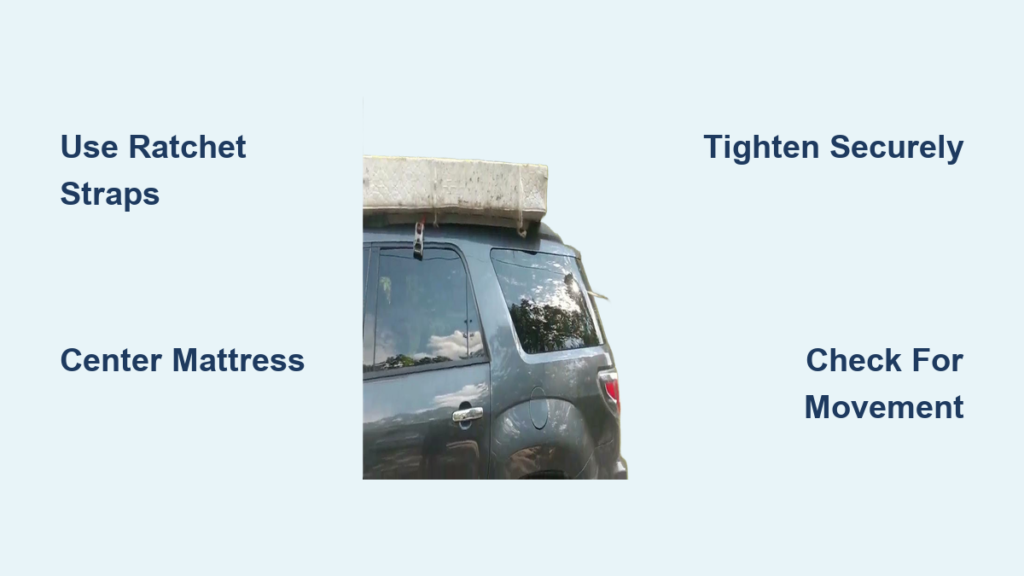
Transporting a mattress on your vehicle’s roof rack opens up possibilities for camping trips, moves, and deliveries without renting a truck. However, an improperly secured mattress creates serious safety hazards—both for you and other drivers on the road. A loose mattress can shift during travel, obstruct your visibility, or detach entirely, causing dangerous debris on the highway. Learning the correct techniques for securing your mattress protects your investment, ensures compliance with traffic laws, and gives you confidence for the journey ahead.
Before you attempt to strap down any mattress, understanding the fundamental principles of roof rack cargo transport saves time, money, and potential accidents. The method you choose depends on your mattress type, roof rack configuration, and travel distance. Memory foam mattresses require different handling than innerspring models, and highway speeds demand more robust securing than short local trips. This guide walks you through every aspect of the process, from selecting the right materials to performing final safety checks before departure.
Select Quality Straps for Maximum Security

Using the right straps makes the difference between a secure load and a dangerous road hazard. Cheap or inappropriate tie-downs often fail when subjected to wind resistance and vibration during travel.
Ratchet straps provide the most reliable option for mattress transport due to their mechanical advantage and secure locking mechanism. These heavy-duty straps allow you to achieve maximum tension without straining your muscles, and they maintain that tension throughout your journey. Look for straps with reinforced stitching and durable hardware that won’t slip under pressure. The ratcheting mechanism should operate smoothly and lock securely in place. When shopping, ensure the straps are long enough to wrap completely around your mattress and roof rack with enough excess for proper tensioning.
Cam buckle straps offer a simpler alternative for lighter mattresses or shorter trips. These straps feature a quick-release buckle that locks the strap in place when pulled tight. While they don’t provide the same tension-holding capability as ratchet straps, they’re easier to adjust and can be sufficient for local moves. The key is ensuring the buckle mechanism operates smoothly and won’t accidentally release during transit.
Never rely on bungee cords or elastic straps for mattress transport—they stretch and relax with movement, allowing dangerous shifting. Similarly, avoid using ordinary rope unless you’re an experienced knot tier, as improper knots can slip or come undone. Always inspect your straps for signs of wear before each use, checking for frayed webbing, cracked buckles, or damaged hooks.
Prepare Your Mattress and Roof Rack Properly
Taking time to prepare both your mattress and vehicle prevents damage and creates a more secure installation. Proper preparation eliminates frustrating mid-transit adjustments and protects both your mattress and vehicle finish.
Clean your mattress thoroughly before loading to prevent dirt and debris from becoming trapped against the surface during transport. Allow the mattress to dry completely if it’s been washed, as moisture trapped during transit can lead to mold and unpleasant odors. If transporting a new mattress still in plastic packaging, consider removing the wrap before loading. While plastic offers some weather protection, it creates a slippery surface that makes securing difficult and can trap condensation.
Inspect your roof rack for stability and compatibility with mattress transport. Verify that all mounting bolts are tight and crossbars sit securely in their mounts. Clean crossbars of dirt and debris that might interfere with strap placement. Consider adding foam padding to crossbar surfaces—this protects the mattress from impressions and provides better grip for straps. Ensure your roof rack’s weight capacity comfortably exceeds the mattress weight, accounting for the additional weight of securing hardware.
Measure your mattress against your roof rack’s dimensions to determine the best loading approach. Most roof racks accommodate standard queen and king-sized mattresses, but smaller vehicles may require diagonal loading. Note any roof-mounted accessories like antennas or solar panels that might interfere with mattress placement or strap routing.
Center Mattress on Roof Rack for Balanced Weight Distribution

Proper positioning creates the foundation for effective securing. The mattress’s location on your roof rack affects strap angles, weight distribution, and overall stability during transport.
Center the mattress across your roof rack’s crossbars to maintain balanced weight distribution. Uneven loading creates stress on one side of your roof rack system and affects vehicle handling, particularly in crosswinds. Align the mattress so equal amounts extend beyond each crossbar—this creates symmetrical anchor points for your straps and reduces leverage forces that might cause shifting. For mattresses longer than your roof rack, aim for approximately one-third of the mattress length extending past both the front and rear crossbars rather than having most of the overhang at one end.
Distribute weight evenly from front to rear as well. Loading excessive weight toward the rear affects steering response and braking, while front-heavy loads impact handling and front tire wear. Most mattresses weigh between 50 and 150 pounds depending on size and type—positioning this weight centrally maintains your vehicle’s designed balance.
Consider airflow and visibility when positioning. The mattress should not block your rear windshield view. Position the mattress as far forward as practical without interfering with front-mounted accessories or creating excessive front-end lift at highway speeds. For very large mattresses extending significantly past vehicle dimensions, additional flag markers may be required by local regulations.
Tighten Ratchet Straps with Correct Technique
Ratchet straps provide maximum security when used with proper technique. Understanding the correct process ensures your mattress remains firmly in place throughout your journey.
Position straps at approximately one-quarter and three-quarter points along the mattress length rather than placing both straps at the edges. This diagonal configuration creates opposing forces that prevent movement in all directions. Feed the strap hook through the roof rack’s mounting points or around crossbars, ensuring the hook faces outward and won’t contact the mattress or vehicle during travel.
Route the ratchet mechanism to an accessible location—typically outside the vehicle near a door for easy adjustment. Thread the strap’s loose end through the ratchet’s spool, leaving approximately six inches of strap extending beyond the ratchet. Pump the ratchet handle to tighten, alternating sides if using multiple straps to maintain even tension. Continue ratcheting until the mattress compresses slightly against the roof rack and all slack removes from the straps.
Lock the ratchet mechanism by folding the handle down flat against the spool. Double-check that all hooks remain securely attached to anchor points and that strap edges aren’t twisted. Perform a final tension check by pressing firmly on the mattress corners—any visible movement indicates insufficient tightening requiring additional adjustment.
Secure with Alternative Methods When Necessary
When ratchet straps aren’t available, proper technique with alternative methods can still provide adequate security for appropriate applications.
For cam buckle straps, wrap the strap around the roof rack crossbar and under the mattress, threading through the buckle’s front slot. Pull the strap tight by hand before engaging the cam mechanism. Press down on the release lever while pulling the strap tail to lock it in place. Position multiple straps at quarter-point locations and tighten progressively to maintain even tension.
Rope securing requires knowledge of effective knots. The trucker’s hitch creates mechanical advantage similar to a ratchet, allowing significant tension. Loop the rope around an anchor point, pass the working end behind the standing part, and wrap it back through the created loop before pulling tight. Alternatively, use the taut-line hitch for adjustable tension—this knot slides along the rope but locks firmly when pulled.
Regardless of method, ensure all anchor points connect to solid roof rack components rather than mattress handles, which often tear under load. Route all straps and ropes away from sharp edges and heat sources. Use padding where straps contact mattress edges to prevent abrasion.
Protect Mattress from Weather Elements During Transport

Proper weather protection extends your mattress’s lifespan and ensures it arrives in usable condition. Exposure to rain, sun, and wind during transport causes damage that can void warranties.
Plastic sheeting or tarps provide basic waterproof protection when properly secured. Use heavy-duty sheeting large enough to cover the entire mattress surface with overhang on all sides. Avoid wrapping the mattress tightly without ventilation—condensation forms inside plastic wraps. Instead, drape the plastic loosely over the top and secure it underneath, creating a tent-like effect that sheds water while allowing airflow.
Secure the plastic covering with additional straps wrapped around the entire package. Position these securing points lower than your primary mattress straps to prevent billowing. Ensure plastic extends past all mattress edges to prevent water from wicking underneath. Tape all seams and overlaps with duct tape to create continuous water barriers.
Verify Safety Before Departing
Perform thorough safety checks before driving to prevent roadside emergencies and ensure legal compliance. These final checks take only minutes but provide essential peace of mind.
Inspect all connection points for secure attachment. Verify that strap hooks are fully closed and release mechanisms are locked. Check that knots show no signs of slippage. Confirm that all straps remain clear of exhaust components, which reach extremely high temperatures during operation.
Check local regulations regarding overhang limits and marking requirements. Most jurisdictions allow cargo to extend up to three feet beyond the vehicle’s rear without special permits. Loads extending beyond these limits require visible warning markers—orange or red flags during daylight.
Test your securing by pushing firmly on all mattress corners. No visible movement should occur when you apply moderate pressure. Walk around the vehicle to confirm stable positioning. Re-check tension after driving the first few miles, as initial settling sometimes requires additional tightening.
Transporting a mattress on your roof rack safely requires proper materials, careful technique, and thorough verification. By selecting appropriate straps, positioning the mattress correctly, and performing comprehensive safety checks, you create a secure installation that protects your cargo and complies with traffic regulations. Remember to adjust your driving for the altered vehicle dynamics, protect the mattress from weather exposure, and maintain your securing equipment for continued reliable service. With these skills, mattress transport becomes a straightforward task you can accomplish confidently whenever the need arises. Always prioritize safety over convenience—taking extra time to secure your load properly prevents dangerous situations on the road.