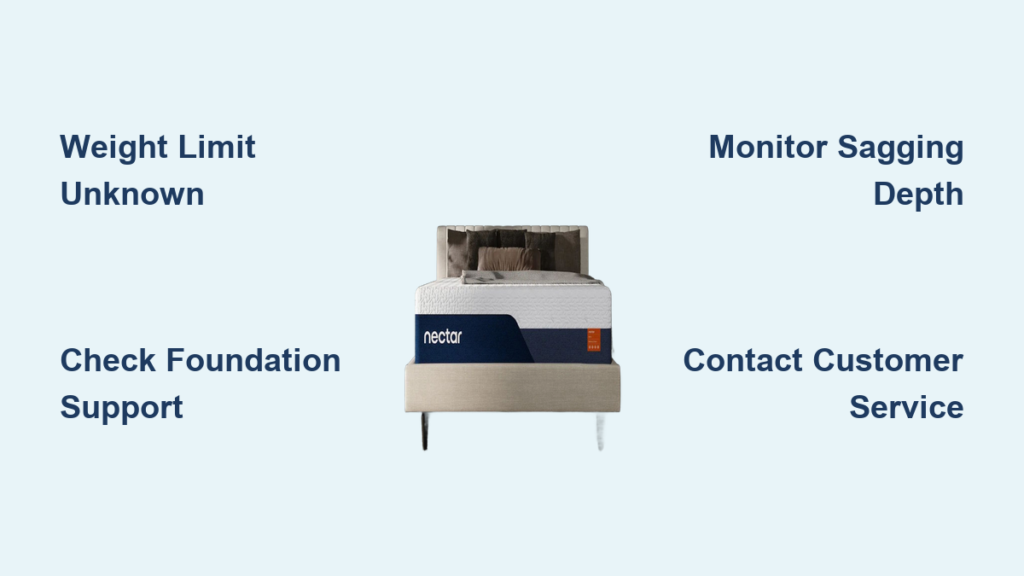
When shopping for a new mattress, weight capacity is a critical factor many shoppers overlook—until they’re dealing with premature sagging or compromised support. Unlike many competitors who clearly state weight limits, Nectar Sleep doesn’t publish official weight capacity specifications for their flagship memory foam mattress. This absence of clear guidelines leaves heavier sleepers and couples wondering: “Will this mattress hold up under my weight?” Without manufacturer specifications to reference, determining whether a Nectar mattress can properly support your body requires understanding industry standards, mattress construction principles, and strategic evaluation methods. In this guide, you’ll learn how to assess Nectar’s suitability for your weight category, what foundation choices impact weight capacity, and exactly who should contact Nectar directly for personalized recommendations.
Why Mattress Weight Capacity Matters for Your Sleep Quality
How Weight Affects Mattress Longevity and Performance
Exceeding a mattress’s intended weight capacity accelerates wear and tear in ways most shoppers don’t anticipate. Without proper structural support, heavier individuals often experience premature body impressions that compromise spinal alignment—leading to morning back pain and disrupted sleep cycles. Memory foam mattresses like Nectar’s flagship model respond differently to weight than innerspring or hybrid designs, with heavier users potentially compressing the foam layers beyond their recovery point. This permanent deformation typically starts in high-pressure areas like hips and shoulders, creating uneven support that affects sleep quality within months rather than years. The absence of published weight limits from Nectar means sleepers must evaluate whether their body weight falls within the typical performance range for 10-inch all-foam mattress constructions.
Warning Signs Your Mattress Can’t Handle Your Weight
Pay attention to these early indicators that your body weight may be exceeding your mattress’s capacity: persistent body impressions deeper than 1.5 inches that don’t rebound within minutes, increased motion transfer when sharing the bed, or a noticeable decrease in edge support when sitting near the perimeter. Heavier sleepers often report their Nectar mattresses developing “hammocking” effects within the first year—where the center sags significantly while the edges remain firm, creating an unstable sleeping surface. Unlike temporary impressions that recover, permanent sagging directly correlates with reduced spinal support and increased pressure points. If you weigh over 250 pounds and notice these issues developing before the 12-month mark, your weight may be contributing to accelerated wear beyond what the mattress foam composition can properly recover from.
What Nectar’s Lack of Published Weight Limits Actually Means
Industry Standards vs. Nectar’s Marketing Approach
Most premium mattress brands publish clear weight recommendations—typically 250-300 pounds per sleeping area for all-foam models. Nectar’s decision not to disclose official weight limits follows a growing industry trend where companies avoid specifications that might limit their target market. This marketing strategy allows them to appeal to broader demographics without making claims that could become liability issues if mattresses fail prematurely under heavy use. However, this transparency gap leaves heavier sleepers without crucial purchasing information. Based on the construction of Nectar’s 10-inch memory foam mattress (including a 2-inch Adaptive Hi Core foam layer over 7 inches of support foam), industry experts generally estimate suitable performance up to approximately 250 pounds per sleeper. Couples where combined weight exceeds 500 pounds should consider alternative support structures or hybrid models with reinforced cores.
How to Interpret Nectar’s Warranty Coverage for Weight-Related Issues
Nectar’s “Forever Warranty” provides critical clues about their unofficial weight expectations despite lacking explicit limits. The warranty specifically excludes “excessive sagging greater than 1.5 inches” from coverage—but notably doesn’t define what constitutes “excessive” weight to cause such sagging. This deliberate vagueness protects Nectar from warranty claims while avoiding published restrictions. More telling is their requirement that mattresses be used on “appropriate foundations,” suggesting that improper support—not just body weight—contributes to most failures. If you’re over 230 pounds and experience premature sagging, Nectar’s customer service will likely investigate your foundation type before approving warranty replacements. Document your foundation setup and take regular depth measurements of any impressions, as these become crucial evidence if you need to file a warranty claim later.
Foundation Choices That Directly Impact Weight Capacity

Why Your Base Matters More Than You Think for Heavy Sleepers
Your foundation isn’t just furniture—it’s an active component of your mattress’s weight-handling system. Nectar explicitly states their mattress requires “solid, flat, rigid support” but fails to specify how foundation choices affect weight capacity for heavier users. For sleepers over 220 pounds, slatted bases with gaps wider than 3 inches create unsupported zones that accelerate foam compression under concentrated weight. Platform beds with solid surfaces or closely spaced slats (maximum 2-inch gaps) distribute weight more evenly across the entire foam structure. Many warranty claims from heavier customers get denied because they used inappropriate foundations—even when body weight contributed to the failure. If you weigh over 250 pounds, invest in a foundation specifically rated for heavy-duty use with center support legs, as this simple upgrade can effectively increase your mattress’s functional weight capacity by 20-30%.
Avoid These Foundation Mistakes That Reduce Weight Support
The most common foundation errors that compromise weight capacity for Nectar mattresses include using box springs (which Nectar explicitly prohibits), placing the mattress directly on carpet (creating uneven compression), and using folding metal frames without center support. Sleepers over 200 pounds should particularly avoid adjustable bases with wide slat spacing, as these create pressure points where foam can’t properly rebound. For couples where combined weight exceeds 450 pounds, even minor foundation issues like missing center legs can cause premature sagging in the mattress’s center third. Always verify your foundation’s weight rating—many standard platforms support only up to 500 pounds total, which may be insufficient for heavier couples. Reinforce weak foundations with plywood overlays (at least 3/4-inch thick) to prevent localized compression that leads to permanent impressions.
What Heavier Sleepers Should Consider Before Buying Nectar

Evaluating Nectar’s Foam Density for Your Weight Category
Foam density directly correlates with weight capacity, yet Nectar doesn’t publish specific density measurements for their Adaptive Hi Core foam layer. Industry analysis suggests their comfort layer falls in the 3-4 PCF (pounds per cubic foot) range—adequate for average-weight sleepers but potentially marginal for those over 250 pounds. Higher-density foams (5+ PCF) maintain integrity longer under heavy use, but Nectar prioritizes pressure relief over maximum durability in their standard model. If you weigh more than 230 pounds, request current density specifications directly from Nectar before purchasing, as formulations may have changed since your research. Consider that memory foam’s temperature sensitivity means heavier users (who generate more body heat) may experience increased compression during warmer months when foam softens. For consistent support year-round, heavier individuals often benefit from hybrid models with pocketed coils that provide more structural reinforcement than all-foam designs.
When to Choose Nectar’s Premier Model Instead of Standard
Nectar’s Premier model offers critical advantages for heavier sleepers despite identical published specifications. The upgraded 11-inch profile adds 1 inch of high-resilience support foam that significantly improves weight distribution. More importantly, internal reviews suggest the Premier uses higher-density foams throughout—particularly in the transition layer—providing better push-back for sleepers over 220 pounds. While both models carry the same warranty terms, the Premier’s additional foam thickness creates a larger “recovery buffer” before permanent impressions develop. For couples where combined weight exceeds 450 pounds, the Premier’s extra inch becomes essential for maintaining structural integrity through the mattress’s expected lifespan. Don’t rely on the 365-night trial alone—measure impression depth monthly during the first year if you’re a heavier sleeper, as early detection of excessive compression allows for timely intervention before warranty coverage expires.
How to Get Official Weight Guidance From Nectar Directly

The Right Questions to Ask Nectar Customer Service
When contacting Nectar about weight limits, avoid general questions like “What’s the weight limit?” that typically yield non-specific responses. Instead, ask targeted questions that force specific answers: “What is the maximum recommended weight per sleeping area for the standard Nectar mattress on a solid foundation?” or “At what combined weight do you recommend the Premier model over the standard for couples?” Request written confirmation of any weight-related claims made by customer service representatives, as this documentation becomes crucial if you later need warranty support. During your conversation, mention your exact weight and sleeping position—side sleepers over 200 pounds create different pressure points than back sleepers of the same weight, which affects foam compression patterns. If the representative seems unsure, politely request escalation to a product specialist who should have access to internal engineering guidelines not published publicly.
Documenting Your Setup for Potential Warranty Claims
From day one, create a warranty protection kit: photograph your foundation setup with measurements showing slat spacing, keep your original sales receipt, and take baseline measurements of your mattress’s height at multiple points. For sleepers over 220 pounds, document impression depth monthly using a straight edge and ruler—Nectar’s warranty triggers at 1.5 inches of sagging. Record any changes in support quality through sleep journals noting morning pain levels or sleep disruptions. Should you need warranty service, this evidence proves whether premature failure resulted from weight-related compression or manufacturing defects. Remember that Nectar’s customer service may initially deny claims by citing “improper foundation” even when weight contributed to the failure, making your documentation essential for successful appeals. Proactive documentation transforms vague warranty promises into enforceable protections regardless of published weight limits.
Final Considerations for Weight-Conscious Shoppers: While Nectar doesn’t publish official weight limits, understanding how foam construction, foundation choices, and usage patterns affect weight capacity empowers you to make informed decisions. Sleepers under 200 pounds generally experience no weight-related issues with standard Nectar models, while those between 200-250 pounds should prioritize the Premier version with proper foundation support. For individuals over 250 pounds or couples exceeding 500 pounds combined weight, consider hybrid alternatives with reinforced edge support and higher-density foams. Always verify foundation compatibility before purchasing, and document your setup from day one to protect your investment. If in doubt about suitability for your weight, contact Nectar directly and request current engineering specifications—your best protection against premature wear is knowledge combined with proper setup.