Walking into a mattress store or browsing online, you quickly realize that “queen” and “king” don’t mean what you thought. Standard mattress dimensions vary significantly across sizes, and choosing incorrectly means your new bed won’t fit your room, your frame, or even your body. This mattress size guide cuts through the confusion with precise measurements, room requirements, and practical advice to ensure you select the perfect mattress for your sleeping needs—without wasting money on returns or custom solutions.
The wrong mattress size creates constant frustration: feet hanging off the end, cramped sleeping space with your partner, or a bed that simply won’t fit through your doorway. With standard U.S. mattress dimensions ranging from compact twin beds at 38×75 inches to expansive California kings at 72×84 inches, understanding these measurements prevents costly errors. Whether you’re furnishing a college dorm, upgrading your master bedroom, or outfitting an RV, this guide delivers the exact dimensions you need to make an informed decision that ensures comfortable sleep for years to come.
Why Mattress Dimensions Matter More Than You Think
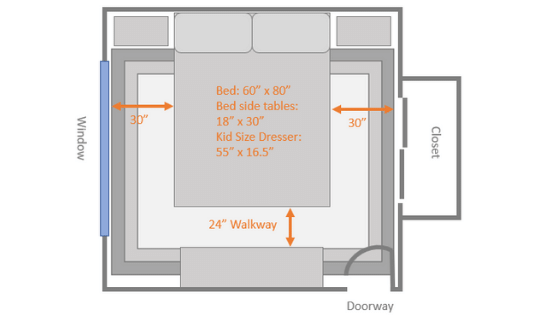
Most shoppers focus solely on comfort and price while ignoring critical size considerations that lead to regret after delivery. A queen mattress needs a room of at least 10×10 feet to fit comfortably with nightstands and walking space, while a king requires 12×12 feet minimum—dimensions many master bedrooms can’t accommodate. The standard queen measures 60×80 inches, but many homeowners discover too late that their bedroom’s actual dimensions leave only 18 inches of space on each side, making furniture placement impossible and creating a cramped environment.
Twin vs. Twin XL: The Critical 5-Inch Difference
Twin mattresses (38×75 inches) work for children and small spaces but leave taller sleepers’ feet hanging over the edge. Twin XL solves this problem with identical width but adds five crucial inches of length (38×80 inches), accommodating sleepers up to 6’6″ comfortably. This seemingly small difference makes Twin XL the standard for college dorms nationwide—where standard twins would leave most students with feet protruding over the end. When shopping for a guest room or child’s first “big kid” bed, prioritize Twin XL if the sleeper exceeds 6 feet tall, as the $100-$300 price difference prevents discomfort and future replacement costs.
Full Size Mattress: The Solo Sleeper’s Sweet Spot
Full mattresses (53-54×75 inches) provide 15-16 inches more width than twins while maintaining the same length, creating the ideal balance for single adults who want extra space without overwhelming their room. These dimensions fit comfortably in bedrooms of 10×11 feet, making them perfect for studio apartments and guest rooms where space optimization matters. However, full mattresses provide only 26.5 inches of personal space per person—less than a twin offers for one sleeper—making them generally unsuitable for couples despite their historical popularity through the 1960s. If you’re a single sleeper who enjoys spreading out, the full offers meaningful extra space starting around $749, positioning it as the most cost-effective upgrade from twin without king or queen pricing.
Queen Size: The Gold Standard for Most Bedrooms
Queen mattresses (60×80 inches) dominate the U.S. market for good reason—they provide 30 inches of personal space per person for couples, striking the perfect balance between intimacy and individual comfort. These dimensions work in bedrooms as small as 10×10 feet while accommodating additional furniture in 10×12-foot rooms, making queens the ideal choice for standard master bedrooms. Quality queen mattresses start around $849, and their widespread popularity ensures abundant accessory options at reasonable prices compared to specialty sizes.
Why Queen Fits Where King Won’t
Before upgrading to king, measure your room carefully—a king mattress (76×80 inches) requires at least 12×12 feet of space to fit with nightstands and walking room, which many standard master bedrooms can’t accommodate. Queens occupy approximately 33 square feet (5×6.67 feet), suggesting a 100-square-foot room as ideal using the “golden ratio” of three to one. If your bedroom measures less than 120 square feet, a queen likely provides the maximum comfortable size without compromising your room’s functionality or creating a cramped environment.
King vs. California King: Width vs. Length
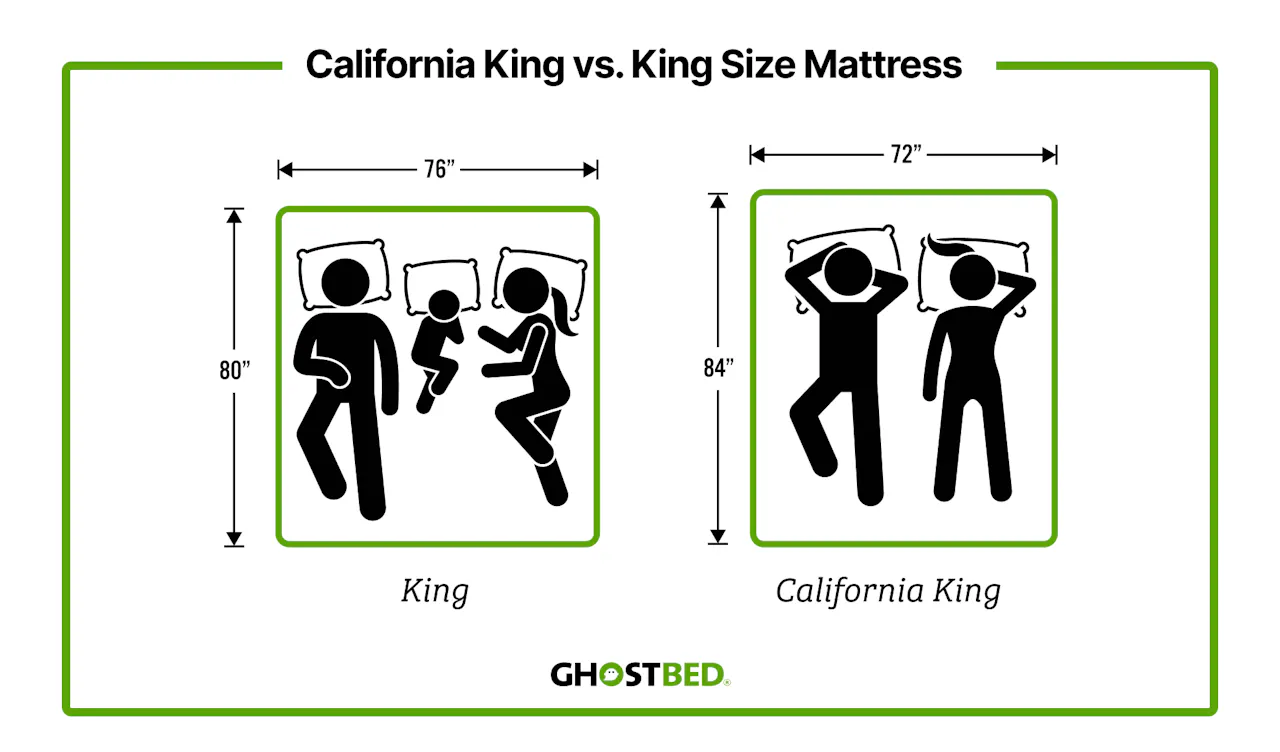
Standard king mattresses (76×80 inches) provide 38 inches of personal space per person—equivalent to a twin mattress for each sleeper—making them ideal for couples who want to spread out or share with children and pets. However, California kings (72×84 inches) offer four extra inches of length while sacrificing four inches of width, creating the perfect solution for sleepers over 6’2″ who experience feet overhang on standard lengths. Despite common myths, California kings originated in the 1920s for Hollywood celebrities needing extra legroom, not in Concord, California as many believe.
How to Choose Between King Sizes
Measure both your height and your room’s proportions before selecting between king options. If you’re over 6 feet tall and currently experience feet hanging off your mattress, California king provides meaningful improvement. However, if shoulder space concerns you more than legroom, standard king’s additional width serves you better despite its shorter length. Both sizes start around $949 for quality models, but California king accessories often cost more due to less common sizing and limited availability of sheets and protectors.
RV and Specialty Mattress Dimensions You Must Know
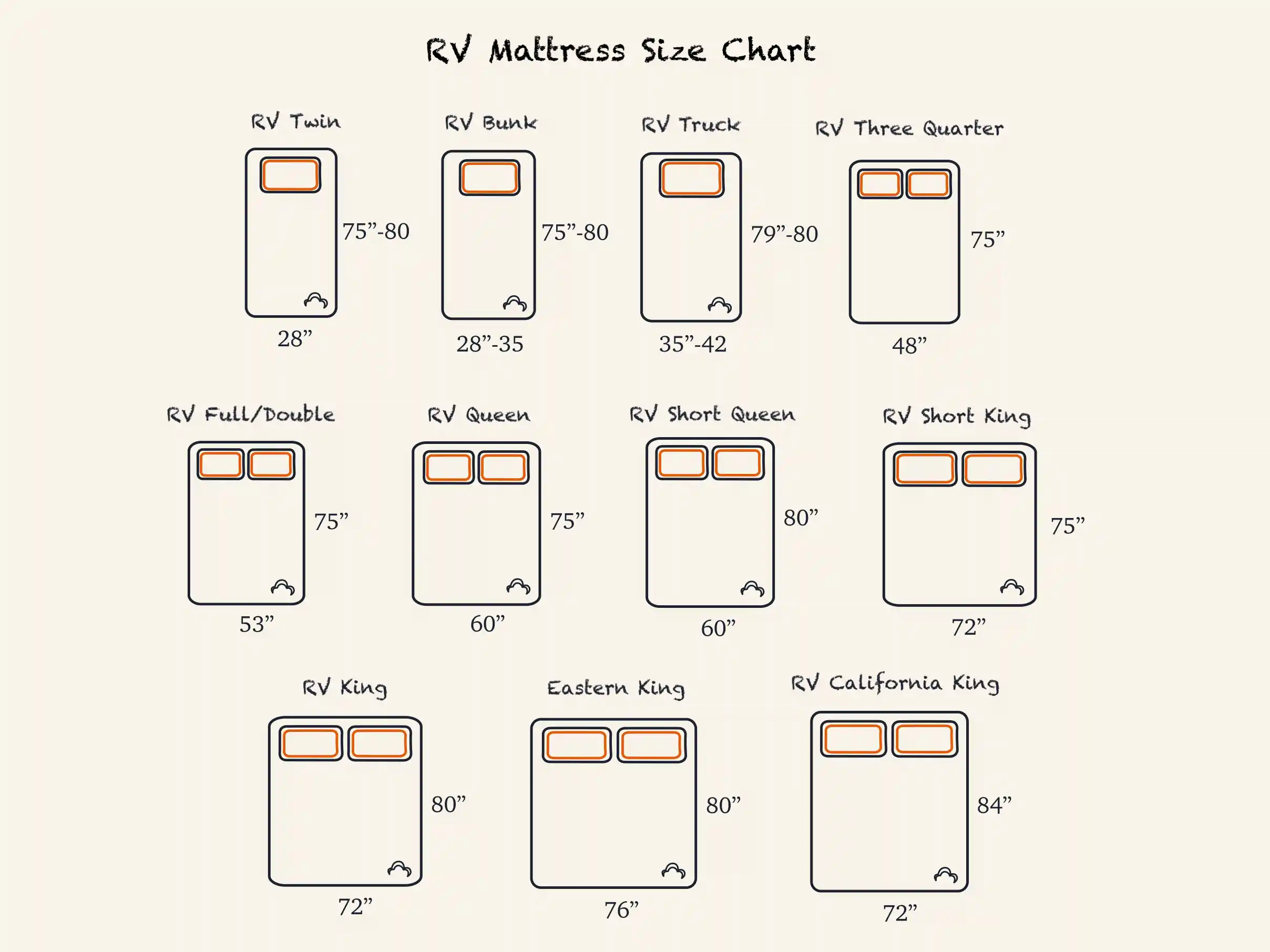
RV mattresses use completely different dimensions than residential models, with the most common sizes being RV Short Queen (60×75 inches), RV Short King (72×75 inches), and RV King (72×80 inches). These shortened lengths accommodate recreational vehicle constraints, but many RVs require custom-shaped mattresses with angled corners or curved edges to fit around wheel wells and cabinetry. Don’t assume your home mattress size matches your RV’s requirements—measure your sleeping platform precisely before ordering replacement bedding.
Olympic Queen and Split King Alternatives
The Olympic Queen (66×80 inches) provides six extra inches of width compared to standard queens, offering couples more personal space without committing to king size. Split king configurations (two Twin XL mattresses side by side) work perfectly with adjustable bases, allowing partners to customize firmness and position independently—a growing trend among couples with different sleep needs. Before selecting specialty sizes, verify accessory availability, as Olympic queens and split configurations often face limited sheet and protector options compared to standard dimensions.
International Mattress Size Confusion Solved
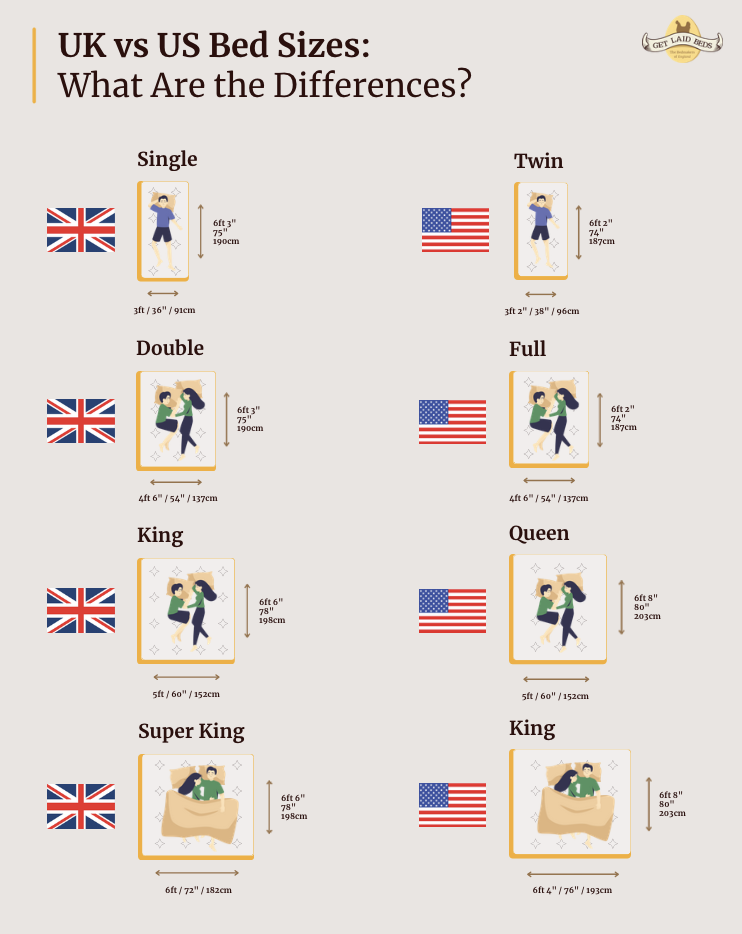
European bed sizes differ significantly from U.S. standards, with dimensions measured in centimeters and following different conventions. Standard European single beds measure 90×200 centimeters (35×79 inches), while double beds typically measure 160×200 centimeters (63×79 inches)—neither matching U.S. twin nor full dimensions. UK standards define single beds as 91×191 centimeters (36×75 inches) and standard doubles as 137×191 centimeters (54×75 inches), making them slightly narrower than U.S. full mattresses.
Australia and Asia Size Differences
Australian queen mattresses measure 153×203 centimeters (60×80 inches)—identical to U.S. queens—but their king size (183×203 centimeters) falls between U.S. king and California king dimensions. Japanese beds follow JIS S 1102:2017 standards with specific dimensions like single (97×195 centimeters) and queen (160×195 centimeters), while Chinese beds categorize sizes by width with standard 200-centimeter lengths. When purchasing internationally, always verify exact measurements in inches rather than relying on size names, which rarely translate accurately across markets.
How to Avoid Costly Mattress Size Mistakes
The most common mattress size error involves failing to measure both the mattress space and the delivery pathway—including door widths, stair corners, and elevator dimensions—which can result in a mattress that physically cannot enter your bedroom. Another frequent mistake is selecting a size based solely on current needs without considering future changes, such as a couple planning to start a family or a single sleeper who frequently hosts overnight guests.
Room Size Requirements You Can’t Ignore
Twin mattresses need approximately 63-80 square feet, full requires about 100 square feet, queens need 110-120 square feet, and both king sizes require at least 144 square feet to accommodate the bed with surrounding furniture. These calculations assume you want functional space beyond just placing the mattress—skip this step, and you’ll end up with a bedroom where you can’t open drawers or walk around your bed comfortably. Before purchasing, measure your room and subtract 24-36 inches from each dimension to determine your maximum mattress size.
Bedding Compatibility Issues Nobody Warns You About
King-size sheets and accessories carry premium pricing compared to queen or full sizes, and the price differential compounds when outfitting a complete bedroom. California king bedding won’t fit standard king mattresses and vice versa—a costly mistake when purchasing expensive high-thread-count sheets or waterproof protectors. Mattress thickness (typically 9-13 inches) also affects fitted sheet depth requirements, so verify your mattress depth before ordering bedding to avoid ill-fitting sheets that constantly slip off.
Frame and Foundation Compatibility Essentials
Different mattress sizes require appropriately sized bed frames, and mixing sizes leads to improper support and premature mattress wear. Antique frames from before the 1950s rarely match modern dimensions—a “double” from 1920 might measure 48×72 inches instead of today’s 53×75 inch standard. If using an antique frame, provide interior measurements to custom mattress manufacturers who can build to exact specifications, ensuring proper support and preventing voided warranties.
Choosing the right mattress size prevents costly mistakes that disrupt your sleep and budget. Verify your room dimensions, consider future needs, and prioritize personal space requirements over aspirational choices. Remember that queen remains the most popular size for good reason—offering the best balance of space, affordability, and accessory availability for most sleepers. Whether you’re a single sleeper in a studio apartment or a family sharing your bed with pets and children, the perfect mattress size exists for your specific needs—you just need the precise dimensions to find it.