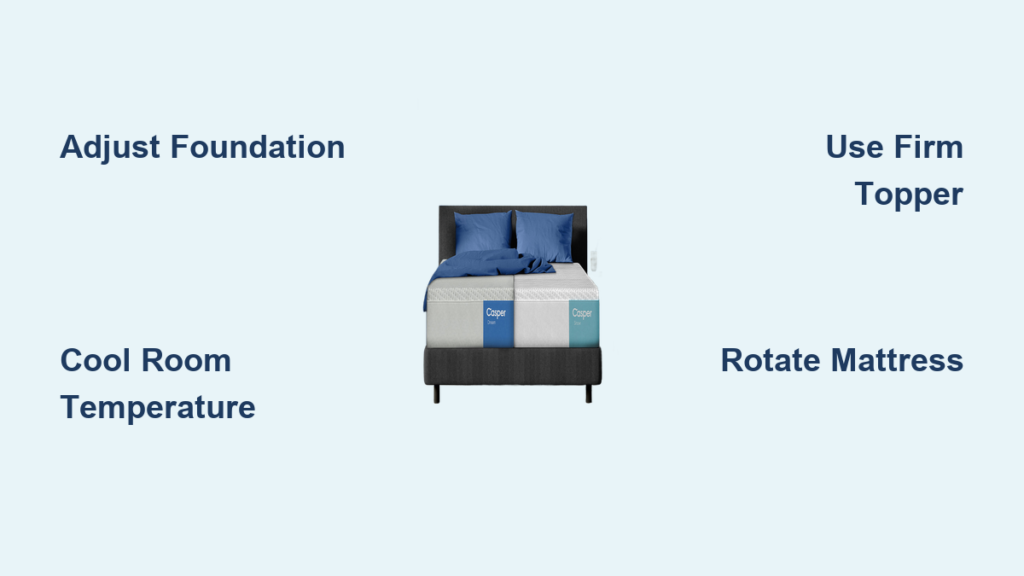
Is your Casper mattress feeling too soft after the initial break-in period? You’re not alone. Many Casper owners experience that sinking feeling—literally—when their once-supportive bed starts conforming too much to their body. The good news is you don’t need to replace your entire mattress to regain that firmer feel you originally loved. This guide reveals seven proven methods to increase firmness in your Casper mattress without voiding your warranty or breaking the bank.
Casper mattresses, known for their balanced medium-firm feel, can soften over time due to body impressions, temperature changes, or simply adjusting to your sleep patterns. The proprietary zoned support system that made your Casper so comfortable initially might now feel like it’s working against you. Whether you’ve noticed your hips sinking too deeply or you’re sharing the bed with a partner who prefers a firmer surface, these solutions address specific pain points Casper owners commonly face. You’ll learn actionable steps you can implement immediately, from simple adjustments to strategic accessory additions, all while maintaining your mattress’s integrity.
Immediate Firmness Fixes Without Additional Purchases
Adjust Your Foundation for Better Support
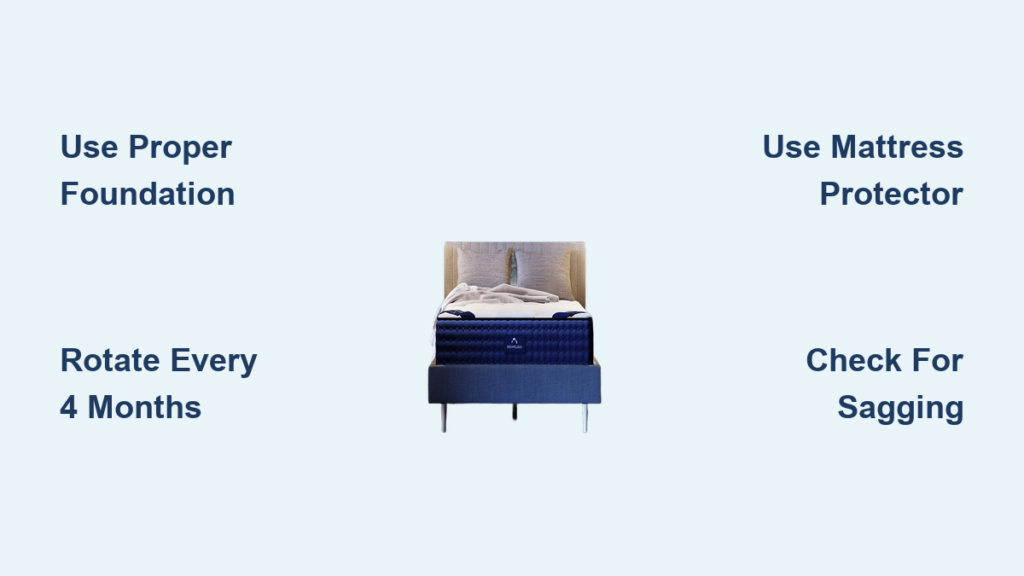
Your mattress only performs as well as the foundation supporting it. Casper mattresses require a solid, flat surface to maintain their intended firmness profile. Many softness issues stem from inadequate support beneath the mattress. If you’re using a box spring, check whether it’s designed for foam mattresses—traditional innerspring box springs create too much give. Switch to a platform bed with slats no more than 3 inches apart or add a plywood board between your mattress and foundation for instant firmness.
Pay special attention to the center third of your mattress, where most body weight concentrates. Weak support here creates that dreaded “hammock effect” where your waist sinks while your shoulders and hips rest higher. Adding cross-supports or reinforcing slats in this critical zone can dramatically improve firmness without any visible changes to your bed setup. This simple foundation adjustment often provides the 20-30% firmness increase most Casper owners need.
Optimize Room Temperature for Firmer Foam Response
Memory foam and latex components in Casper mattresses naturally soften as temperatures rise—a feature that enhances comfort but sometimes creates excessive softness. Cooler sleeping environments maintain foam density, resulting in a firmer feel. Keep your bedroom between 60-67°F (15-19°C) for optimal firmness retention. During warmer months, run your air conditioner an hour before bedtime to cool both the room and your mattress.
For immediate results, try this temperature hack: place a cooling mattress pad or even a damp towel (wrung out thoroughly) on your mattress for 15-20 minutes before sleeping. The temporary cooling effect temporarily increases foam density, creating a firmer sleep surface. Just avoid direct contact with water, which could damage the mattress cover and void your warranty.
Strategic Mattress Accessories for Enhanced Firmness
Select the Perfect Mattress Topper for Firm Support
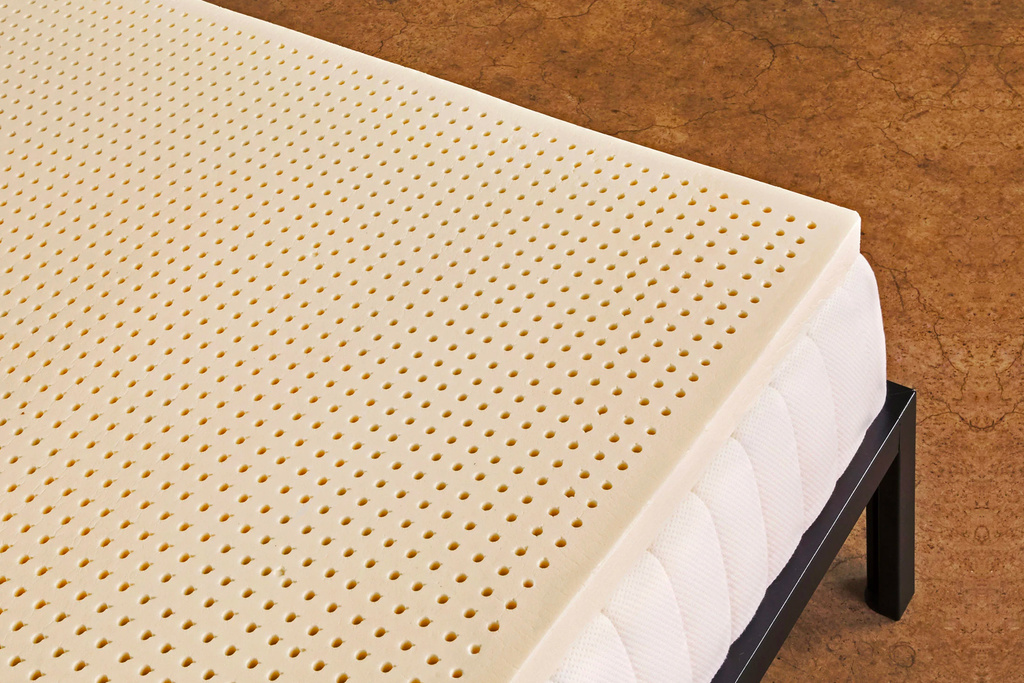
While most people assume toppers automatically soften mattresses, the right firm topper actually increases overall support. Look for 2-3 inch latex or high-density polyfoam toppers with ILD (Indentation Load Deflection) ratings of 35+ for genuine firmness improvement. Avoid memory foam toppers, which typically add conforming softness rather than support.
When shopping, prioritize toppers specifically designed for firmness enhancement rather than pressure relief. The best options feature breathable covers that prevent heat retention—another factor in foam softening. Properly sized to fit your Casper dimensions, a quality firm topper integrates seamlessly while adding noticeable support. Expect to invest $150-$250 for a topper that won’t compromise your Casper’s airflow or temperature regulation.
Install a Mattress Encasement System

Mattress encasements often overlooked as firmness solutions actually provide structural reinforcement that prevents excessive sinking. A high-quality, breathable encasement with reinforced edges creates tension across the mattress surface, effectively increasing firmness by 15-25%. Look for options with elastic corners that grip firmly without restricting the mattress’s natural expansion and contraction.
The right encasement works with your Casper’s design rather than against it. Choose breathable materials like bamboo or Tencel that maintain temperature regulation while providing structural support. Proper installation is crucial—ensure the encasement fits snugly without wrinkles that could create uncomfortable pressure points. This solution preserves your mattress warranty while delivering immediate firmness improvement.
Maintenance Techniques to Restore Original Firmness
Implement Strategic Rotation Patterns
Casper mattresses feature zoned support designed for specific orientation—rotating them can redistribute foam density for firmer support in key areas. Unlike traditional mattresses, Casper beds shouldn’t be flipped, but strategic rotation every 3-4 months helps maintain even support. Rotate 180 degrees so your feet rest where your head previously did, allowing different foam zones to support your body’s heavier areas.
Focus on rotating when you first notice body impressions forming. Early intervention prevents permanent compression in high-pressure zones. For best results, rotate during seasonal changes when temperature fluctuations naturally affect foam density. This simple maintenance habit extends your mattress’s optimal firmness period by months, sometimes years.
Address Body Impressions with Targeted Techniques
Normal body impressions up to 1.5 inches are expected in foam mattresses, but deeper impressions indicate uneven support that creates a softer-than-intended feel. For impressions exceeding 2 inches, try the tennis ball method: place tennis balls in socks and position them beneath the sagging area for 24-48 hours. The concentrated pressure helps redistribute foam particles upward.
For more stubborn impressions, use the vacuum method: cover the affected area with a clean towel, then use a vacuum cleaner hose with a soft brush attachment to gently massage the impression for 5-10 minutes. This stimulates the foam’s memory properties, encouraging it to rebound. Always perform these techniques on a completely dry mattress to prevent moisture damage.
Advanced Firmness Solutions for Persistent Issues
Add Strategic Support Layers Beneath Your Mattress
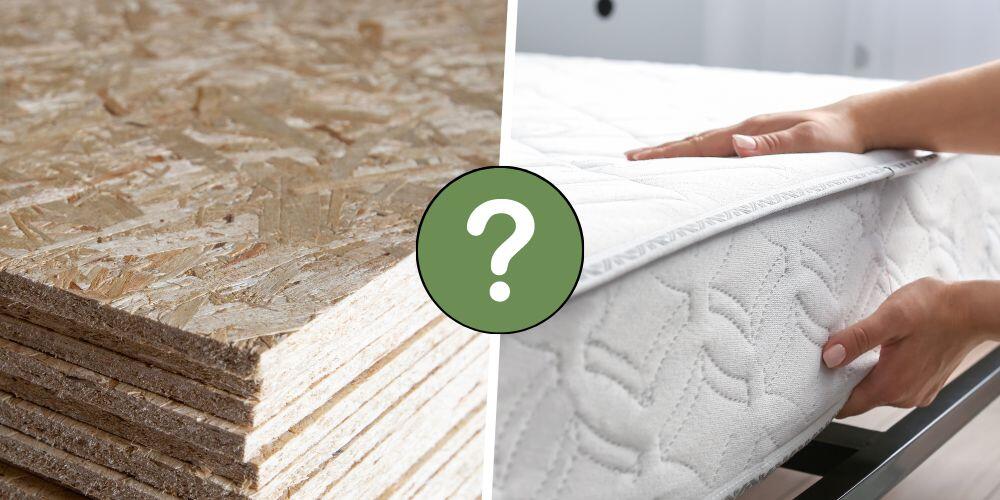
When foundation adjustments aren’t enough, consider adding targeted support layers between your mattress and foundation. A ½ inch high-density plywood board cut to your mattress dimensions provides uniform firmness enhancement without compromising breathability. For more nuanced support, create a custom solution: cut the plywood to cover only the center third of your mattress where most sinking occurs.
Alternative materials like rigid foam insulation boards (specifically designed for bedding use) offer similar benefits with less weight. Ensure any added layer has ventilation holes matching your Casper’s airflow system to maintain temperature regulation. This solution typically increases firmness by 25-40% while preserving the mattress’s original feel in non-problem areas.
Evaluate Your Sleep Position and Partner Dynamics
Your perceived mattress softness directly correlates with your sleep position and body composition. Side sleepers naturally experience more sinking than back or stomach sleepers. If you’ve recently changed sleep positions, this could explain your firmness concerns. For side sleepers wanting more support, place a firm pillow between your knees to maintain spinal alignment, reducing the sensation of excessive sinking.
For couples with different firmness preferences, the Casper’s zoned support already addresses this to some extent, but you may need additional customization. Try placing a thin, firm pad (1-2 inches) under just your side of the mattress. This targeted approach maintains your partner’s preferred softness while giving you the firmer support you need.
When to Contact Casper Support Instead of DIY Fixes
Recognize Normal Break-In Period Versus Defects
All Casper mattresses require 30-60 days to fully decompress after unboxing, during which firmness naturally decreases slightly as foams settle. However, excessive softening beyond this period may indicate issues covered under warranty. Normal break-in includes temporary off-gassing odors and slight softening, but not dramatic loss of support or deep permanent impressions.
Contact Casper if you notice:
– Body impressions deeper than 1.5 inches after 3 months
– Complete loss of bounce or responsiveness
– Visible foam degradation or tearing
– Firmness changes that prevent restful sleep
Their customer service typically responds within 24-48 hours and may offer replacement layers or full mattress replacement if a manufacturing defect is confirmed.
Long-Term Firmness Preservation Strategies
Establish a Regular Maintenance Routine
Preventative care maintains your Casper’s original firmness longer. Vacuum your mattress monthly with a clean upholstery attachment to remove dust particles that can degrade foam over time. Rotate quarterly as recommended, and flip your mattress pad regularly to ensure even wear. These simple habits prevent uneven compression that leads to premature softening.
Store your mattress properly during moves or seasonal changes—always keep it rolled in its original position with the label facing up. Never fold or bend your Casper mattress, as this damages the foam structure permanently. Proper care extends the period before significant firmness adjustments become necessary.
Monitor Firmness Changes Seasonally
Temperature and humidity fluctuations significantly impact foam density. Establish a seasonal routine: in summer months when softness increases, implement cooling strategies; in winter when foam naturally firms, reduce bedding layers to maintain comfort balance. Keep a simple journal noting how your mattress feels at different times of year—this helps distinguish normal seasonal variation from actual degradation.
Understanding these patterns prevents unnecessary adjustments. Most Casper owners find their mattress feels approximately 15-20% softer in peak summer compared to winter, which is normal foam behavior rather than product failure.
Final Note: Regaining firmness in your Casper mattress typically requires just one or two strategic adjustments rather than complete replacement. Start with foundation improvements and temperature control before investing in accessories, as these often provide sufficient results. Remember that some softening is natural as your mattress conforms to your body—aim for supportive comfort rather than maximum firmness. Implement these solutions systematically, allowing 1-2 weeks to evaluate each change before adding another adjustment. With proper maintenance, your Casper should maintain its ideal firmness balance for years beyond the standard 10-year warranty period.